
You turn the key or press the start button, and instead of heading off to work, school drop-off or the job site, you get nothing useful back. Maybe it clicks. Maybe the dash lights flicker. Maybe it starts and dies. If you’re asking, why won’t my car start battery or alternator, you’re already looking in the right area – but the two faults can feel very similar when you’re stuck.
The good news is there are usually a few clear signs that point one way or the other. The catch is that modern vehicles do not always fail in a neat, obvious way. A weak battery can make you think the alternator is gone, and a failing alternator can flatten a perfectly good battery. That’s why a proper test matters.
Why won’t my car start – battery or alternator?
In simple terms, the battery gives your car the power it needs to start, while the alternator keeps the battery charged once the engine is running. If the battery is flat, the engine may not crank at all. If the alternator is faulty, the car may start at first but then lose power because the battery is no longer being recharged.
That sounds straightforward, but real-world faults often overlap. If your alternator has been undercharging for a few days, the battery may now be too low to start the car. In that case, the battery looks like the problem, but it may only be the victim.
Signs it’s more likely the battery
A battery fault is the more common starting issue, especially during colder mornings, after the car has been sitting for a while, or when the battery is simply getting old. Most car batteries do not fail all at once without warning. They often give a few hints first.
If you hear a rapid clicking sound when you try to start the car, that often points to low battery voltage. The starter motor is trying to engage, but there is not enough power behind it. Dim headlights, weak interior lights, slow cranking and electronics behaving oddly can also suggest a tired battery.
Another clue is what happened before the no-start. If the vehicle was running normally yesterday and now won’t crank after sitting overnight, the battery is a strong suspect. The same applies if a light was left on, a door was not fully shut, or the vehicle has not been driven much lately.
Battery age matters too. If it is more than three years old, especially in a vehicle used for short trips, it may be nearing the end of its life. Heat also shortens battery life, and Sydney conditions can be hard on them.
Signs it’s more likely the alternator
Alternator faults usually show up while the car is driving, not just when it is parked. That is one of the biggest differences. If your vehicle needed a jump-start recently and then went flat again soon after, the alternator becomes a much stronger possibility.
A battery warning light on the dash is another common sign. Despite the symbol, that light often relates to the charging system, not just the battery itself. If you notice headlights dimming while driving, the radio cutting out, power windows slowing down, or warning lights appearing one after another, the alternator may not be supplying enough charge.
Some drivers describe it as the car gradually losing strength. The engine may start rough, dashboard lights may flicker, and eventually the car may stall because the battery has been drained. When that happens, recharging or replacing the battery alone will not solve the actual issue.
There can also be related faults around the alternator, such as a worn drive belt, poor wiring connections or a bad voltage regulator. That is why testing the full charging system is more useful than guessing based on one symptom.
Battery or alternator – what you can check safely
Before assuming the worst, there are a few basic checks you can do without tools. Start with the obvious. Are the headlights bright or weak? Do the dash lights come on normally? Does the engine crank slowly, click once, or do absolutely nothing?
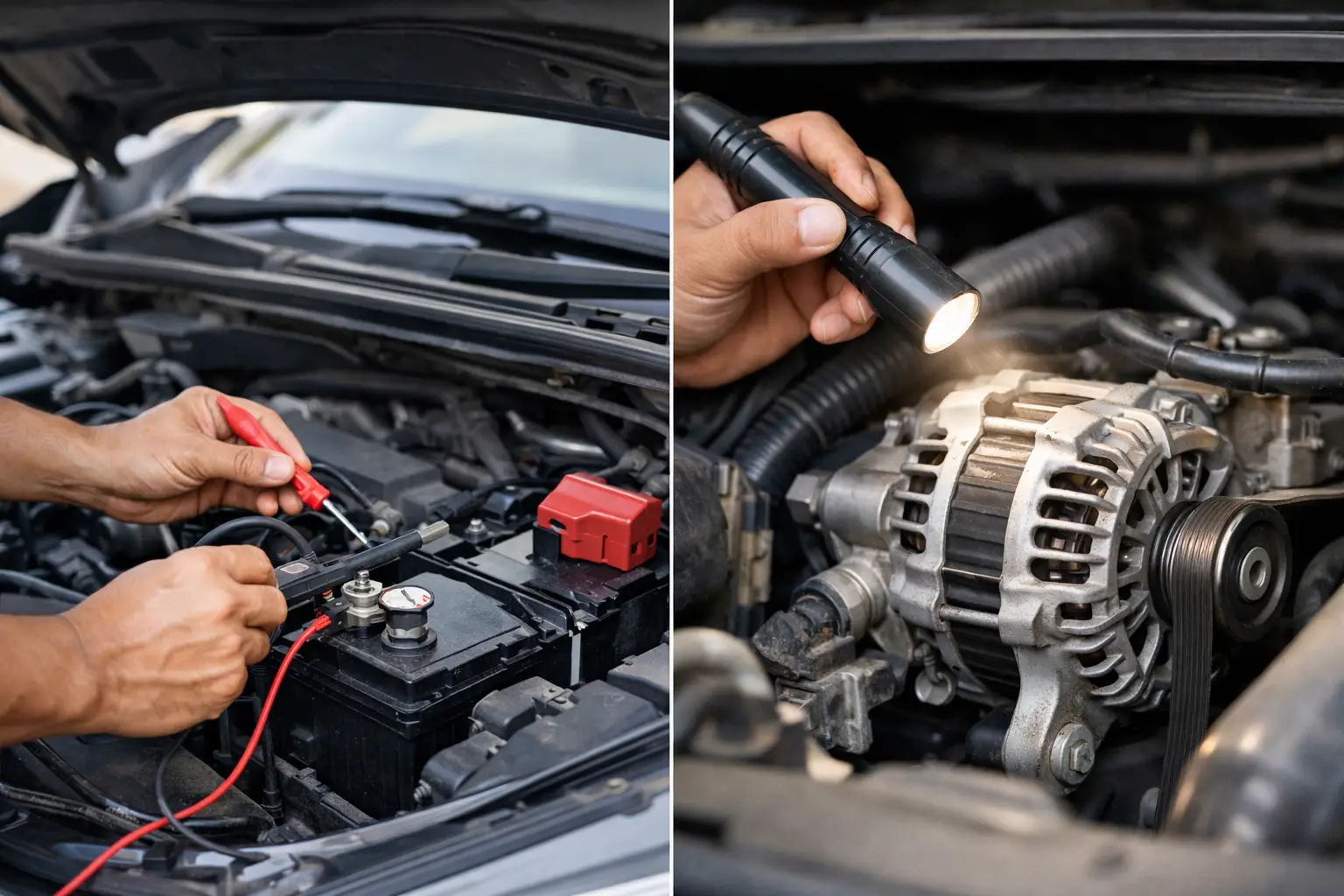
Next, have a look under the bonnet if it is safe to do so. Check whether the battery terminals are loose or heavily corroded. White or green buildup around the terminals can interfere with current flow and create starting trouble. Also look for anything clearly out of place, such as a loose belt or obvious damage.
If the car starts with jumper leads and then keeps running normally for a good while, that can suggest the battery was flat from lack of use or a one-off drain. If it starts with a jump and then dies again shortly after, the alternator becomes more likely. Even then, it is not a perfect rule. Some batteries can accept a jump but still fail under load moments later.
The main point is this: symptoms help, but they do not replace proper testing.
When it’s not the battery or alternator
This is where some people get caught out. Not every no-start issue is caused by the battery or alternator. A faulty starter motor, blown fuse, bad earth, ignition switch problem, immobiliser fault or wiring issue can produce very similar symptoms.
For example, if the dash lights are bright but the engine will not crank and you only hear a single click, the starter motor may be the issue. If the engine cranks strongly but will not actually fire up, the problem could be fuel, spark or an immobiliser fault rather than charging system failure.
That is also why typing Auto Electrician near me into a search engine is often the quickest next step when the cause is unclear. A proper mobile diagnostic saves time, avoids unnecessary parts replacement and gets you back on the road faster.
Why testing matters more than guessing
Replacing a battery because the car would not start can seem like the easiest move. Sometimes it works. Sometimes it leaves you stranded again two days later because the alternator was the real cause all along.
A proper test checks battery condition, voltage, cranking performance and alternator output. It can also reveal whether the battery is failing internally, whether the alternator is undercharging or overcharging, and whether there is a parasitic drain pulling power while the vehicle is off.
This matters because the wrong repair costs more in the long run. A flat battery caused by an alternator fault is not fixed by fitting a new battery alone. On the other hand, replacing an alternator when the battery is simply old and weak is money wasted.
For drivers who rely on their car every day, that difference is not minor. It affects work, school runs, appointments and everything else that depends on the car starting when it should.
What to do if your car won’t start at home or work
If the vehicle is in a safe spot, avoid repeated start attempts. Constant cranking can flatten the battery further and make diagnosis harder. If you have jumper leads and know how to use them safely, a jump-start may help confirm whether the issue is power-related, but it is not a final diagnosis.
If the car starts, do not assume the problem has gone away. Pay attention to warning lights, dim lights, rough running or any sign that power is dropping off. If it does not start, or if it starts and then quickly struggles again, it is time for proper on-site testing.
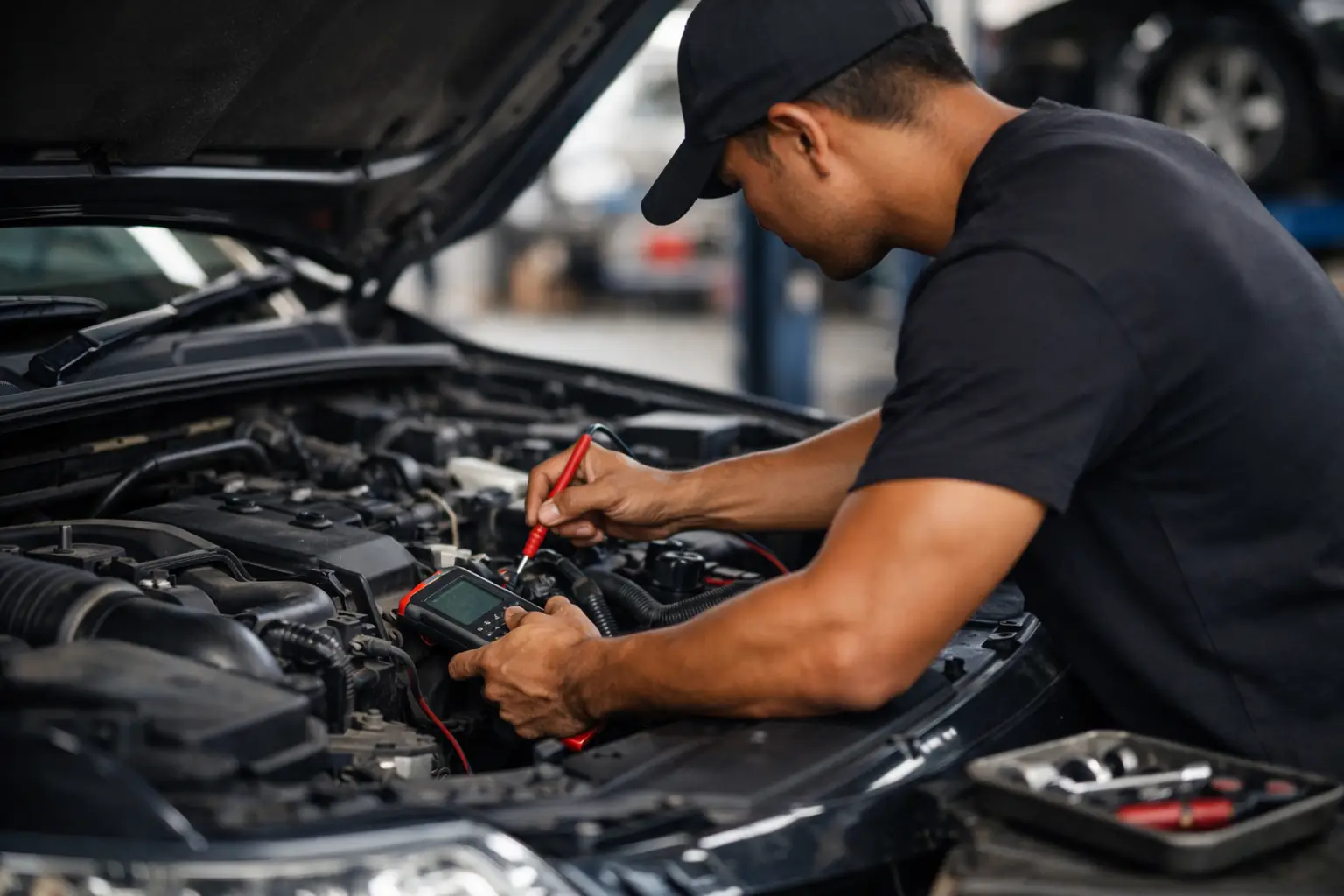
That is where a mobile service makes a real difference. Instead of organising a tow and losing half a day at a workshop, a qualified auto electrician can test the battery, alternator and related circuits where the vehicle is parked. For busy Sydney drivers, that is usually the more practical option.
If you are in the west and searching for Auto electrican Blacktown, it makes sense to choose someone who can come out, diagnose the fault properly and sort it without the extra run-around.
The most common outcome
In many cases, the battery is the first part to fail and the alternator is still fine. In others, the alternator fault causes the battery to go flat, and both end up needing attention because one has damaged the other. It depends on how long the problem has been there, the age of the battery, and how the vehicle has been used.
That is why there is no honest one-size-fits-all answer to why won’t my car start battery or alternator. The symptoms can point you in the right direction, but the right fix comes from testing, not guesswork.
If your car is clicking, cranking slowly, stalling, or refusing to start altogether, get it checked before the problem leaves you stranded somewhere less convenient. A fast diagnosis is usually the cheapest part of the whole job, and it often saves a lot of frustration.