

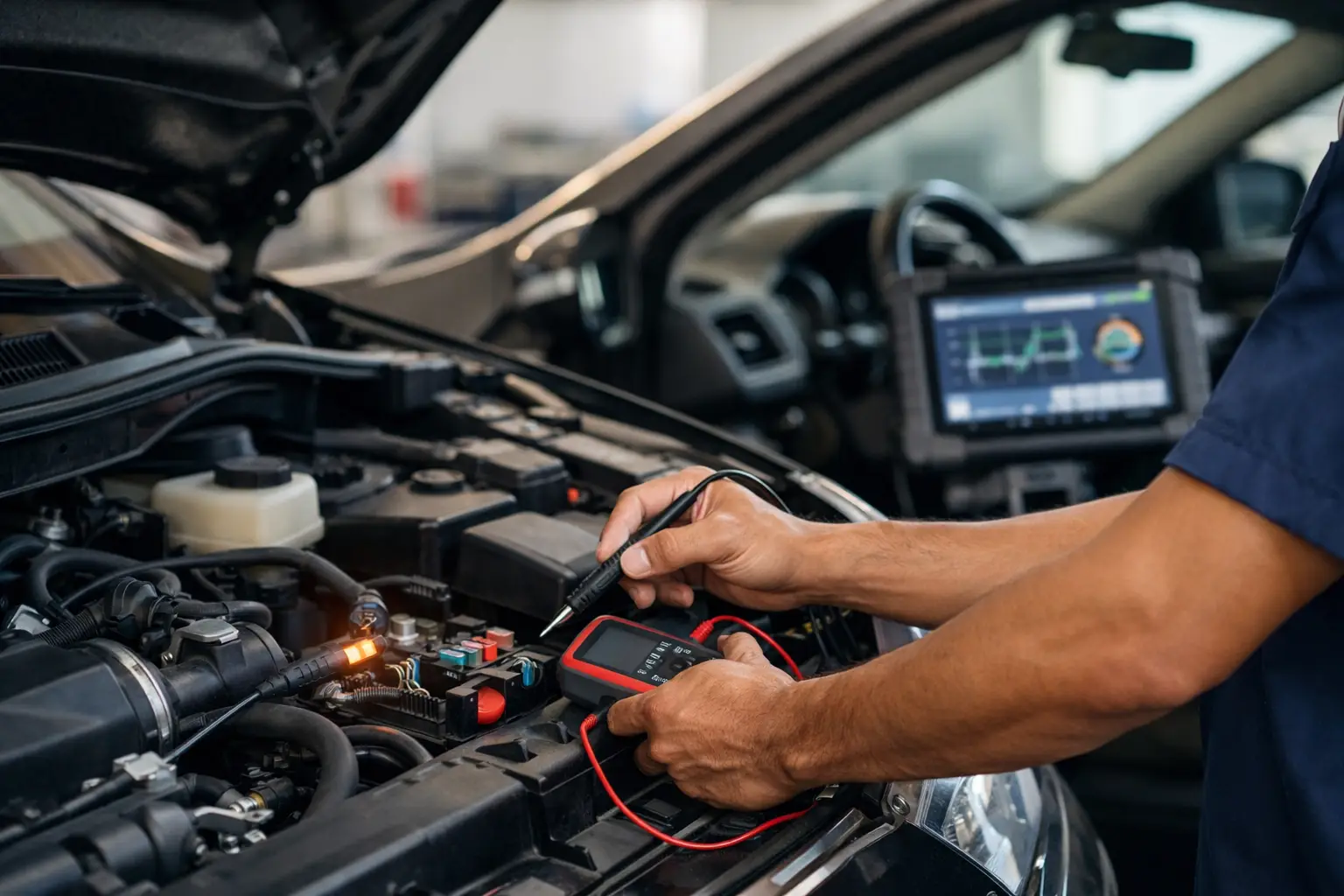
When your car won’t start, the lights flicker, or the battery keeps going flat for no clear reason, guessing usually costs more than proper car electrical fault diagnosis. A modern vehicle has dozens of electrical components working together, and one fault can easily look like something else. What seems like a dead battery might be a charging problem, a bad earth, damaged wiring, or a module that is staying awake after the car is switched off.
That is why the first step is not replacing parts at random. It is finding the actual cause.
What car electrical fault diagnosis really means
Car electrical fault diagnosis is the process of testing the vehicle’s electrical system to identify where the problem starts, not just where the symptom shows up. In plain terms, it means checking power supply, charging performance, battery condition, wiring, fuses, relays, switches, sensors and control units in a logical order.
For most drivers, the problem shows up in a familiar way. The engine cranks slowly. Dashboard lights behave oddly. Power windows stop working. The air conditioning fan cuts in and out. Accessories like dash cams or stereos start acting up. Sometimes the issue is obvious. More often, it is intermittent, which is where proper testing matters most.
A qualified auto sparky is not just looking for a failed part. They are checking whether the part is actually receiving the right voltage, whether the circuit has too much resistance, and whether another fault is triggering the problem.
The most common signs of an electrical fault
Electrical problems do not always arrive dramatically. Plenty of them start small, then become a no-start or breakdown at the worst possible time.
A few warning signs come up again and again. If your battery needs frequent jump-starts, your headlights dim at idle, warning lights appear for no clear reason, or the alternator is not charging properly, there is usually an underlying issue that needs attention. You may also notice blown fuses, a burning smell, central locking faults, non-working indicators, or problems with trailer plugs and aftermarket accessories.
Intermittent faults are especially common. The car might start perfectly at home, then refuse to start outside the shops. That does not mean the problem has vanished. It usually means the fault is being affected by heat, vibration, moisture or time.
Why electrical faults are often misdiagnosed
A flat battery is one of the most misread problems on the road. People naturally assume the battery has reached the end of its life, but batteries often go flat because something else is wrong.
Sometimes the alternator is undercharging. Sometimes there is a parasitic draw draining the battery overnight. In other cases, poor cable connections or corrosion create enough resistance to stop the system working properly. Replacing the battery may get the car going again for a short time, but it will not fix the root cause.
The same applies to starter motors, fuses and sensors. A blown fuse is not always the fault itself. It may be the result of a short circuit elsewhere. A sensor code on a scan tool does not always mean the sensor is bad. It may be a wiring issue or a voltage supply problem.
This is where experience saves time. Good diagnosis follows the evidence instead of the symptom.
How car electrical fault diagnosis is done properly
The process should be systematic. First comes a clear picture of the fault. What is happening, when it happens, and whether any recent work or accessory installation might be related. From there, testing begins.
Battery and charging system checks
The battery is usually tested for condition, voltage and load performance. The charging system is then checked to confirm whether the alternator is producing the correct output. If the battery is healthy but not being recharged properly, replacing it will not solve much.
Wiring, fuses and connection testing
Visual checks matter, but they are only the start. A cable can look fine on the outside and still have high resistance inside. Earth points, terminals, fuse boxes and connectors all need proper testing. Loose, corroded or heat-damaged connections are common causes of hard-to-trace faults.
Scan tool and live data checks
On newer vehicles, diagnostics often include fault code scanning and live data analysis. This helps identify communication issues, sensor behaviour and module faults. Even then, scan data is only one part of the job. Codes point you in a direction, but they do not replace hands-on electrical testing.
Parasitic draw testing
If the battery keeps going flat while the car is parked, the vehicle may have an excessive current draw. This means something is still using power when it should be asleep. It could be a light, module, relay or accessory. Finding it takes patience and methodical circuit isolation.
Common causes behind electrical issues
Electrical faults vary from simple to time-consuming, and the cause is not always dramatic. In many cases, it is wear and tear.
Batteries weaken over time, especially in heat. Alternators and starter motors eventually fail. Wiring can be damaged by vibration, poor previous repairs, rodent activity or water ingress. Fuse and relay problems are also common, especially in older vehicles or vehicles with added accessories.
Aftermarket installations can create issues too, particularly if they were not wired correctly in the first place. Dash cams, sound systems, driving lights, UHF radios and trailer wiring all need proper power supply and protection. A poor install can lead to battery drain, blown fuses, interference or damage to other circuits.
That does not mean accessories are a problem by themselves. It just means they need to be fitted properly and checked if electrical faults start afterwards.
When a mobile auto electrician makes more sense
Electrical faults are not always workshop-friendly. If the car will not start at home, at work, or on the roadside, getting it towed just for testing adds cost and hassle.
That is where mobile service makes practical sense. An on-site technician can test the battery, alternator, starter circuit, wiring and common electrical faults where the vehicle is parked. For many Sydney drivers, especially people trying to juggle work, school runs or trade jobs, that saves a lot of disruption.
It also helps with intermittent issues that only happen in real-world conditions. Sometimes a fault appears after the car has sat overnight, after rain, or when the engine is hot. Testing the vehicle at the location where the problem actually occurs can make diagnosis faster and more accurate.
If you have searched for Auto Electrician near me because the car is stuck in the driveway or refusing to start in a car park, quick local response matters just as much as technical skill. The same goes for drivers looking for an Auto electrician Blacktown service when they need help without waiting days for a workshop booking.
Can you diagnose an electrical fault yourself?
Some basic checks are worth doing. If the battery terminals are loose or badly corroded, that is an obvious starting point. You can also note when the fault happens, whether warning lights appear, and whether any recent repairs or installations came just before the issue started.
Past that, DIY diagnosis has limits. Modern vehicles are packed with electronics, and replacing parts based on guesswork gets expensive quickly. It can also create new problems. Fitting the wrong battery type, bypassing a fuse issue, or disturbing wiring without proper testing can make a small repair turn into a bigger one.
The smarter approach is usually simple: gather the symptoms, avoid using the vehicle if the fault is serious, and get it tested properly.
What to do before the fault gets worse
Electrical faults rarely improve on their own. If the car is showing signs of charging problems, repeated battery drain, burning smells, smoke, melted wiring or random loss of power, it is best not to leave it.
Early diagnosis often means a smaller repair. A loose terminal or failing alternator picked up early is far easier to deal with than a breakdown, damaged battery, or wiring repair after overheating. If your air con, lights, starting system or accessories have started behaving differently, that is usually your warning.
At Ray’s Auto Electrical, the focus is straightforward – find the fault properly, fix what needs fixing, and do it where the vehicle is when possible. That approach saves time, reduces guesswork and gives drivers a clearer answer than swapping parts and hoping for the best.
If your vehicle is showing electrical problems, the safest move is not to wait for a full breakdown. Get the fault checked while it is still a manageable repair.