

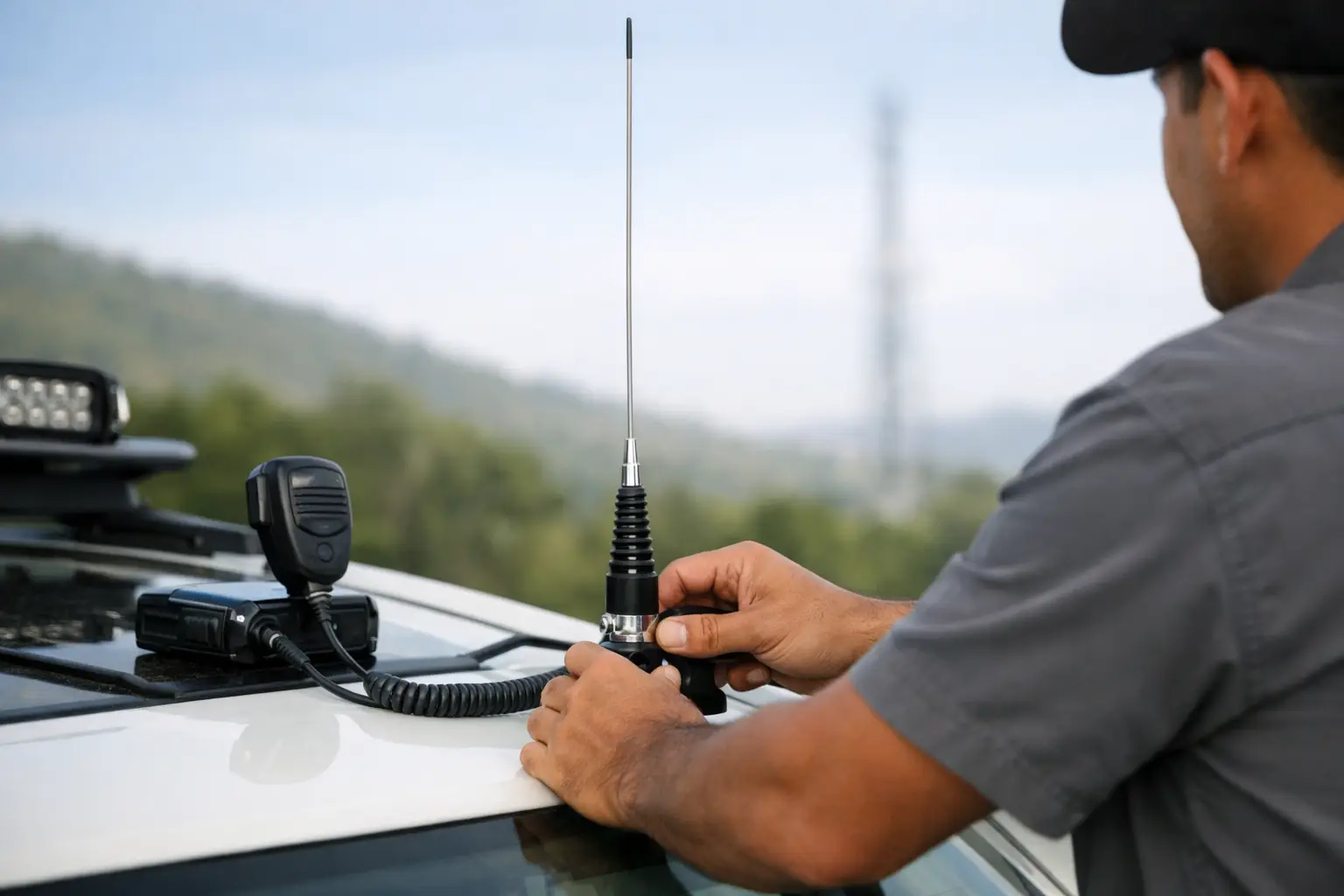
A UHF radio that cuts out when you need it most is usually not a radio problem. More often, it comes back to poor UHF radio antenna installation – the wrong antenna, the wrong mounting point, or a rushed cable run that creates signal loss and future faults. If you rely on your vehicle for work, towing, off-road trips or day-to-day driving, getting the antenna set up properly makes a real difference.
Why UHF radio antenna installation matters
A lot of vehicle owners focus on the head unit and assume that is where the performance comes from. In practice, the antenna and the way it is installed play a major part in how clearly you transmit and receive. A good radio paired with a poor antenna setup will still perform badly.
That matters when you are on the highway with a caravan, coordinating with other vehicles, or working on sites where clear communication saves time. A weak signal, excessive interference or an antenna mounted in the wrong spot can make the whole system frustrating to use.
There is also a durability side to it. Vehicles deal with vibration, weather, low branches, car parks and rough roads. An antenna installation needs to be secure, practical and suited to how the vehicle is actually used. What works on a weekend 4WD is not always the best option for a city work ute.
Choosing the right antenna for the vehicle
Not every antenna suits every job. One of the most common mistakes is buying based on appearance or price alone. The better approach is to match the antenna to the terrain, the vehicle and the kind of communication you need.
Higher gain antennas generally perform better on flatter ground and longer open-road runs. Lower gain antennas are often better in hilly or built-up areas because they give a broader signal pattern. That is why there is no single best antenna for everyone. It depends on where you drive most.
Vehicle size and body style also matter. A compact SUV, dual cab ute, van and touring 4WD all present different mounting options and different signal obstacles. Metal body panels can affect performance. So can roof racks, bull bars, awnings and canopies. A proper assessment looks at the whole vehicle, not just where the bracket will fit.
Best mounting positions for UHF radio antenna installation
Mounting position has a direct impact on performance. In general, the antenna should be placed where it has the clearest possible path and enough height to transmit effectively. But there is always a trade-off between signal quality, practicality and protection.
Bull bar mounting
This is a common option on 4WDs and trade vehicles. It is practical, easy to access and often suits heavier antennas. The downside is that lower mounting positions can reduce overall performance compared with a roof-mounted option, and placement too close to other metal accessories can affect signal pattern.
Roof mounting
Roof mounting often gives stronger all-round performance because the antenna sits higher and more centrally. That can improve transmission and reception. The catch is that installation is more involved, cable routing must be done neatly, and not every driver wants added height for shopping centres, home garages or low-clearance worksites.
Guard or bonnet mounting
This can be a good middle ground for some vehicles. It is less exposed than a full roof setup and can look tidy when done well. But depending on the bracket location and surrounding panels, it may not perform as evenly as a better-positioned mount.
The right choice comes down to how the vehicle is used. If the car spends most of its time in suburban traffic, practicality may matter more than chasing the last bit of range. If it is built for touring or remote work, performance may take priority.
The part many people do not see – cable routing and electrical quality
A tidy-looking install can still be a poor one if the cable work behind the scenes is substandard. Coax cable should be routed carefully, protected from heat and sharp edges, and kept clear of places where it can be pinched or worn through over time.
This is where DIY jobs can come unstuck. Running cable through the wrong point in the firewall, leaving it loose under trims, or creating tight bends can all reduce performance or lead to faults later. Water entry is another issue. A badly sealed pass-through can create bigger problems than radio interference.
The mounting bracket and grounding also need attention. A weak mount can vibrate, crack or work loose. Poor electrical contact can affect antenna efficiency. These are not always obvious on day one, but they show up soon enough when the vehicle is used properly.
Common mistakes with UHF radio antenna installation
The most common issue is simply choosing the wrong antenna for the job. After that, poor mounting location is a close second. Plenty of antennas are installed where they fit easily rather than where they will work best.
Another regular problem is using cheap brackets or hardware that cannot cope with vibration. On corrugated roads or rough worksites, that matters quickly. An antenna that shakes excessively will not last.
Cable quality is also often overlooked. So is connector quality. Even a good antenna can be let down by poor terminations or damaged cable. Then there is interference. If wiring is run poorly near other electrical systems, you can end up with noise that affects radio clarity.
For vehicle owners searching Auto Electrician near me, this is usually the point. The radio is installed, but the result is disappointing, and the cause is not obvious without proper testing.
When a professional installation is worth it
If you have a simple setup and a clear mounting point, a basic installation may sound straightforward. But modern vehicles are packed with electronics, trim clips, airbags, sensors and tight access points. It does not take much to turn a simple job into one that causes rattles, leaks or damaged wiring.
A professional installer will look at more than just where the antenna can go. They will consider signal performance, cable protection, bracket strength, interference risks and day-to-day usability. They can also make sure the radio and antenna are matched correctly and tested once fitted.
That matters even more if the vehicle is used for work. Downtime costs money. A rushed install that fails later is rarely a bargain. Mobile service is especially useful here because the job can often be done on-site without taking time out to sit around a workshop.
If you are based in the western side of Sydney and need practical help, searching Auto electrician Blacktown is often how locals start when they want someone who can come out and sort it properly.
What to expect from a proper mobile install
A good mobile installation should start with the basics – how you use the vehicle, where you drive, what accessories are already fitted, and what kind of antenna setup actually suits your needs. That avoids over-selling and helps get the right result from the start.
From there, the install should be neat and secure. Brackets should be solid. Cables should be protected and hidden where possible. The finished setup should feel like part of the vehicle, not an afterthought.
Testing is the final step that matters. There is no point fitting everything neatly if the signal is poor or the system has interference. A proper check confirms the radio is transmitting and receiving as it should.
For everyday drivers, tradies and families heading away with a caravan or camper, the main goal is simple. You want communication that works when you need it, without creating new electrical issues in the process.
Getting the balance right
The best UHF radio antenna installation is not always the tallest antenna or the most expensive setup. It is the one that matches the vehicle, suits the way you drive and is installed properly enough to handle real conditions.
That is why the details matter. Mounting position, antenna type, cable routing and fitment quality all work together. Get them right, and the radio does what it should. Get them wrong, and even a quality unit can feel unreliable.
If you are planning a UHF setup, think beyond the box the radio came in. A well-installed antenna is what turns it from an accessory into something genuinely useful every time you get behind the wheel.