

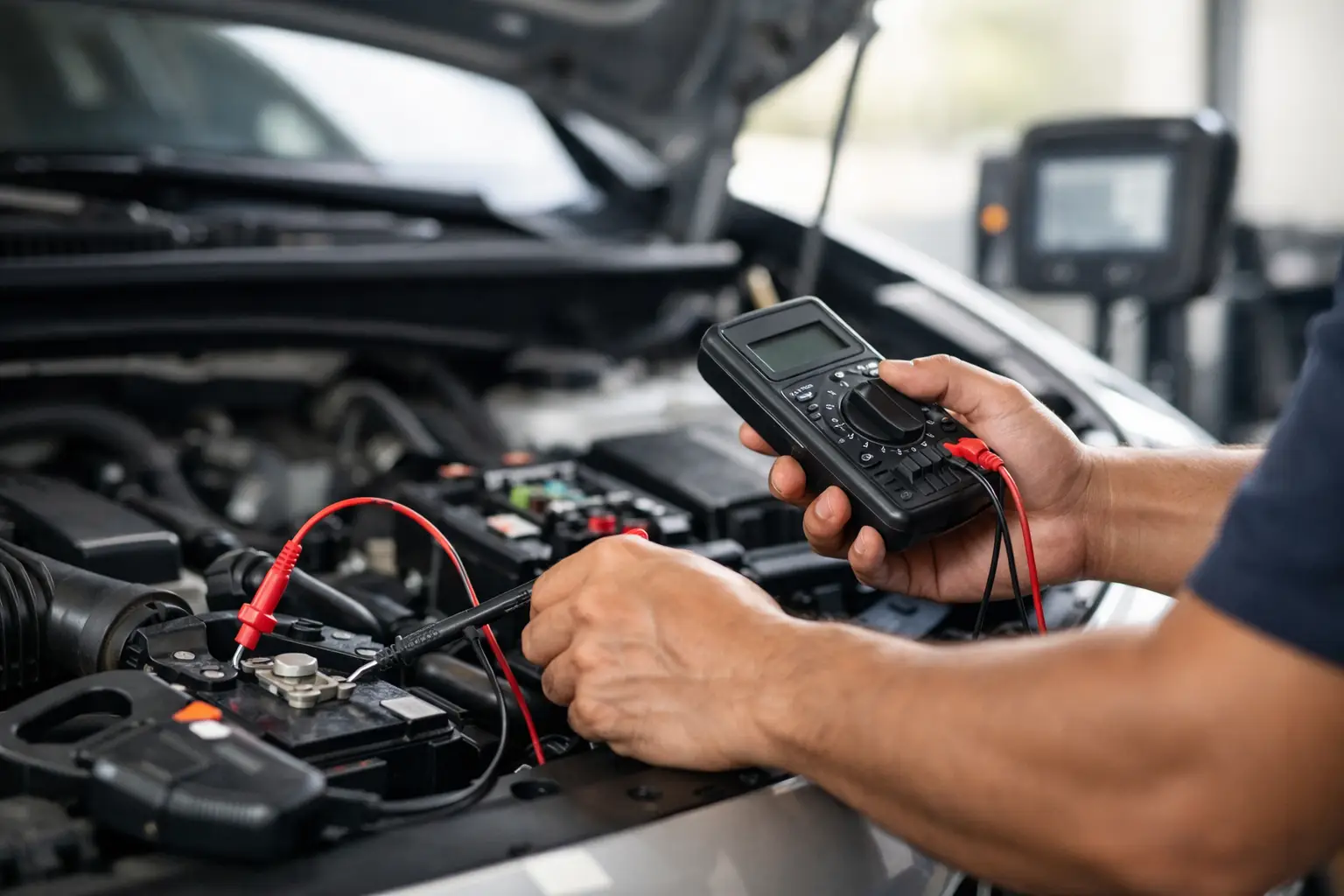
You park the car at night, everything seems fine, and by morning it barely turns over or will not start at all. That pattern is exactly why parasitic battery drain diagnosis matters. When a battery keeps going flat for no obvious reason, the problem is often not the battery itself. It is usually an electrical component staying awake when the vehicle should be fully switched off.
For most drivers, that means wasted time, missed work, and the frustration of not knowing whether to replace the battery, the alternator, or something else entirely. The tricky part is that modern vehicles always draw a small amount of power when parked. That is normal. The real job is working out when the draw is too high, where it is coming from, and whether it is constant or intermittent.
What parasitic battery drain diagnosis actually means
A parasitic drain is an electrical load that continues to pull power from the battery after the vehicle has been shut down. Some current draw is expected. Items like the clock, alarm, radio memory, and body control modules need a small amount of standby power.
The problem starts when a module does not go to sleep, a relay sticks, an aftermarket accessory is wired poorly, or a fault keeps a circuit alive when it should be off. That extra draw can flatten a healthy battery overnight or over a day or two, depending on the size of the drain and the condition of the battery.
This is why guessing rarely saves money. Replacing the battery may get you going again for a short time, but if the drain is still there, the same issue comes back.
Signs you may need parasitic battery drain diagnosis
The most obvious sign is a battery that keeps going flat even after charging or replacement. But there are a few other clues that point to a hidden draw rather than a worn-out battery alone.
If the vehicle starts fine after a drive but struggles after sitting, that matters. If interior lights flicker oddly, accessories behave inconsistently, or you notice a faint buzzing from behind the dash after shutdown, that can also point to a circuit staying active. In some vehicles, the drain may be linked to door locks, infotainment systems, trailer wiring, dash cams, reverse cameras, or aftermarket audio gear.
Trade vehicles and family cars often show this problem after accessory upgrades. A dash cam hardwired the wrong way, a UHF setup with a poor connection, or a dual battery-related fault can all create battery drain. That does not mean accessories are a bad idea. It just means they need to be installed and tested properly.
Why this fault can be hard to find
Parasitic battery drain diagnosis is not just a matter of putting a tester on the battery and seeing if power is present. The hard part is timing. Many control modules stay awake for a while after the ignition is turned off. Open a door, unlock the car, or disturb the system, and some modules wake up again.
That means testing too early can give a false reading. Testing the wrong way can also create new faults or reset systems, which wastes time. On newer vehicles, it is common to wait for the car to enter sleep mode before measuring the actual standby current.
Intermittent faults are another headache. A relay may stick only occasionally. A module may fail to sleep once every few shutdown cycles. A wiring issue may only appear after rain, heat, vibration, or when a certain accessory is connected. That is why proper diagnosis takes method, not guesswork.
How a proper parasitic battery drain diagnosis is done
A reliable test usually starts with confirming the battery and charging system are in decent condition first. There is no point chasing a drain if the battery is already failing internally or the alternator is undercharging.
Once those basics are checked, the current draw is measured with the vehicle off and allowed time to settle. If the reading is above what is acceptable for that vehicle, the next step is isolating the circuit. That may involve checking fuses one by one, using a clamp meter, reviewing wiring diagrams, and testing suspect modules or accessories.
The process sounds simple on paper, but every vehicle is different. Some need a bonnet latch bypassed during testing. Some have delayed shutdown systems. Some aftermarket installations complicate things because the wiring colours, fuse taps, and earth points do not match factory diagrams.
This is where experience counts. A good auto electrician is not only measuring current draw. They are also reading the pattern, understanding what should be sleeping, and spotting what looks out of place.
Common causes of battery drain
In day-to-day vehicle work, a few faults turn up more than others. Interior, glovebox, and boot lights that stay on are still common. So are faulty relays, Bluetooth or infotainment modules, alarm systems, trailer plug wiring issues, and aftermarket accessories that have been wired to constant power instead of ignition-switched power.
Dash cams are a frequent example. Some are designed to operate in parking mode, which can be useful. But if they are set up without proper low-voltage protection, they can pull the battery down more than expected. The same goes for audio amplifiers, GPS trackers, mobile chargers left plugged in, and older battery isolator setups.
Then there are vehicle-specific faults. Some makes and models are known for modules that do not sleep correctly, especially after low voltage events or software issues. In those cases, the fix might involve a repair, rewiring, or replacing a faulty component. It depends on what the testing shows.
Why replacing the battery is not always the answer
A lot of people replace the battery first because it seems like the quickest fix. Sometimes that works, especially if the battery was already at the end of its life. But if there is an ongoing parasitic draw, the new battery can end up in the same state very quickly.
That creates a false sense that you bought a bad battery, when the real problem is elsewhere. It can also shorten the life of the replacement battery. Deep discharge is hard on any battery, and repeated flattening can damage it permanently.
So if your battery has gone flat more than once, especially in a short period, it is worth having the electrical system checked properly before spending more money on parts you may not need.
When mobile testing makes more sense
Battery drain faults often show up where the vehicle is parked overnight – at home, at work, or on site. That is one reason mobile testing can be practical. If the car is hard to start, completely flat, or unreliable, getting it to a workshop is not always convenient.
On-site diagnosis also makes sense because the fault can sometimes be reproduced in the same conditions where it happens. For drivers searching Auto Electrician near me because the car will not start in the driveway again, having someone come out and test it properly can save a lot of disruption.
For local vehicle owners dealing with repeat battery problems, especially around the western suburbs, working with an Auto electrician Blacktown customers can call out to can be the difference between another temporary fix and finding the actual cause.
What you can do before booking a diagnosis
A few observations can help speed up the job. Notice how long the vehicle can sit before going flat. Check whether the problem started after a new accessory was fitted. Pay attention to any unusual lights, warning messages, or sounds after shutdown.
If safe to do so, remove chargers and unplug portable accessories. Make sure doors, boot, and glovebox are fully shut. But beyond that, it is best not to start pulling fuses randomly or disconnecting the battery repeatedly, especially on newer vehicles. That can make the fault harder to track and may create additional issues with system memory or coding.
The goal is not just to get the car started today. It is to stop the drain from returning tomorrow.
The value of fixing the cause, not the symptom
A proper parasitic battery drain diagnosis gives you clarity. It tells you whether the problem is a hidden accessory load, a control module fault, a wiring issue, or simply a battery that has already been damaged by repeated discharge.
That matters because the repair can vary a lot. One job may be as simple as correcting an accessory feed. Another may involve relay testing, module replacement, or wiring repairs. Without diagnosis, those are just guesses.
When the fault is found and repaired properly, you get your reliability back. The car starts when it should, the battery lasts as it should, and you stop wasting time wondering if it will let you down again.
If your vehicle keeps flattening the battery and you are tired of jump-starts, the smartest next step is to test the draw properly and pinpoint the source. A battery should support your day, not interrupt it.