
A dark fire trail outside the city is not the place to discover your factory headlights do not reach far enough. Whether you are heading away for a weekend, towing a camper, working before sunrise or simply travelling regional roads, the best 4WD lighting upgrades improve what you can see and how confidently you can respond.
The right setup is not always the biggest light bar or the brightest set of driving lights. Beam pattern, mounting position, wiring quality and legal requirements all matter. A well-planned installation gives you useful light where you need it without creating glare for other road users or putting unnecessary strain on your vehicle’s electrical system.
Start with the driving you actually do
Before choosing lights, think about when and where the 4WD is used. Long runs on open country roads call for distance, while tight tracks and slow off-road driving need light spread across the sides of the vehicle. A tradie’s ute may benefit most from practical work lights around the tray. A family touring vehicle may need a mix of forward lighting and low-glare camp lighting.
Your existing headlights also set the baseline. If the lenses are cloudy, the housings are damaged or the headlight aim is incorrect, accessory lights will not fix the underlying problem. Sorting those issues first can make a noticeable difference and helps ensure your upgrades work as intended.
Driving lights for long-distance visibility
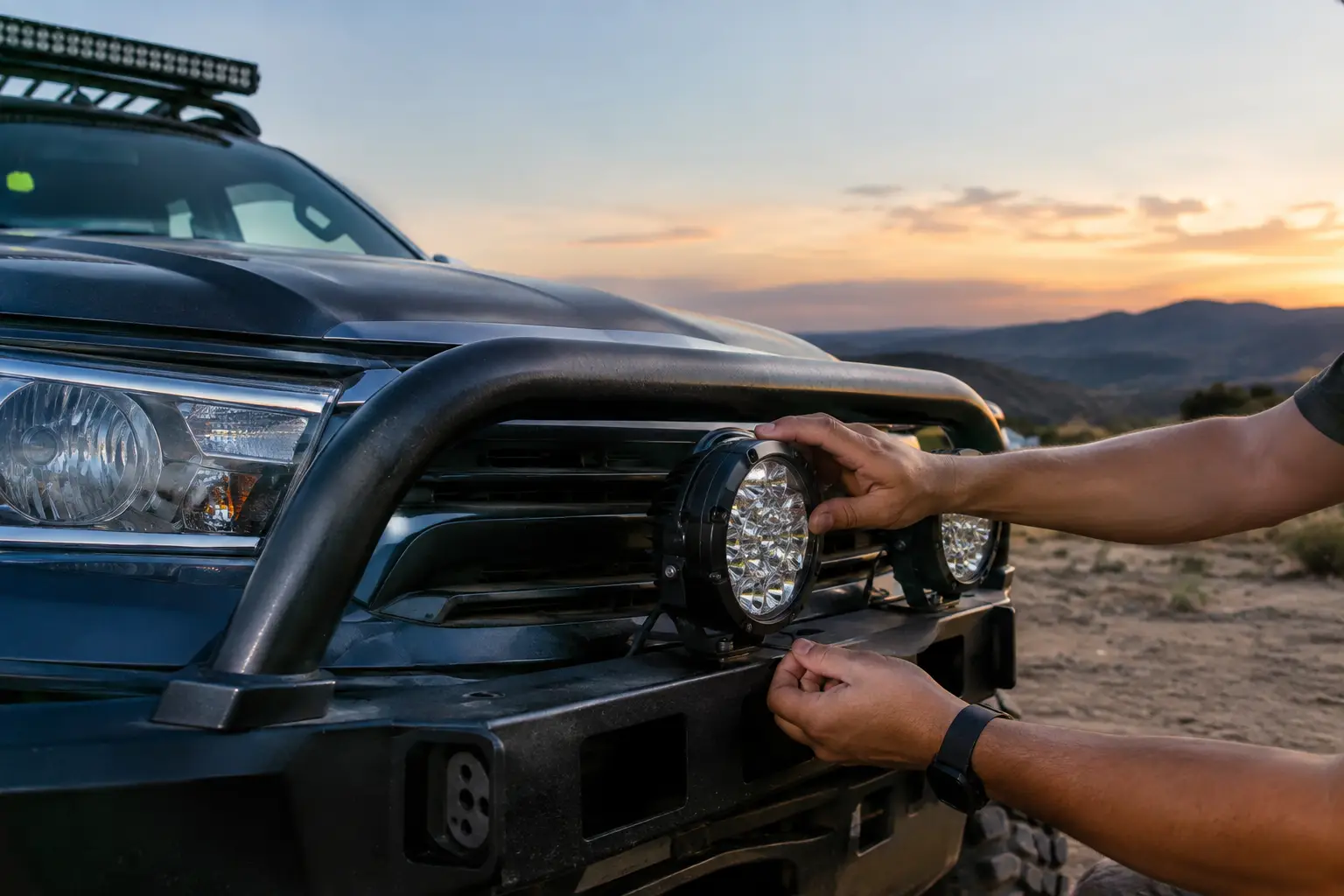
Quality LED driving lights remain one of the best 4WD lighting upgrades for drivers who spend time on unlit roads. They are designed to project a strong, controlled beam well beyond the reach of standard headlights, giving you more time to spot wildlife, bends, parked vehicles and hazards ahead.
Round driving lights are a popular choice because they offer a classic look, durable housings and good output. Modern LED models generally use less power than older halogen lights and can deliver excellent light colour and distance. However, output figures on the box are not the whole story. A light with a useful, controlled beam will often be more effective than a cheaper unit claiming huge lumen numbers.
Spot, spread or combination beam?
A spot beam concentrates light down the road. It suits open highways and long straight stretches, but can leave the edges of the track dark. A spread beam throws light wider, which is useful when tracks bend or wildlife may come from the roadside, although it does not reach as far.
For many Sydney 4WD owners, a combination setup is the practical middle ground. This may be one spot and one spread light, or a pair of lights with a combined beam pattern. The best choice depends on your usual trips, not the most extreme trip you might take once a year.
LED light bars where they make sense
LED light bars can provide a broad, even field of light and are popular on bull bars, roof racks and behind grilles. They are compact, relatively efficient and available in many sizes. A bar mounted low on the front of the vehicle can be particularly useful for seeing track edges and the immediate area in front of the 4WD.
There is a trade-off. Roof-mounted light bars can cause bonnet glare, especially in wet or dusty conditions, and their height can make the beam less helpful on undulating tracks. Mounting a bar high can also increase wind noise and needs careful attention to legal placement and wiring protection.
A light bar is often best used alongside driving lights rather than as a complete replacement for them. The driving lights handle distance; the bar fills in the foreground and peripheral view. Correct aiming makes this combination far more useful than adding more lights at random.
Work lights for campsites, trays and recovery gear
Not all 4WD lighting needs to point forward. Rear-facing work lights make a major difference when loading tools, setting up a campsite, checking a trailer connection or dealing with a recovery after dark. Side work lights can also help around a canopy, roof rack or service body.
Choose a light with a diffused beam for close work. A narrow, powerful beam can be unpleasant around camp and may shine into neighbouring sites. Warm white lights are often easier on the eyes than very cool white LEDs, particularly when you are using them for long periods.
Work lights must be switched separately from driving lights. This gives you proper control and avoids dazzling other drivers. It also means you can use the rear of the vehicle safely without having to run every auxiliary light at once.
Interior, canopy and under-bonnet lighting
Small upgrades can solve frustrating problems. LED lighting in a canopy, drawer system or cargo area makes gear easier to find at night. An under-bonnet light is useful for checking fluids, changing a fuse or inspecting a battery when daylight has gone. Footwell or door-area lighting can help passengers enter and exit safely on uneven ground.
These lights should be wired with purpose. A canopy light may need a door switch, while an under-bonnet light may need an independent switch and a protected circuit. Poorly fitted accessories can flatten a battery, damage wiring or create a fault that is difficult to trace later.
Wiring matters as much as the lights
A quality lighting upgrade is more than bolting products onto a bull bar. The wiring must be sized for the load, fused correctly, protected from heat and abrasion, and routed away from moving parts. Relays, switches and connectors also need to suit the environment they will operate in.
Off-road vehicles encounter vibration, water crossings, mud, dust and engine-bay heat. Cheap connectors and exposed joins can corrode or work loose, causing flickering lights, blown fuses or intermittent electrical faults. Water-resistant fittings and neat cable protection help prevent problems before they start.
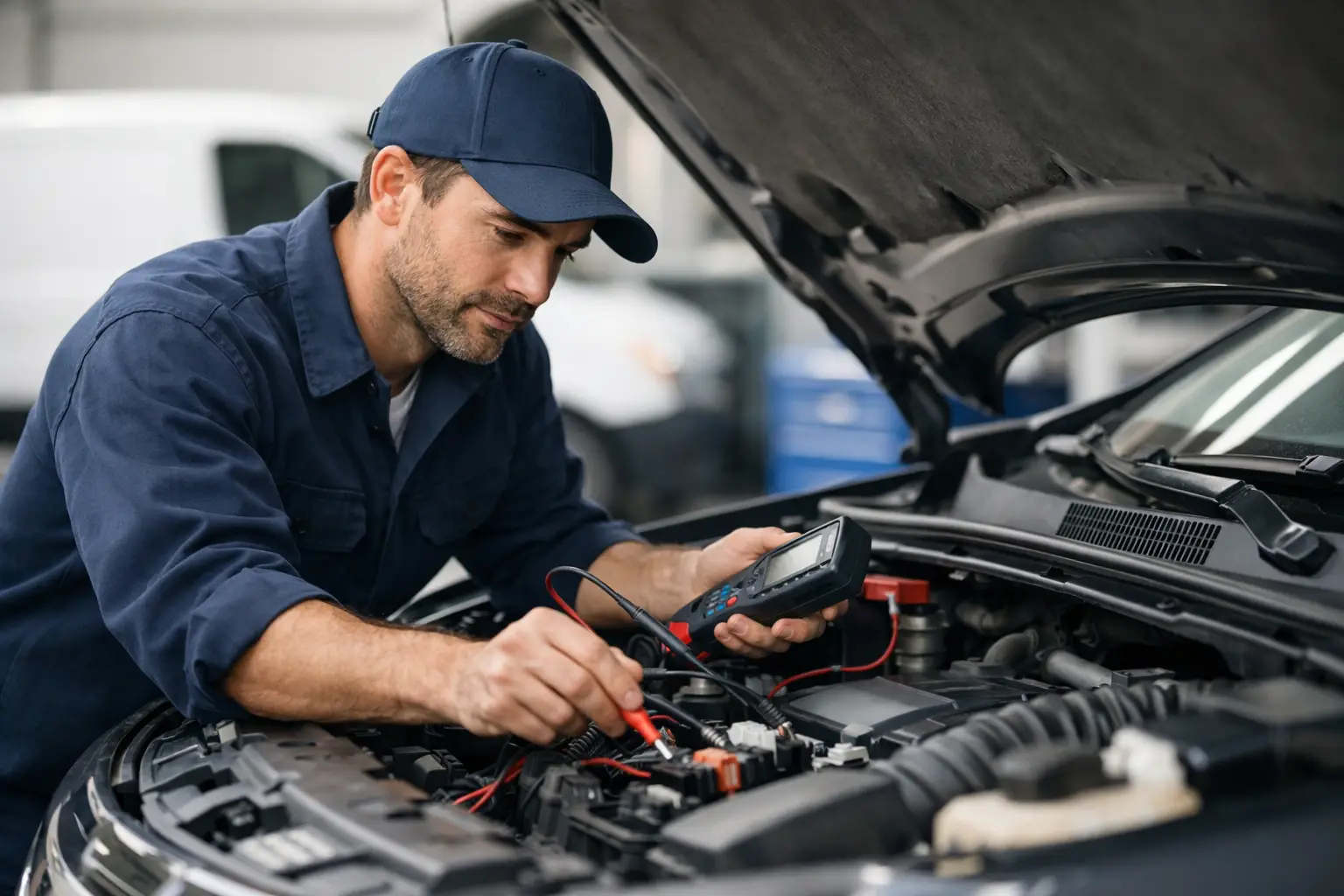
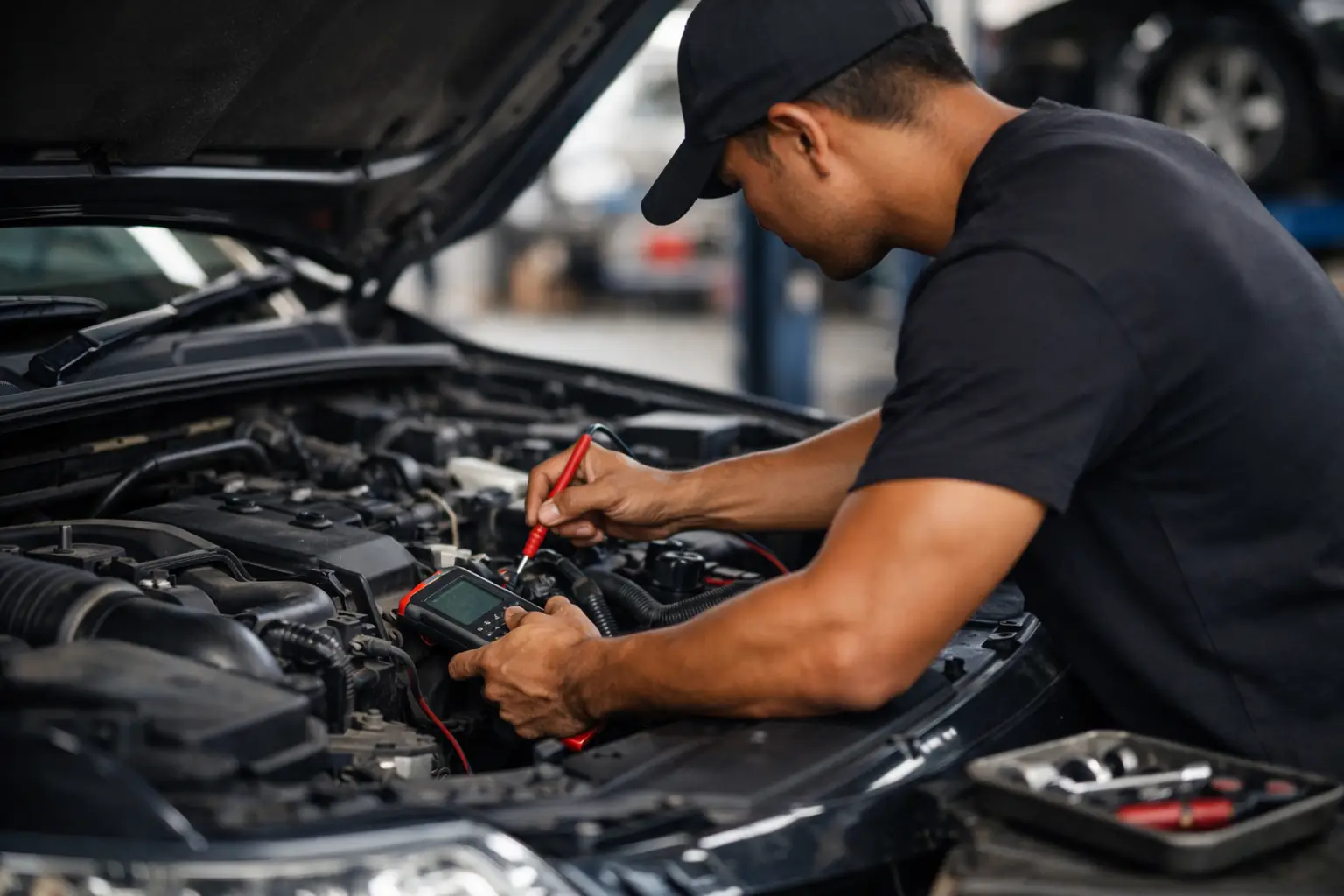
Modern 4WDs can also have sensitive electrical systems. Incorrect connections can affect high-beam circuits, battery management systems or vehicle electronics. Professional installation is especially worthwhile if your vehicle has a dual-battery system, aftermarket accessories or a newer model electrical network.
Keep it legal and considerate on the road
Auxiliary lighting must comply with Australian Design Rules and NSW road requirements. Forward-facing driving lights should generally operate only with high beam and turn off when low beam is selected. They must be fitted securely, aimed correctly and positioned in a way that does not create a hazard.
Light bars and driving lights are for use when conditions allow, not suburban streets or busy motorways. Even a high-quality setup becomes unsafe if it blinds oncoming traffic. Rear work lights also need care – use them when parked or off-road, not as an extra reverse light shining at drivers behind you.
The rules and vehicle requirements can vary, so it is sensible to check compliance before buying or fitting equipment. This is particularly relevant if you are adding several lights, changing the front bar or mounting equipment on a roof rack.
Choosing products without wasting money
Look for lights from established suppliers with clear specifications, solid mounting hardware and a genuine warranty. Consider ingress protection ratings, lens material, vibration resistance and the availability of replacement parts. A cheaper light may look acceptable in the driveway but fail after months of dust, rain and corrugations.
Avoid judging products by brightness alone. Ask how far the light projects, how wide the usable beam is, and whether the colour temperature is comfortable for extended night driving. A balanced setup with good wiring usually delivers better real-world results than the brightest product fitted poorly.
If you are searching online for an “auto electrician near me”, choose someone who can assess the entire vehicle rather than simply install what is in the box. For drivers looking for an auto electrician in Blacktown or across Sydney’s western suburbs, a mobile auto electrician can inspect the vehicle at your home or workplace and fit lighting around your schedule.
Ray’s Auto Electrical can help with practical 4WD accessory installations, from driving lights and light bars to work lights and wiring checks. The aim is straightforward: a tidy, reliable setup that works when you are on a dark road, at a work site or well away from the nearest workshop.
Before the next trip, consider the night driving that makes you hesitate most. Build your lighting around that situation, have it fitted properly, and you will get more value from every kilometre after sunset.