

A car that will not start outside the school run, a battery light appearing on the M4, or an air conditioner that suddenly blows warm air can turn an ordinary day into a major disruption. This vehicle electrical diagnostics guide explains what those signs can mean, which basic checks are worthwhile, and when it is time to call a qualified auto electrician.
Modern vehicles rely on electrical systems for far more than starting the engine. The battery, alternator, wiring, fuses, sensors, control modules and accessories all need to work together. A fault in one area can look like a problem somewhere else, which is why accurate testing matters more than swapping parts and hoping for the best.
What vehicle electrical diagnostics actually involves
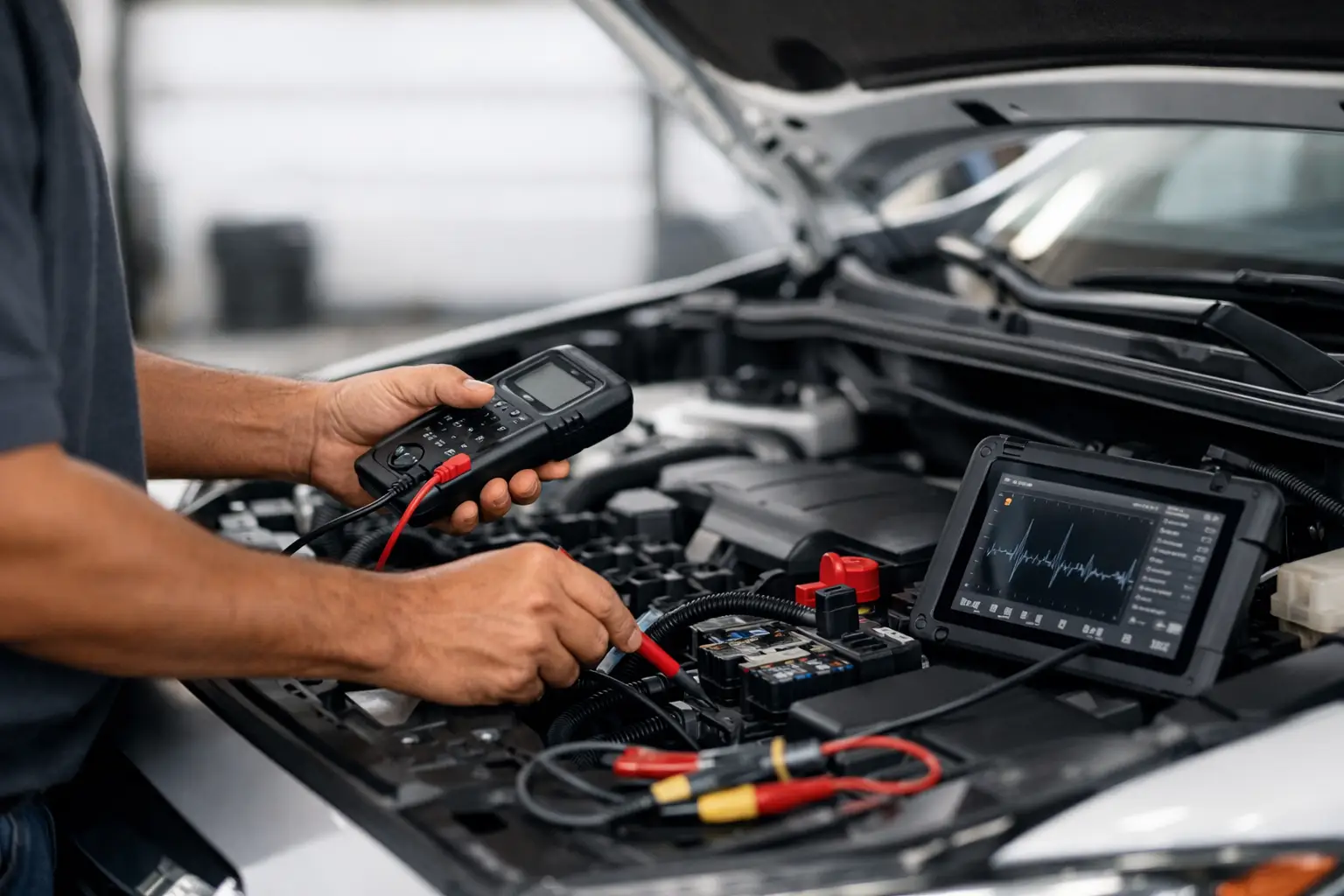
Electrical diagnostics is the process of finding the real cause of an issue before repairs begin. A qualified auto electrician uses specialised test equipment to check voltage, current draw, circuit continuity, charging performance, fault codes and component operation.
For example, a flat battery does not automatically mean the battery has failed. It may be old and unable to hold charge, but it could also be caused by a weak alternator, loose terminal, damaged cable or an electrical accessory drawing power while the vehicle is parked. Replacing the battery alone may get you moving briefly, yet the same issue can return if the underlying fault remains.
The same applies to warning lights and intermittent problems. A warning light can point to a stored fault code, but the code is a clue, not always a final diagnosis. Proper testing confirms whether a sensor, wiring connection, power supply or control unit is at fault.
Common signs your vehicle needs an electrical check
Electrical faults often start small. Paying attention early can prevent a no-start situation, an avoidable breakdown or damage to electrical components.
Slow cranking is one of the most common signs. If the engine turns over reluctantly, especially first thing in the morning, the battery may be low, the terminals may be corroded, or the starter circuit may need attention. Clicking when you turn the key or press the start button can also indicate low battery power, though it may be a starter motor or connection issue.
Dimming headlights, flickering dash lights and accessories that cut in and out can suggest a charging or wiring concern. If the battery warning light stays on while the engine is running, arrange a charging-system test promptly. Driving for too long with a failing alternator can leave the vehicle without enough power to continue.
Other signs include blown fuses that keep returning, a radio or dash cam that switches off unexpectedly, central locking faults, power window problems, unusual battery drain, or warning messages on the dash. Air conditioning issues can also have an electrical cause, particularly where the blower fan, compressor control, relay or sensors are involved.
Safe checks you can do before booking
There are a few simple observations that help an auto electrician narrow down a fault, without taking risks or pulling apart the vehicle.
First, note exactly what happens. Does the issue occur only when the engine is cold? Does it happen after rain, after fitting an accessory, or only when headlights and air conditioning are running? Intermittent faults can be challenging, so these details are valuable.
Check the battery terminals with the engine off. They should be secure and free from heavy corrosion. Do not touch exposed wiring, attempt to bypass fuses or use makeshift repairs. A fuse that repeatedly blows is protecting the circuit from a fault. Fitting a larger fuse can overheat wiring and create a fire risk.
If the vehicle has a flat battery, a jump-start may be enough to move it to a safer location, but it does not diagnose the cause. Avoid repeatedly jump-starting a vehicle with a suspected charging issue. If the battery is swollen, leaking, smells strongly of sulphur, or the cables are hot, do not attempt a jump-start. Arrange professional help instead.
Why battery and alternator testing should be done together
The battery starts the vehicle. The alternator recharges the battery and supplies electrical power while the engine runs. Because they work as a pair, testing only one can lead to an incomplete answer.
A battery can show a normal voltage when parked but fail under load during starting. Likewise, an alternator may appear to charge at idle but struggle once headlights, air conditioning, rear demister and other loads are switched on. A proper test checks battery condition, starting voltage drop and alternator output under realistic conditions.
Battery age is also relevant. Many batteries last several years, but heat, short trips, regular stop-start driving and accessories can shorten their life. If a replacement is needed, the correct battery type and capacity matter, especially in newer vehicles with stop-start systems or multiple electronic modules.
Accessory faults need careful diagnosis
Dash cams, UHF radios, sound systems, driving lights and trailer wiring are useful additions, but poor installation can create frustrating faults. Loose earth connections, undersized wiring, incorrect fuse protection or connections made into the wrong circuit can flatten a battery or affect other vehicle functions.
If an issue started after an accessory installation, mention this when booking. It does not always mean the accessory is the cause, but it gives the diagnostic process a sensible starting point. A professional installation uses suitable wiring, circuit protection and secure routing so the accessory works without compromising the vehicle’s electrical system.
This is particularly important for trade vehicles and family cars that depend on reliable charging, communications and safety equipment every day. The cheapest installation is not always the most cost-effective if it leads to repeated repairs later.
When a mobile auto electrician is the practical option
A vehicle that will not start in your driveway, workplace car park or shopping centre does not always need a tow. Mobile diagnostics can often identify the fault on site, saving time and removing the hassle of arranging a workshop visit.
For Sydney drivers, this is useful when a battery has failed, the alternator warning light has appeared, an accessory is causing problems, or an electrical fault is stopping the vehicle from operating normally. Some repairs can be completed at your location, while more complex faults may require further parts, workshop equipment or a planned follow-up. The right approach depends on the vehicle, the fault and safe access to the job.
When searching online, many people type “Auto Electrician near me” because they need help quickly. Choose a provider who asks clear questions, explains the likely process and tests before recommending parts. If you are in the local area and search “Auto Electrician Blacktown”, look for a mobile specialist with experience across starting, charging, wiring, air conditioning and accessory systems, rather than someone offering a guess over the phone.
Information to have ready when you call
A fast, accurate booking starts with the basics: your vehicle make, model and year; where it is located; whether it starts; and the exact symptoms you have noticed. Mention warning lights, recent repairs, new accessories and whether the problem is constant or intermittent.
Photos of dash warnings or battery terminals can help in some cases, but do not delay calling if the vehicle is stranded or you smell burning insulation. Turn the engine off, keep clear of any smoke or heat, and seek urgent assistance.
Ray’s Auto Electrical provides mobile vehicle electrical diagnostics across Sydney, including the Western Suburbs, with practical testing and straightforward advice. Whether the problem is a flat battery, charging fault, air conditioning electrical issue or unreliable accessory, the aim is simple: find the cause, explain the repair clearly and get your vehicle dependable again.
A warning light or slow start is rarely convenient, but acting on it early usually gives you more options and less disruption. A proper diagnosis now can save you from being stuck later.