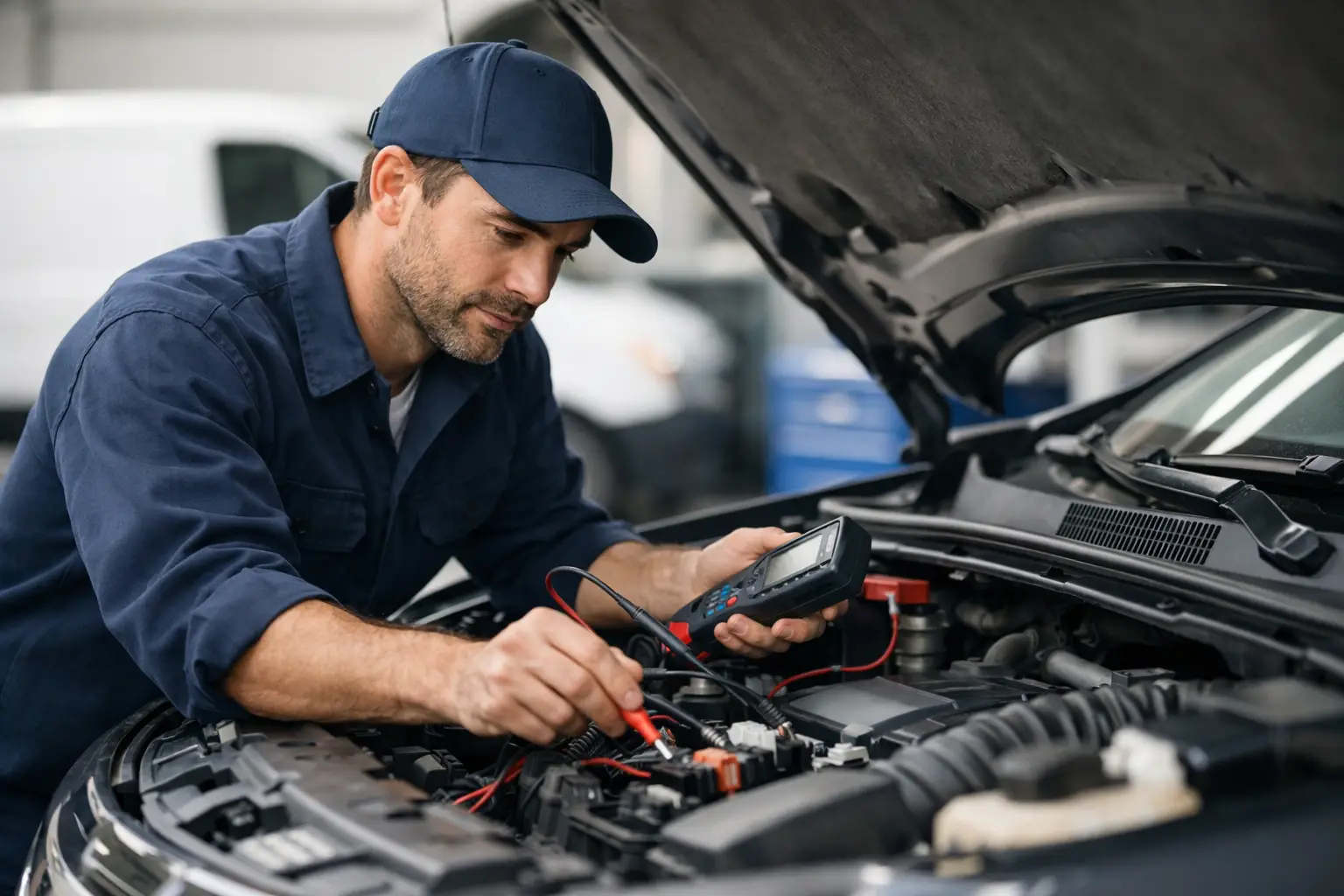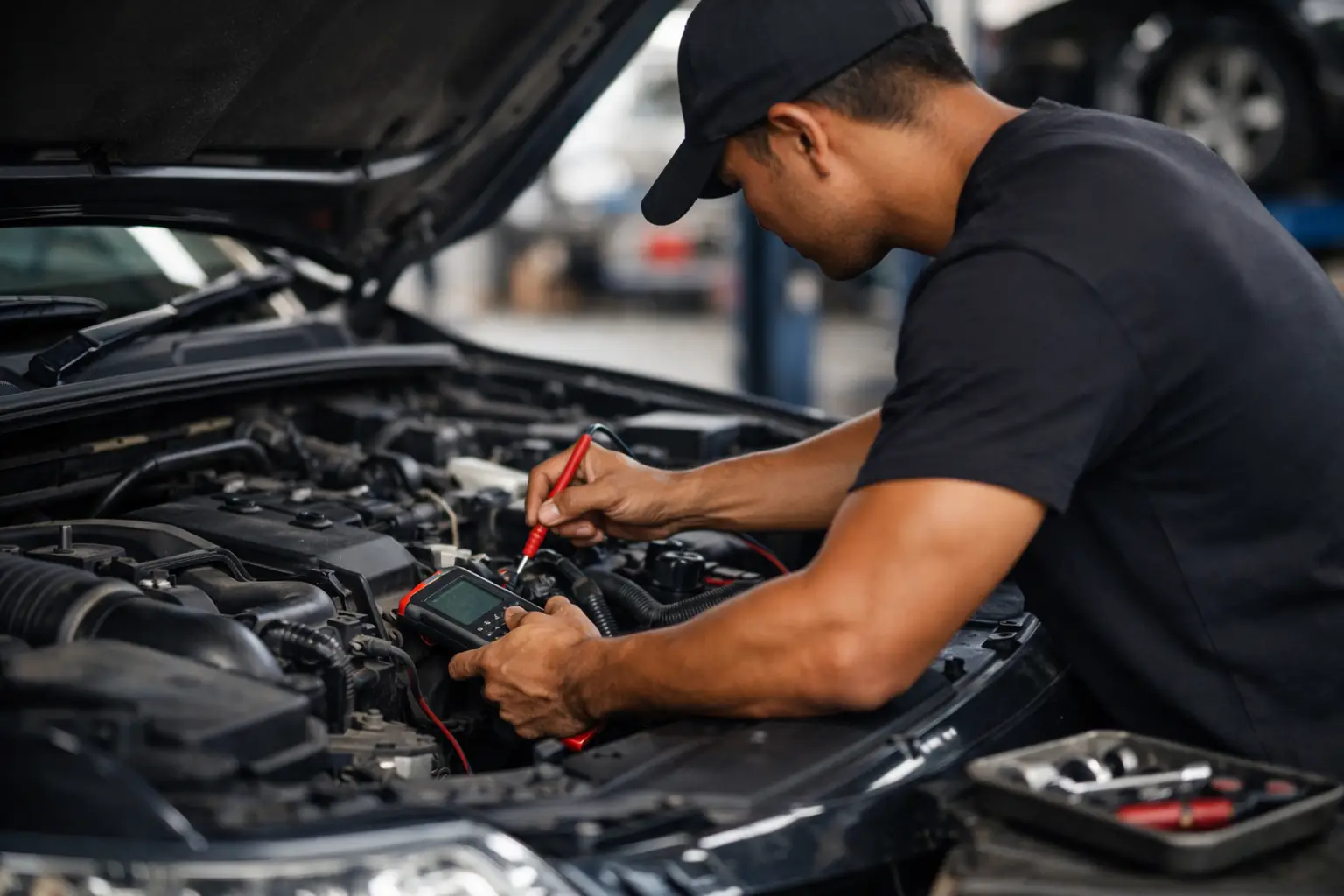

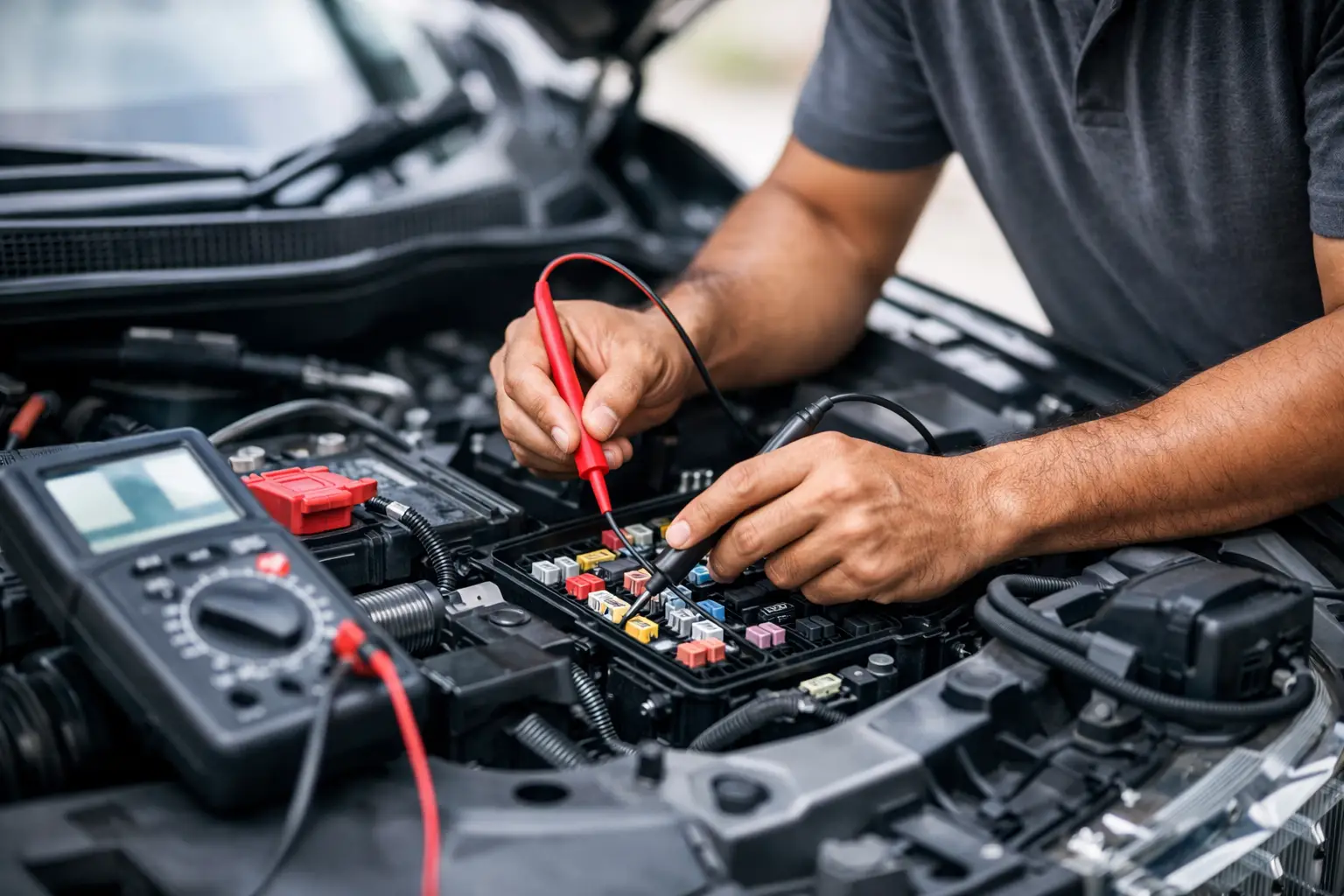
That moment when you turn the key or press the start button and nothing happens can throw your whole day off. A proper car won’t start electrical diagnosis is about more than fitting a new battery and hoping for the best. The symptoms your vehicle gives you can point to the battery, charging system, starter motor, wiring, immobiliser or a fault in the vehicle’s control system.
The good news is that many no-start faults can be identified quickly with the right testing equipment. The key is to avoid guessing, especially if you rely on your car for work, school runs or getting around Sydney.
Start with what the car does when you try to start it
Before anyone tests the vehicle, the starting behaviour matters. Does the engine crank slowly? Do you hear one click? Does it crank strongly but refuse to fire? Or is the dash completely dead?
A vehicle with no dash lights, no interior lights and no response when you turn the key often has a flat battery, loose battery terminal or poor earth connection. If the dash lights come on but dim heavily or flicker as you try to start, a weak battery or cable connection is still likely.
A single solid click from the engine bay can indicate that the starter solenoid is receiving power but the starter motor is not turning. Rapid clicking is more commonly linked to low battery voltage. If the engine turns over at normal speed but will not start, the issue may be outside the main starting circuit, such as an immobiliser fault, fuel system issue or engine management problem.
These differences save time. They help an auto electrician test the correct circuit first instead of replacing parts that may still be perfectly serviceable.
Car won’t start electrical diagnosis: the main checks
A qualified diagnosis follows the power from the battery to the starter and then confirms the charging and control systems are doing their jobs. A battery reading alone does not tell the full story.
Battery condition and terminal connections
A battery can show enough voltage with no load, then drop sharply the moment the starter demands power. This is why a proper battery load test is more useful than simply looking at the battery indicator or checking voltage at rest.
Battery terminals should be tight, clean and free from white or blue-green corrosion. A corroded terminal can restrict current flow even when the battery itself is healthy. The battery earth lead and engine earth straps also need checking. A poor earth can cause intermittent starting, strange dash warnings and voltage drops that mimic other faults.
Battery age is worth considering too. In Sydney heat, batteries can deteriorate faster than expected. A battery may seem fine after a drive but fail first thing in the morning, particularly if it is more than a few years old.
Alternator output and charging faults
If your vehicle starts with a jump-start but goes flat again soon after, the alternator needs attention. The alternator recharges the battery while the engine is running and supplies electrical power to the vehicle.
Warning signs of a charging problem include a battery warning light, dim headlights, a burning smell, electrical accessories cutting out or repeated flat batteries. However, a flat battery does not automatically mean the alternator has failed. A loose belt, damaged cable, blown fuse, poor connection or excessive electrical drain can produce similar symptoms.
Testing alternator output under suitable conditions confirms whether the charging system is working correctly. Replacing an alternator without checking the wiring and battery condition can lead to an unnecessary expense and leave the original problem unresolved.
Starter motor and starter circuit
The starter motor uses high current to turn the engine. When it fails, you may hear a click, experience an intermittent no-start condition or find the engine will not crank at all despite a charged battery.
The starter circuit includes more than the motor itself. It may involve the ignition switch or start button, starter relay, fuses, neutral safety switch or clutch switch, wiring and engine earth. Automatic vehicles must generally recognise Park or Neutral before they will crank. Manual vehicles may require the clutch pedal to be fully depressed.
If an automatic car will not start in Park, carefully trying Neutral can sometimes reveal a selector-related issue. This is only a clue, not a repair. Do not keep attempting to start the vehicle repeatedly, as this can flatten the battery and make the diagnosis less clear.
Fuses, relays and damaged wiring
Modern vehicles rely on multiple fuses and relays to control starting, ignition and engine management systems. A blown fuse can be the result of a simple fault, but it can also indicate a short circuit. Replacing the fuse without finding the cause may result in it blowing again.
Wiring damage can occur through age, rodent activity, accident repairs, water entry or poor accessory installation. A damaged wire may cause an intermittent fault that appears only when the vehicle is hot, wet or moved in a certain way. This is where systematic electrical testing is far more reliable than visual checks alone.
Immobiliser, key and electronic control faults
If the engine cranks but does not start, or an immobiliser/security light flashes unexpectedly, the key may not be communicating correctly with the vehicle. A flat key fob battery, damaged key, transponder fault or vehicle security-system issue can prevent starting.
Push-button vehicles can also have problems recognising the key if its battery is weak or the key is not detected in the cabin. Check the owner’s manual for the vehicle-specific emergency key recognition method. If a spare key works, that is useful information, but it does not always rule out an issue with the vehicle’s receiver or immobiliser system.
Safe checks you can make before booking help
There are a few sensible checks that do not require dismantling anything. Make sure the vehicle is in Park or Neutral with the handbrake on, and check that the dash lights, headlights and interior lights respond normally. Look for loose battery terminals, obvious corrosion or signs that a battery case is swollen or leaking.
If your vehicle has a manual transmission, ensure the clutch is pressed firmly. For an automatic, try starting in Neutral if it is safe to do so. Check whether the battery warning light, security light or check-engine light is behaving differently from usual.
Avoid using makeshift tools to bridge starter terminals or repeatedly jump-starting a vehicle with damaged leads. Never jump-start a battery that is swollen, leaking, frozen or smells strongly of sulphur. Modern vehicles have sensitive electronics, and incorrect jump-starting can cause additional damage.
If you do use a jump pack or jumper leads and the car starts, do not assume the problem is solved. The battery, alternator and connections still need testing. A one-off flat battery after an interior light was left on is different from a battery that goes flat every few days.
Why repeated flat batteries need proper testing
A battery that keeps going flat may be worn out, but it may also be losing charge while the vehicle is parked. This is known as a parasitic draw. Some electrical systems remain active briefly after locking the car, which is normal. The concern is an electrical component that stays on when it should switch off.
Common causes include a faulty light, boot switch, glovebox light, relay, aftermarket stereo, dash cam wiring or accessory installation. Finding an unwanted draw requires measured testing after the vehicle’s systems have gone to sleep. Pulling fuses at random can be slow and may disrupt vehicle settings.
This is particularly relevant for vehicles with added accessories. A professionally installed dash cam, UHF, sound system or dual-battery setup should be protected and wired so it does not leave you stranded after the car has been parked overnight.
When mobile electrical help makes sense
A no-start fault is inconvenient because the car cannot easily be driven to a workshop. Mobile diagnostics allow the battery, alternator, starter circuit and related electrical systems to be checked where the vehicle is parked, whether that is at home, work or on-site.
For drivers searching Auto Electrician near me, the best outcome is not simply getting the engine started once. It is identifying why it failed to start and carrying out the repair that prevents the same issue from returning. Depending on the fault, that may mean replacing a battery, repairing a cable, fitting an alternator, resolving a starter problem or tracing an electrical drain.
If you are looking for an Auto Electrician Blacktown or need support elsewhere across Sydney, Ray’s Auto Electrical provides practical mobile testing and repairs without adding the stress of organising a tow. Clear testing, upfront advice and quality workmanship make a real difference when your vehicle is already disrupting your day.
A car that will not start is rarely fixed by luck. Pay attention to the symptoms, avoid unsafe shortcuts and arrange a proper electrical test before a small issue leaves you stranded at the worst possible time.