

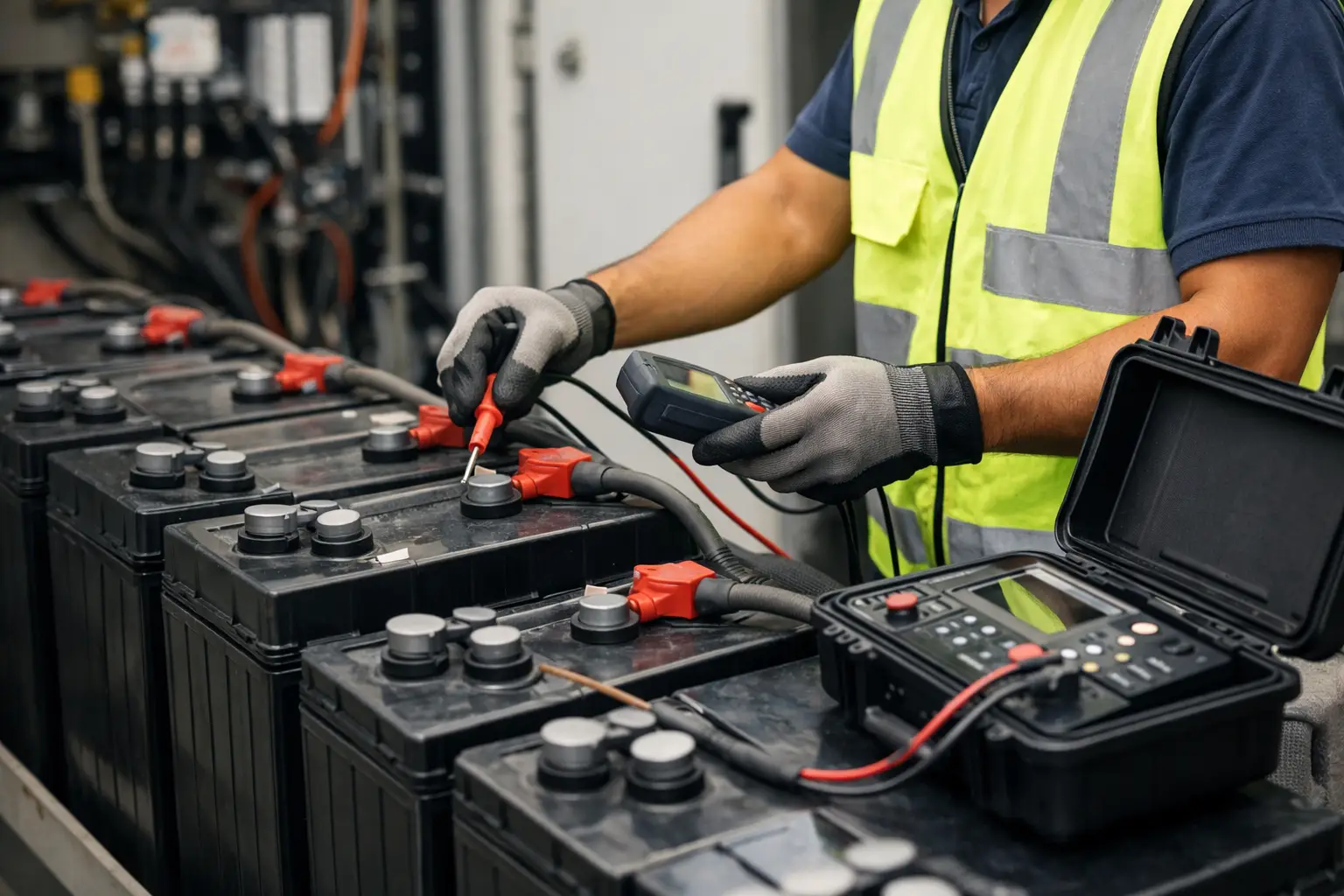
A car that will not start at home, at work, or in a shopping centre car park usually gets blamed on the battery straight away. Sometimes that is true. Sometimes it is not. That is why an on site battery testing service matters – it tells you whether the battery is actually the problem, or whether the issue sits somewhere else in the starting or charging system.
For most drivers, the real benefit is not just convenience. It is avoiding the wrong fix. Replacing a battery that still tests fine will not solve a faulty alternator, a parasitic drain, poor terminal connection, or a starter motor problem. Proper testing at your location saves time, money, and the hassle of guessing.
What an on site battery testing service actually covers
A proper battery test is more than checking whether the headlights come on. A qualified mobile auto electrician should assess the battery condition, available cranking power, charge level, terminal condition, and how the battery behaves under load. They should also look at whether the charging system is doing its job once the vehicle is running.
That matters because batteries often fail gradually. You might notice slower cranking in the morning, electronics dropping out, warning lights on the dash, or needing a jump start after the car has sat for a day or two. In other cases, the battery is healthy enough, but the alternator is undercharging, or there is an electrical draw draining power while the vehicle is parked.
An on-site service makes sense when the vehicle cannot be moved safely or conveniently. It also suits busy people who do not want to spend half a day arranging a tow or waiting around at a workshop for a problem that can be diagnosed in the driveway.
Why testing on site is often better than a quick battery swap
A lot of people only want the fastest answer: fit a new battery and move on. Sometimes that is exactly the right call, especially when an older battery has clearly reached the end of its life. But there are trade-offs.
If no one tests the battery properly first, you can end up paying for a replacement when the real fault is elsewhere. That creates a frustrating cycle – the car starts for a short time, then the same issue comes back. From the customer’s side, it feels like the battery was no good. From the technician’s side, it usually means the battery was only part of the story, or not the story at all.
Testing on site also gives a more realistic picture of how the vehicle behaves in normal conditions. A battery that struggles after sitting overnight in your driveway tells a different story from one tested later in a workshop after being charged up first. Seeing the vehicle where it failed can help identify patterns, like an interior light staying on, accessories wired incorrectly, or infrequent use flattening the battery over time.
Common signs you may need battery testing
Most battery faults do not arrive without warning. The signs are often there, just easy to brush off until the car refuses to start.
Slow cranking is one of the biggest clues. If the engine sounds sluggish when turning over, especially first thing in the morning, the battery may be weak. Clicking sounds with no start, dim dash lights, or electrical systems that reset themselves can also point to low voltage.
Then there are the faults that look like battery trouble but need proper diagnosis. If a battery goes flat repeatedly, if the vehicle only starts with a jump pack, or if a new battery has already started struggling, there is usually a reason behind it. That is where testing becomes more valuable than replacement alone.
What gets checked during mobile battery diagnostics
A good mobile technician will usually start with the basics and work outward. Battery age and physical condition matter. Corrosion on terminals, damaged clamps, swelling, leaks, or loose connections can all create starting issues.
From there, the battery itself should be tested with proper equipment rather than guesswork. The result helps show whether the battery can hold charge and deliver enough cold cranking amps for reliable starting. Voltage readings on their own do not always tell the full story, so load or conductance testing is usually part of the process.
Once the vehicle starts, the charging system should also be checked. An alternator that is undercharging or overcharging can kill a battery early. In some cases, the battery is healthy but never gets fully replenished because the charging voltage is too low. In others, excessive charging shortens battery life and damages electrical components.
If the battery keeps going flat while parked, the next step may be checking for current draw. That takes more time, but it is often the only way to pinpoint a drain caused by lighting circuits, aftermarket accessories, control modules, or wiring faults.
When an on site battery testing service saves the most hassle
This kind of service is especially useful for people who rely on their car every day. Commuters, families doing school runs, tradies with tools in the back, and older drivers who do not want the stress of a non-starting vehicle all benefit from having someone come to them.
It is also useful when the vehicle is stuck somewhere awkward. Basement car parks, office car parks, home garages, roadside breakdowns, and shopping centres are all places where mobile diagnostics can save you from organising a tow just to confirm what is wrong.
For Sydney drivers, especially across busy western suburbs, convenience matters. Traffic, work schedules, and family commitments make workshop visits harder than they should be. A mobile service removes a big chunk of that disruption. If you have ever typed Auto electrician near me into a search engine while standing next to a dead car, you already know the value of quick, local help.
On site battery testing service and the bigger electrical picture
Battery trouble is often connected to other systems. That is why it helps to have a technician who understands the full vehicle electrical setup, not just the battery under the bonnet.
For example, modern vehicles place more demand on batteries than many drivers realise. Dash cams, mobile chargers, audio systems, alarm systems, GPS trackers, and work accessories all add load. If they are installed poorly or drawing power at the wrong time, battery performance suffers.
Short trips can also create battery complaints. A vehicle used only for quick local runs may not get enough driving time to recharge properly, even if nothing is technically faulty. On the other hand, a car used every day but still going flat likely points to a battery nearing failure, charging issue, or hidden drain.
This is where practical diagnosis matters more than blanket advice. Some batteries simply need replacement. Some need charging and retesting. Some are fine and are exposing another fault. It depends on the condition of the vehicle, its usage, and what the test results actually show.
Choosing the right mobile auto electrician
Not every call-out service gives the same level of diagnosis. If you are booking an on site battery testing service, it helps to choose someone who does more than arrive with a jump pack and a sales pitch for a new battery.
You want clear communication, proper test equipment, and someone who can explain the result in plain English. If the battery is dead, they should say so. If the alternator is weak, they should say that instead. If there is evidence of a drain, that should be part of the conversation too.
Local experience helps as well. A mobile specialist working across Sydney and the western suburbs will usually understand the common issues affecting daily drivers, work utes, and family cars in the area. If you are searching for Auto electrician Blacktown, for example, you are probably not after a lecture on battery chemistry. You want someone who can turn up, test the system properly, and tell you the next step without mucking you around.
Ray’s Auto Electrical focuses on exactly that kind of practical support – mobile diagnostics and repairs that make life easier when your vehicle lets you down.
What to do before the technician arrives
If it is safe to do so, make a note of what happened before the fault. Did the car crank slowly, click once, or stay completely dead? Were any lights left on? Has the battery been jumped recently? Is the problem worse in the morning or after the car sits for a few days?
Those details can speed up diagnosis. They help separate a one-off flat battery from a recurring issue. If you have had recent accessory work done, mention that too. It does not always mean the accessory caused the problem, but it is worth checking.
Try not to keep jump-starting the vehicle repeatedly without testing. It can mask the fault and, in some cases, put extra strain on already weak components.
A dead battery is frustrating, but the fix should still be the right one. Good mobile testing gives you that clarity. It gets you closer to a reliable repair, not just a temporary start.