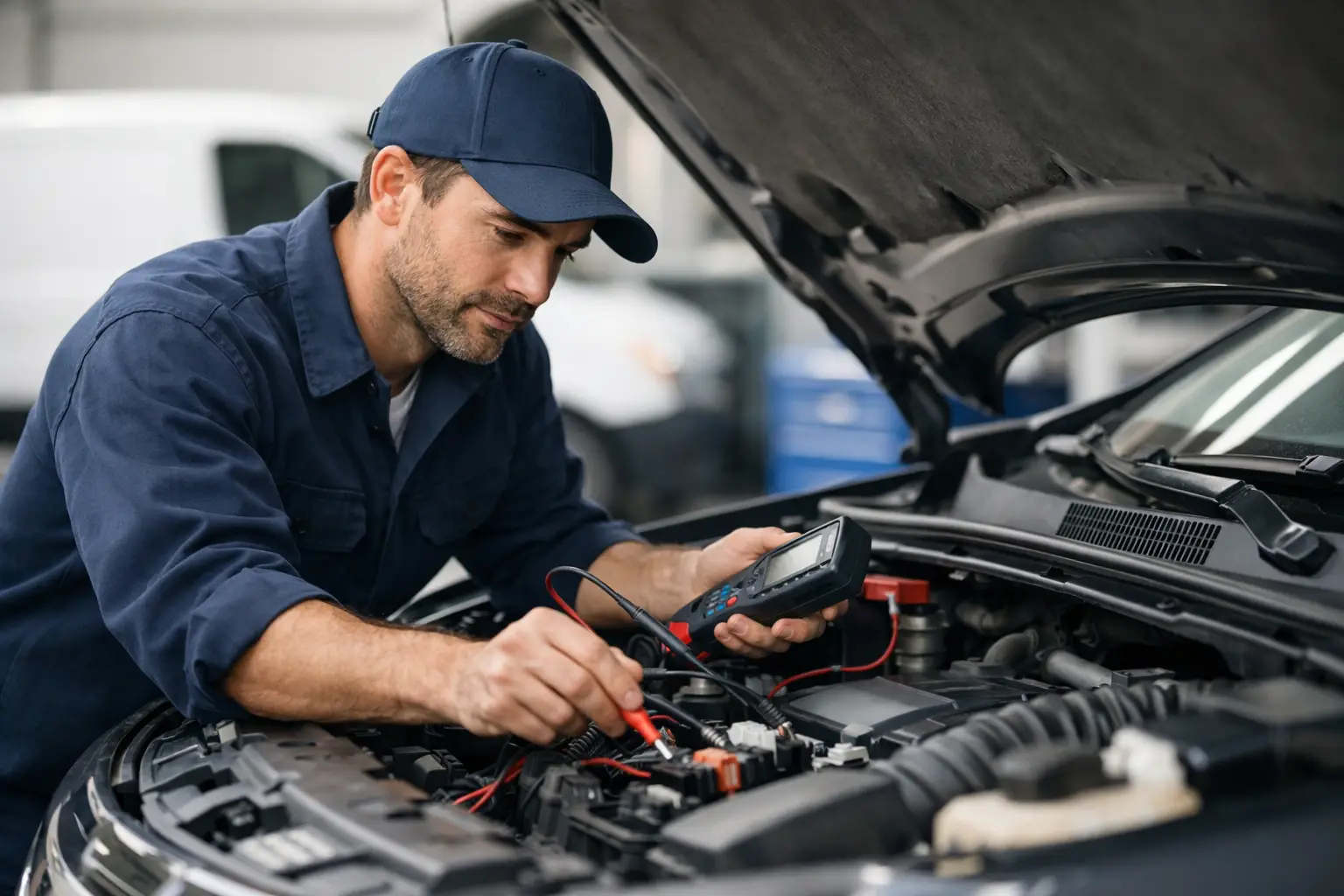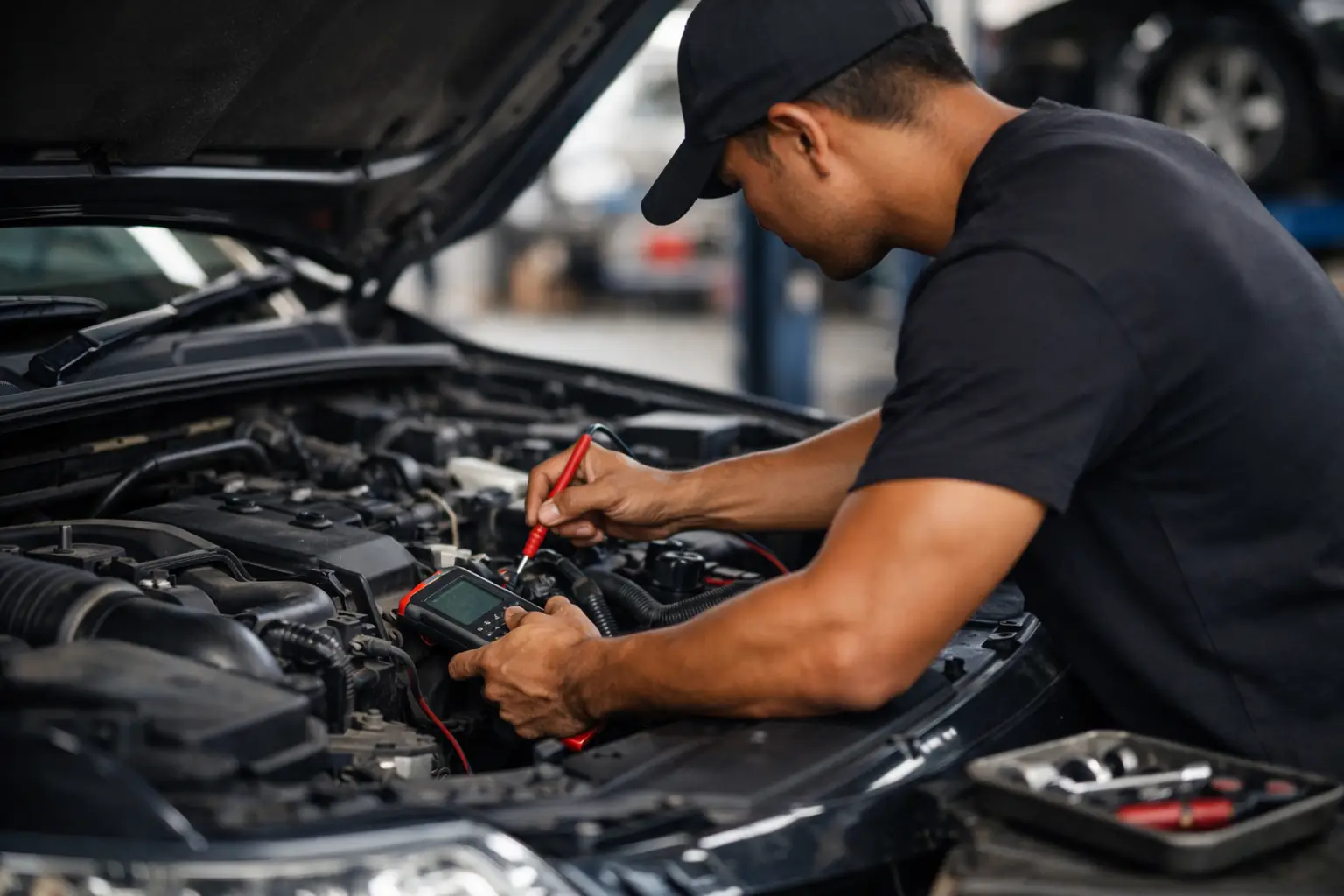

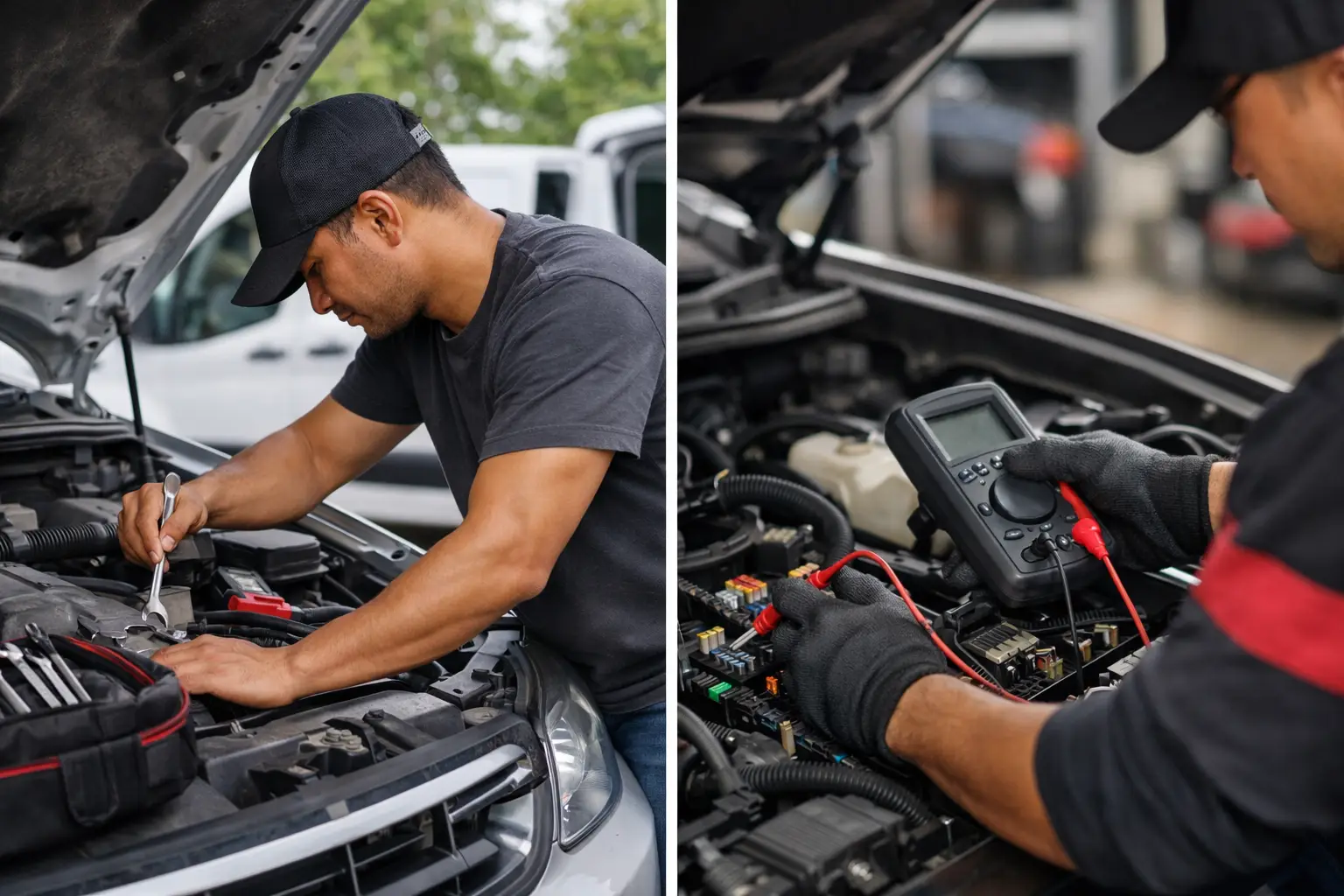
You turn the key, nothing happens, and suddenly the question is not just what is wrong with the car – it is who you should call. When people search mobile mechanic vs auto electrician, they are usually dealing with a real problem: a flat battery, a no-start issue, warning lights, faulty air conditioning, or an accessory that has stopped working. Choosing the right trade first can save you time, money and a lot of frustration.
For most everyday drivers, the difference is simpler than it sounds. A mobile mechanic handles general mechanical repairs and servicing. An auto electrician focuses on the vehicle’s electrical systems, including diagnostics, batteries, alternators, starter motors, wiring, lighting, charging faults, air conditioning electrics and accessory installations. Both can be mobile, but they do different jobs.
Mobile mechanic vs auto electrician – what is the difference?
A mobile mechanic is the person you would usually call for brakes, suspension, engine servicing, cooling system repairs, oil leaks or general mechanical faults. If your car needs a logbook service, new spark plugs, a belt replaced or a mechanical inspection, that is typically mechanic territory.
An auto electrician works on the systems that power, control and connect your vehicle’s electrical components. That includes testing why a battery keeps going flat, checking whether the alternator is charging properly, tracing wiring faults, diagnosing parasitic drains, repairing lighting problems, sorting out starter motor issues and dealing with modern electrical faults that trigger warning lights or intermittent failures.
This matters because modern vehicles rely heavily on electronics. Even a problem that feels mechanical can turn out to be electrical. A car that will not start, for example, may not need an engine repair at all. It could be a failed battery, a bad earth, a charging issue or a fault in the starting circuit.
When a mobile mechanic is the better choice
If the problem is clearly mechanical, a mobile mechanic is often the right call. That might include worn brake pads, a leaking radiator hose, overheating caused by cooling system failure, suspension noise, engine oil leaks or routine servicing.
They are also useful when your car is due for maintenance and there is no sign of an electrical issue. For busy households and working drivers, having a mechanic come to your home or workplace can make basic servicing much easier.
That said, some faults sit in the grey area. A rough-running engine might be caused by ignition components, sensors or wiring. A mechanic may be able to identify the symptom, but if the root cause is electrical, an auto electrician is often better placed to diagnose it properly.
When an auto electrician is the better choice
If your issue involves power, charging, starting, wiring, electronic accessories or electrical diagnostics, an auto electrician is usually the more direct solution. This is especially true when the fault is intermittent or difficult to pin down.
Common examples include a battery that keeps dying, a car that clicks but will not crank, blown fuses, headlights or tail lights not working properly, dashboard warning lights, reverse camera issues, trailer plug faults, radio problems, air conditioning controls not working or accessories that have been poorly installed.
An auto electrician is also the right choice for fitting and testing accessories such as dash cams, UHF systems, audio gear and other add-ons that need clean, safe wiring. This is one area where guesswork can become expensive very quickly. Poor installations can drain batteries, damage circuits or create ongoing electrical faults that are difficult to track down later.
Why people often call the wrong trade first
A lot of vehicle problems overlap. That is where confusion starts.
If your car will not start, many people assume the engine itself is the issue and call a mechanic. But no-start faults are often linked to the battery, alternator, starter motor, ignition feed or wiring. On the other hand, if the air conditioning is not cooling, it might be an electrical control fault, or it might be a refrigerant or compressor issue. Sometimes both trades have a role, depending on the exact fault.
The main difference is diagnostic focus. A mechanic tends to approach the problem from a mechanical angle. An auto electrician approaches it from the electrical side, using test equipment and circuit knowledge to pinpoint where voltage, signal or continuity is being lost.
That can save time. Instead of replacing parts based on a hunch, the right specialist can test the system and identify the actual cause.
Mobile service changes the equation
Years ago, many people assumed electrical work had to be done in a workshop. That is no longer the case for a large range of faults. A qualified mobile auto electrician can carry out on-site testing, repairs, replacements and installations at your home, workplace or roadside location.
For drivers across Sydney, that convenience can be the deciding factor. If the car will not start in the driveway or the battery fails in a work car park, you may not want the cost and delay of a tow just to find out the issue was electrical all along. A mobile-first service model is practical because it brings the testing and repair process to the vehicle.
That is one reason many people type Auto Electrician near me into a search engine when they are stuck. They are not looking for a long explanation. They want someone who can arrive, diagnose the fault properly and sort it out without turning the day upside down.
Mobile mechanic vs auto electrician for common problems
For a flat battery, battery warning light or charging issue, start with an auto electrician. The problem may be the battery itself, but it could just as easily be the alternator, a wiring fault or a parasitic drain.
For routine servicing, brake replacement or suspension repairs, a mobile mechanic is usually the better fit.
For a car that cranks slowly, clicks, or starts one day and not the next, an auto electrician is often the best first call. These faults commonly involve the battery, charging system, starter motor or electrical connections.
For engine overheating, coolant leaks or mechanical noises, go with a mechanic.
For lighting faults, blown fuses, trailer wiring issues, accessory installs, dash cam fitting, UHF work, radio issues or electrical fault finding, choose an auto electrician.
For air conditioning, it depends on the fault. If the issue is with switches, relays, control circuits, fans or wiring, an auto electrician is the right trade. If it is a broader mechanical refrigeration problem, additional air conditioning service work may be needed.
Why proper diagnostics matter more than replacing parts
Vehicle owners often spend money on the wrong fix because the symptom seems obvious. A battery goes flat, so they buy a new battery. The car still will not start. Then they replace something else. Before long, the cost adds up and the actual fault is still there.
This is where specialist electrical diagnostics really matter. A qualified auto electrician tests the charging system, current draw, voltage drop, wiring integrity and component performance before recommending repairs. That process reduces guesswork and helps avoid replacing parts that were never faulty.
It is also better for modern vehicles, where one electrical issue can affect several systems at once. A fault in one circuit can trigger warning lights, disable accessories or create strange intermittent behaviour that looks unrelated on the surface.
If you are in Sydney, who should you call first?
If the issue involves electrical power, starting, charging, wiring, accessories or electronic fault finding, an auto electrician is generally the smarter first call. That is particularly true if the vehicle is off the road and you want the problem assessed on-site.
For drivers in the western suburbs, searching Auto electrician Blacktown is often the quickest way to find local help when the battery is dead, the alternator has stopped charging or the car simply will not start. The local advantage is not just distance. It usually means faster response times and a better understanding of how to get you moving again without the workshop runaround.
If the problem is clearly mechanical, a mobile mechanic still makes sense. But if there is any doubt, especially with modern cars, electrical diagnostics are often the missing piece.
Ray’s Auto Electrical works with the kind of faults that stop everyday drivers in their tracks – no-start issues, battery and alternator problems, wiring faults, air conditioning electrical issues and accessory installations – all delivered as a mobile service across Sydney.
The best choice comes down to the fault, not just the convenience. If the problem points to wiring, power, charging or electronics, call the specialist who works with those systems every day. Getting the right person first usually means less downtime, less guesswork and a faster path back on the road.