
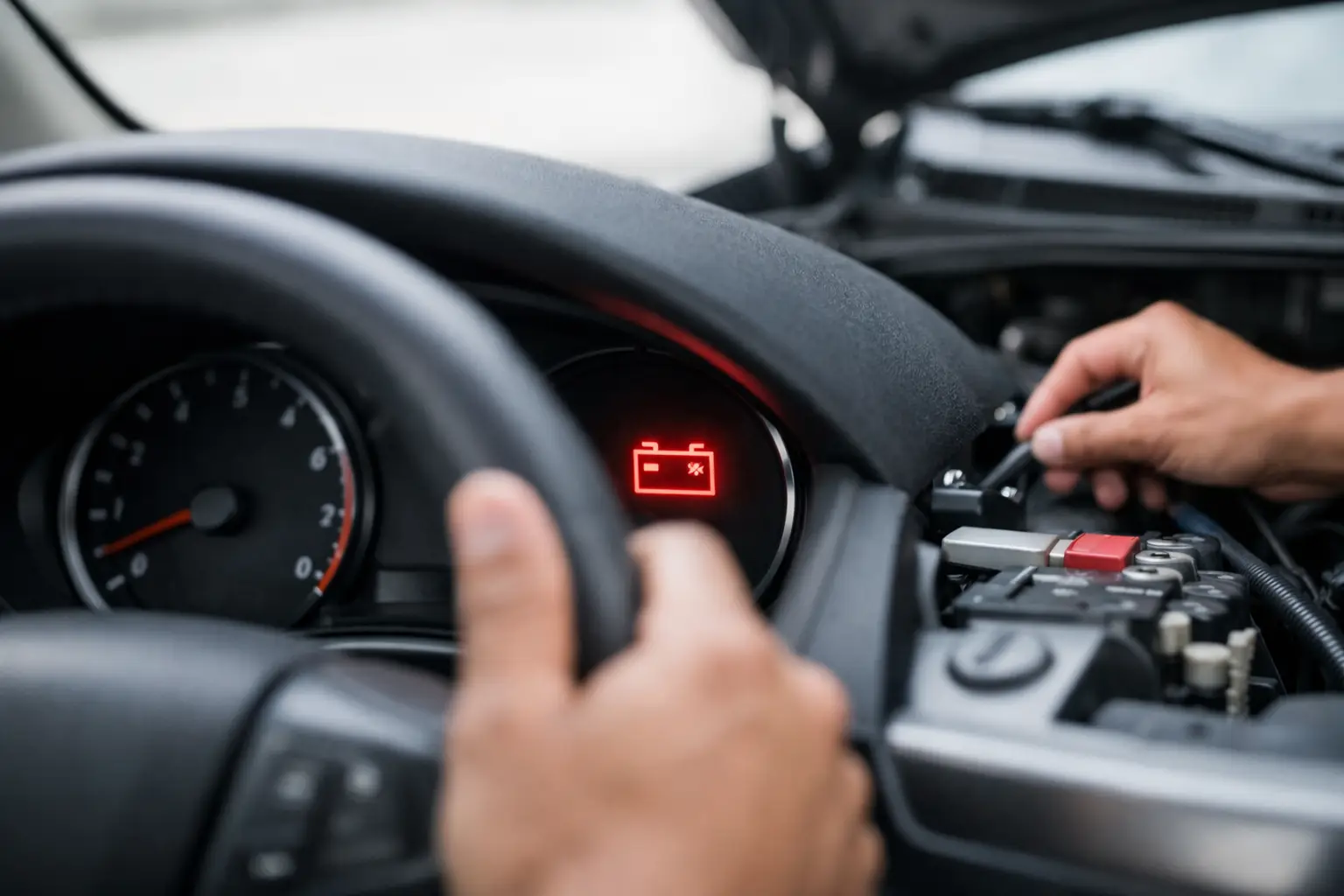
That small red battery symbol can be easy to ignore when the car is still running normally. But if you are asking, “why is my battery light on?”, treat it as an electrical warning, not just a reminder to replace the battery. In most vehicles, the light means the battery is not being charged properly while the engine is running.
You may still be able to drive for a short distance, but the vehicle is then relying on the power already stored in the battery. Once that power runs low, the engine can stall and may not restart. Acting early can save you from being stranded at home, at work or on the side of the road.
Why is my battery light on while driving?
The battery warning light is part of your vehicle’s charging system. When you start the engine, the alternator should generate electricity to run electrical components and recharge the battery. If the system detects low charging voltage or a charging fault, the battery light comes on.
Despite the name, the battery itself is not always the cause. A worn alternator, loose drive belt, damaged wiring, poor battery connections or a fault in the voltage regulator can all trigger the warning light. Modern vehicles can also have computer-controlled charging systems, so a proper test is the best way to identify the real problem.
A failing alternator
A failing alternator is one of the most common reasons for a battery light. The alternator converts engine movement into electrical power. If it cannot produce enough charge, the battery takes over to keep the ignition, lights, engine electronics and accessories operating.
Early signs can include dimming headlights, slow electric windows, a warning light that comes and goes, unusual whining noises or a burning rubber smell. The vehicle may start normally in the morning, then lose power later in the trip as the battery is drained.
A worn or loose drive belt
The alternator is usually driven by a belt at the front of the engine. If that belt is loose, worn, cracked or broken, the alternator may not spin fast enough to charge the battery. On some vehicles, the same belt also operates other important components.
A squealing sound when starting the car, turning the steering wheel or switching on the air conditioning can point to a belt issue. Do not put your hands near belts or pulleys while the engine is running. A visual inspection and correct belt tension should be handled safely.
Loose, corroded or damaged battery terminals
Battery terminals need a clean, tight connection. White, green or blue corrosion around the terminals can interfere with charging and starting. A loose terminal can also cause an intermittent warning light, especially when driving over bumps.
Corrosion is sometimes a simple clean-up job, but it can also indicate an ageing battery or a charging issue that has caused the battery to vent. The terminals, cables and earth connections should be checked together rather than assuming the battery is the only issue.
A weak battery or internal battery fault
A battery that is old, damaged or unable to hold a charge can contribute to charging-system warnings. Most car batteries do not fail without warning, particularly in hot Sydney conditions where heat can shorten battery life.
However, replacing the battery without testing the alternator can be an expensive mistake. A new battery will also go flat if the alternator is not charging it properly. A voltage and load test can separate a battery fault from an alternator, wiring or regulator fault.
Wiring, fuse or voltage regulator problems
Charging systems rely on more than a battery and alternator. There are cables, fuses, earth points, plugs and, in many vehicles, a voltage regulator that controls charging output. Damage from heat, vibration, rodents or previous repairs can create faults that are not obvious from under the bonnet.
This is where professional diagnostics matter. A battery light may appear only at certain engine speeds, when accessories are on, or after the vehicle has warmed up. Testing the system under the right conditions helps avoid replacing good parts.
What should you do when the battery light comes on?
First, stay calm and reduce electrical load where it is safe to do so. Turn off non-essential accessories such as the radio, mobile chargers, heated seats and rear demister. Avoid using the air conditioning if you can manage without it, as it adds load to the system.
If you are driving at night, do not switch off your headlights. Your safety comes first. Instead, make your way to a safe location as soon as practical. If the steering becomes heavy, the engine temperature rises, multiple warning lights appear, you smell burning, or the vehicle begins losing power, pull over safely and arrange assistance.
Do not keep driving simply because the car has not stopped yet. With no alternator charging, a vehicle may travel only a short distance or it may continue for longer – it depends on the battery’s condition, the vehicle’s electrical demand and how much charge remains. There is no reliable distance you can count on.
Avoid jump-starting the vehicle repeatedly and continuing your day as normal. A jump-start may get the engine running, but it will not fix a failed alternator, loose belt or poor connection. It can leave you stranded again soon after.
Can I drive with the battery warning light on?
It is best to think of the battery light as a “drive only to safety” warning. If the engine is running smoothly and there are no other danger signs, you may be able to travel a short distance to a safe place or nearby repair option. But it is not a fault to postpone for days.
Some vehicles will keep running until the battery voltage drops too low for the ignition and engine control systems. Others may develop additional warning messages, reduced performance or electrical faults first. A vehicle with start-stop technology, multiple accessories or advanced safety systems can be especially sensitive to low voltage.
If the light comes on before you leave home, do not assume the battery will recharge on the drive. Arrange a charging-system test first. It is usually more convenient than dealing with a no-start situation later.
How an auto electrician finds the real fault
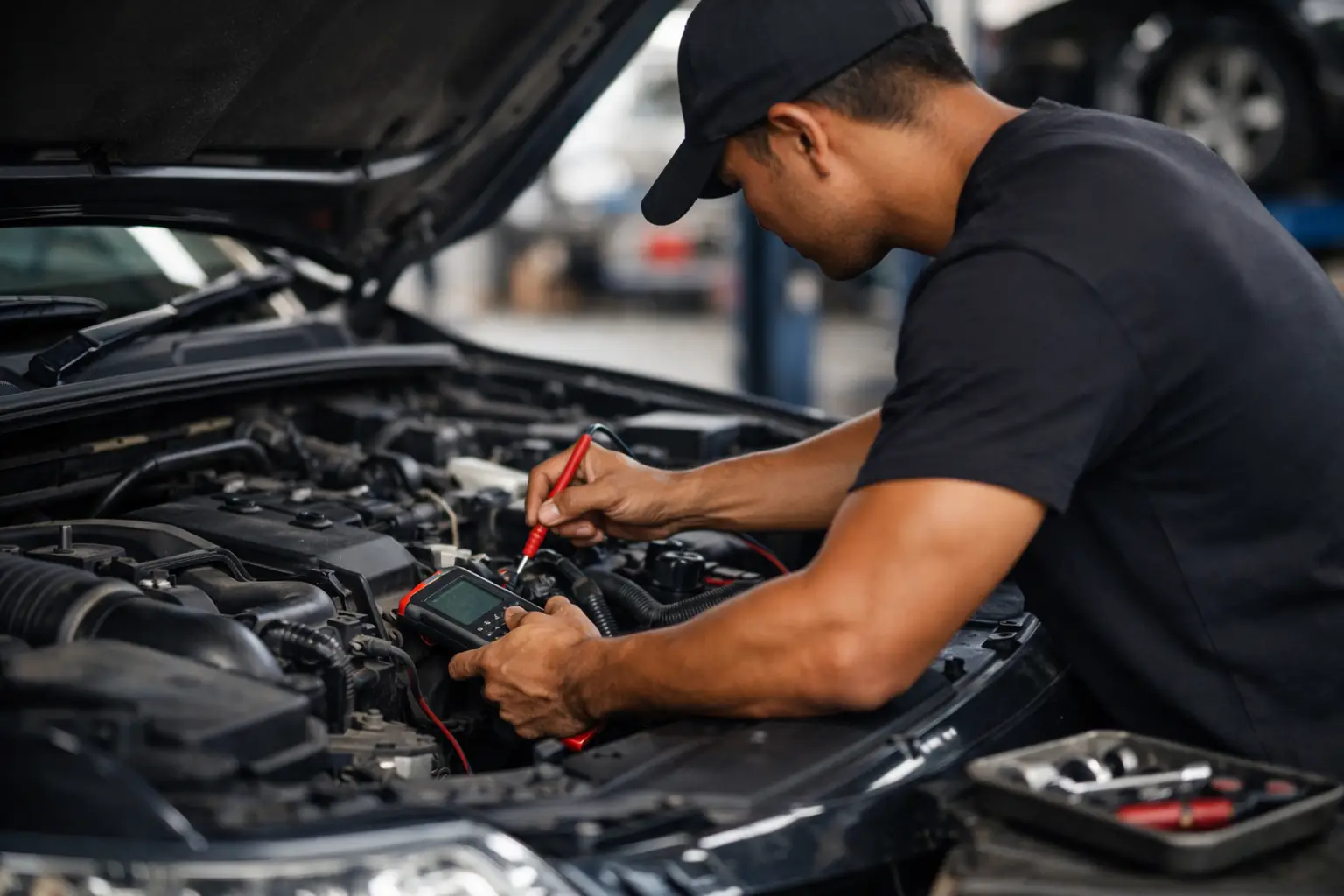
A qualified auto electrician does more than check whether the battery has power. The process normally starts with testing battery voltage and condition, then measuring alternator output with the engine running. Connections, cables, fuses, earths and belt operation are also inspected.
Where needed, the charging system can be tested under load to see how it performs when headlights, blower fans and other equipment are operating. Diagnostic equipment may also be used to check vehicle fault codes and smart-charging system data.
This approach matters because the symptoms overlap. Slow starting can be caused by a weak battery, but it can also result from poor terminals or inadequate charging. Headlights that dim at idle may suggest an alternator issue, yet a poor earth can produce similar behaviour. Accurate diagnosis helps ensure the repair is targeted and cost-effective.
Get mobile help before a small fault stops your day
For busy drivers, a battery warning light often appears at the worst possible time: before school drop-off, on the way to a job or after a long day at work. A mobile auto electrician can test the charging system at your home, workplace or roadside location, then advise whether the fault is safe to repair on site or requires further work.
Ray’s Auto Electrical provides on-site battery and alternator testing, electrical fault diagnosis and repairs across Sydney, including the Western Suburbs. If you are searching for an “Auto Electrician near me” or typing “Auto electrican Blacktown” after the warning light appears, getting a proper charging-system check can prevent a flat battery from turning into a missed day.
A battery light is your vehicle’s early warning that charging power may be disappearing. Give yourself the best chance of avoiding a breakdown by having it checked promptly, before the next start becomes the one that does not happen.