
Your dash warning light comes on during the school run, the vehicle feels normal, and a quick scan shows a fault code. It is tempting to think the answer is sitting on the screen. But when it comes to an OBD scanner vs auto electrician, the scanner usually identifies where to start looking, while the electrician finds the actual cause and carries out the repair.
For Sydney drivers who rely on their car, ute, van or 4WD every day, that difference can save time, money and unnecessary parts replacements. A code reader is useful to have. It is not a replacement for proper electrical fault diagnosis.
What an OBD scanner can tell you
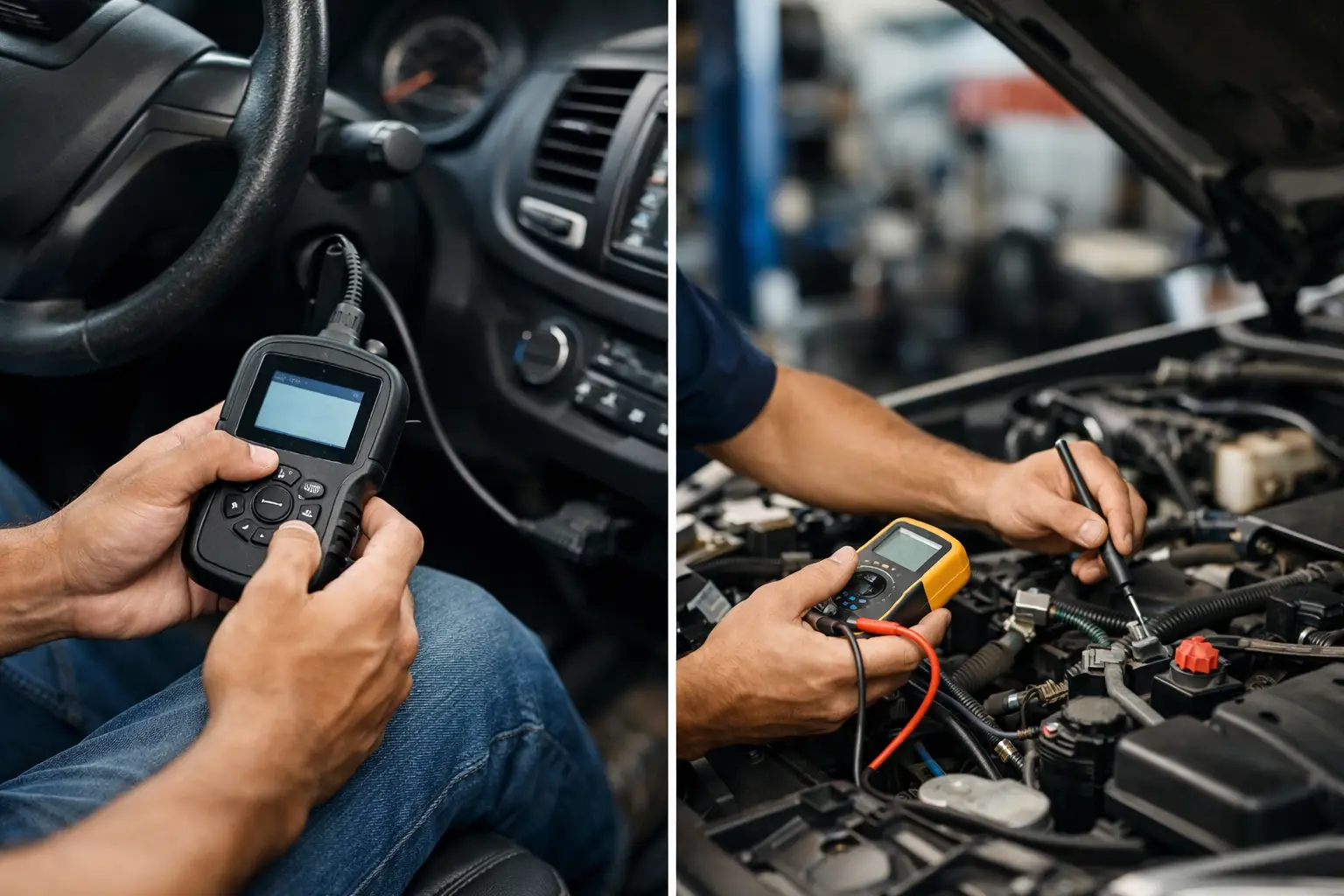
An OBD scanner plugs into your vehicle’s diagnostic port, usually beneath the dashboard near the steering wheel. It reads information stored by the vehicle’s computer, including fault codes linked to the engine, emissions system and, on many newer vehicles, other control modules.
A basic scanner can tell you that the check engine light relates to a sensor circuit, misfire, fuel system issue or communication fault. Better scan tools can display live readings such as battery voltage, coolant temperature, engine speed and sensor data. This can be helpful when you want to understand why a warning light has appeared or clear a code after a minor repair.
The problem is that a fault code is not a diagnosis. It is a record of what the computer noticed. For example, a code for low voltage may point to a weak battery, a failing alternator, loose terminals, damaged wiring, poor earth connection or an electrical accessory drawing power when it should not. Clearing the code does not repair any of those faults.
Think of it like a smoke alarm. It tells you there is smoke in the house, but it does not tell you whether the cause is burnt toast, a faulty appliance or a serious fire.
OBD scanner vs auto electrician: the key difference
An OBD scanner reads data. An auto electrician tests the vehicle and interprets that data alongside the wiring, battery, charging system, fuses, relays, connections and components involved.
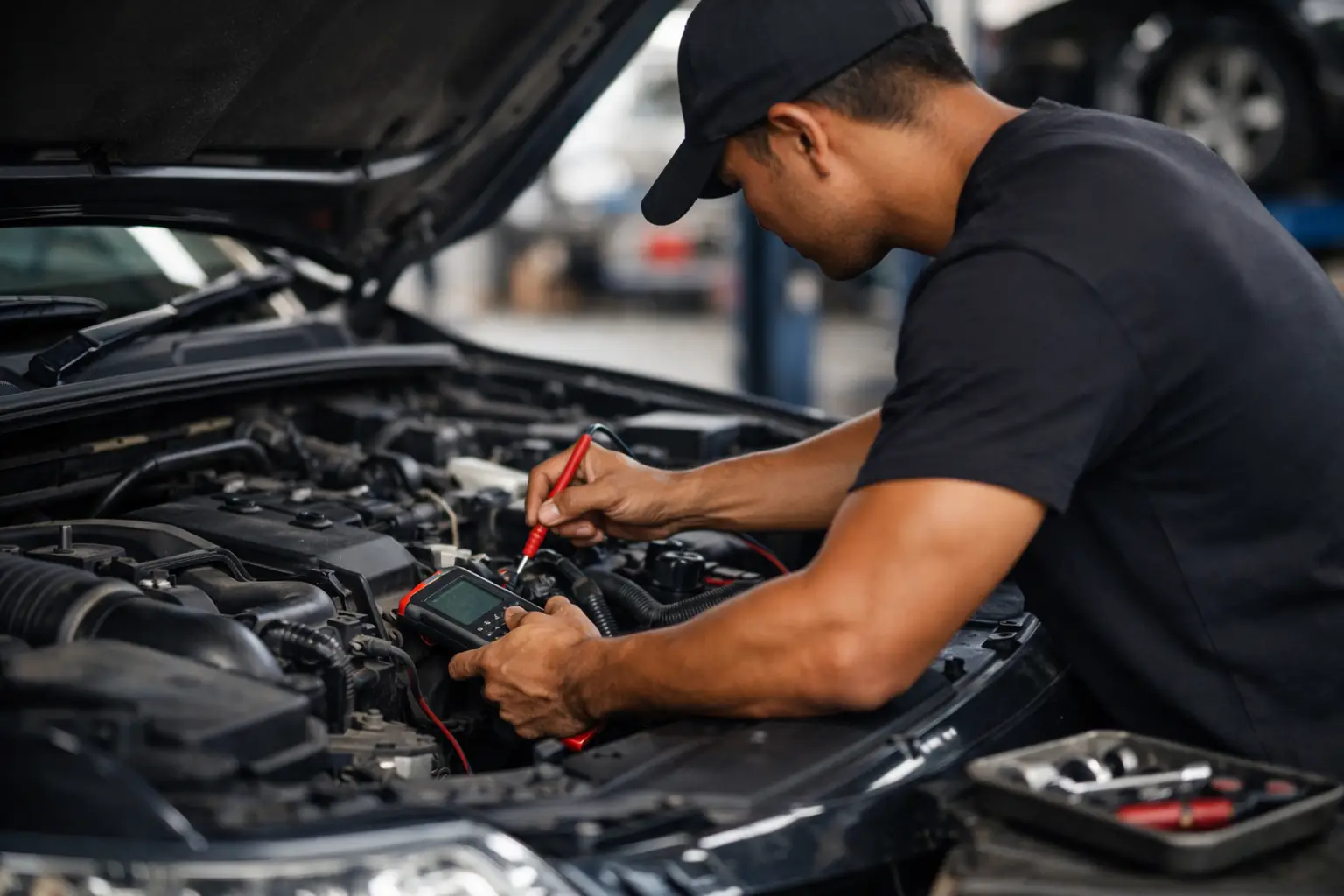
A qualified auto electrician does not rely on one fault code. They check the basics first, then test the relevant circuit. That may involve checking voltage drop, power supply, earth integrity, continuity, alternator output, battery condition or signals between control modules. These tests show whether a component has actually failed or whether it is being affected by another issue.
This matters because modern vehicles are packed with electronics. A poor battery connection can trigger several unrelated warning lights. Moisture in a connector can cause an intermittent starting fault. A damaged wire can make a perfectly good sensor appear faulty. Replacing parts based only on a code can become expensive very quickly.
An auto electrician also has the equipment and experience to work safely around sensitive vehicle systems. Airbags, immobilisers, CAN bus communications, electric steering systems and high-current circuits all need careful testing. Guesswork can create a bigger problem than the original fault.
When a scanner is useful
A personal OBD scanner can be worthwhile for drivers who want an early indication of a problem. It is particularly handy when the check engine light comes on but the vehicle is still driving normally. Reading the code before booking a repair can give you useful information to pass on to the technician.
It can also help monitor recurring faults after a repair. If the same warning light returns, recording the code and noting when it happens – such as after rain, on cold starts or when the air conditioning is on – gives your auto electrician a clearer starting point.
A scanner may be enough when the fault is minor and obvious, such as a loose fuel cap causing an emissions-related warning light. Even then, if the light stays on after a few drives or the code returns, it is best to have the vehicle checked.
Do not keep clearing codes simply to turn off a warning light. The vehicle computer may need time to complete its checks again, and an underlying fault can worsen while the warning is hidden.
When you need an auto electrician
Book a professional diagnosis when your vehicle will not start, the battery keeps going flat, lights are flickering, fuses keep blowing or multiple warning lights appear at once. These are common signs that the issue goes beyond a single code.
You should also call an auto electrician if the vehicle cuts out, has intermittent electrical faults, displays battery or charging warnings, or develops problems after an accessory installation. Dash cams, UHF systems, radios, driving lights and sound systems need correct wiring and protection. A poor installation can drain the battery, interfere with vehicle electronics or create a safety risk.
Air conditioning electrical faults are another area where a scan alone has limits. A code may indicate a pressure sensor or compressor control issue, but diagnosis can involve testing the electrical circuit as well as the air conditioning system itself. Replacing the wrong component does not bring back cold air.
For drivers stranded at home, work or on-site, a mobile auto electrician can be the practical option. Instead of arranging a tow or losing a day at a workshop, the fault can often be tested where the vehicle is parked. Ray’s Auto Electrical provides mobile diagnostics and repairs across Sydney, helping drivers get a clear answer before money is spent on unnecessary parts.
Why fault codes can be misleading
A common example is an oxygen sensor code. The code may say the sensor reading is out of range, but the sensor may not be the cause. An exhaust leak, vacuum leak, wiring fault, poor connector, fuel delivery issue or engine problem can all affect what the sensor reports.
The same applies to battery and alternator codes. A vehicle may report a charging problem when the alternator is healthy but the battery is worn out. Or the battery may test fine, while a corroded terminal creates enough resistance to prevent proper charging and starting.
Intermittent faults are even harder to solve with a basic reader. If the problem only occurs after rain, over bumps, or when the engine is hot, the code is just one clue. A technician may need to inspect wiring movement, test connections under load and reproduce the conditions that trigger the fault.
How to make a diagnostic visit faster
You do not need technical knowledge to help with diagnosis. Before calling, make a note of what the vehicle is doing and when it started. Mention whether it cranks but will not start, whether any warning lights are showing, and whether the battery has recently been replaced or the vehicle has had accessories fitted.
If you have scanned the car, write down the exact code rather than only saying that a warning light came on. Avoid deleting it if possible. A stored code and its related data can help show what was happening when the fault occurred.
Also mention anything that changed before the issue began: a flat battery, heavy rain, jump-starting, a recent service, rodent damage, accident repairs or a new trailer connection. These details are often more useful than people realise.
Choosing the right help in Sydney
If you are searching for an “Auto Electrician near me”, look for someone who can diagnose before replacing parts, explain the issue in plain English and test the complete circuit rather than relying on a scan result alone. Mobile service is especially useful when the vehicle cannot be driven safely or reliably.
Drivers in the western suburbs may also search “Auto electrician Blacktown” when they need help quickly. Whether the problem is a flat battery, no-start condition, charging fault or warning light, the important part is getting a qualified technician to confirm the cause on the vehicle.
An OBD scanner is a useful first tool, not a final answer. When a warning light, starting issue or electrical fault is affecting your day, proper testing gives you the confidence to repair the right problem the first time.