

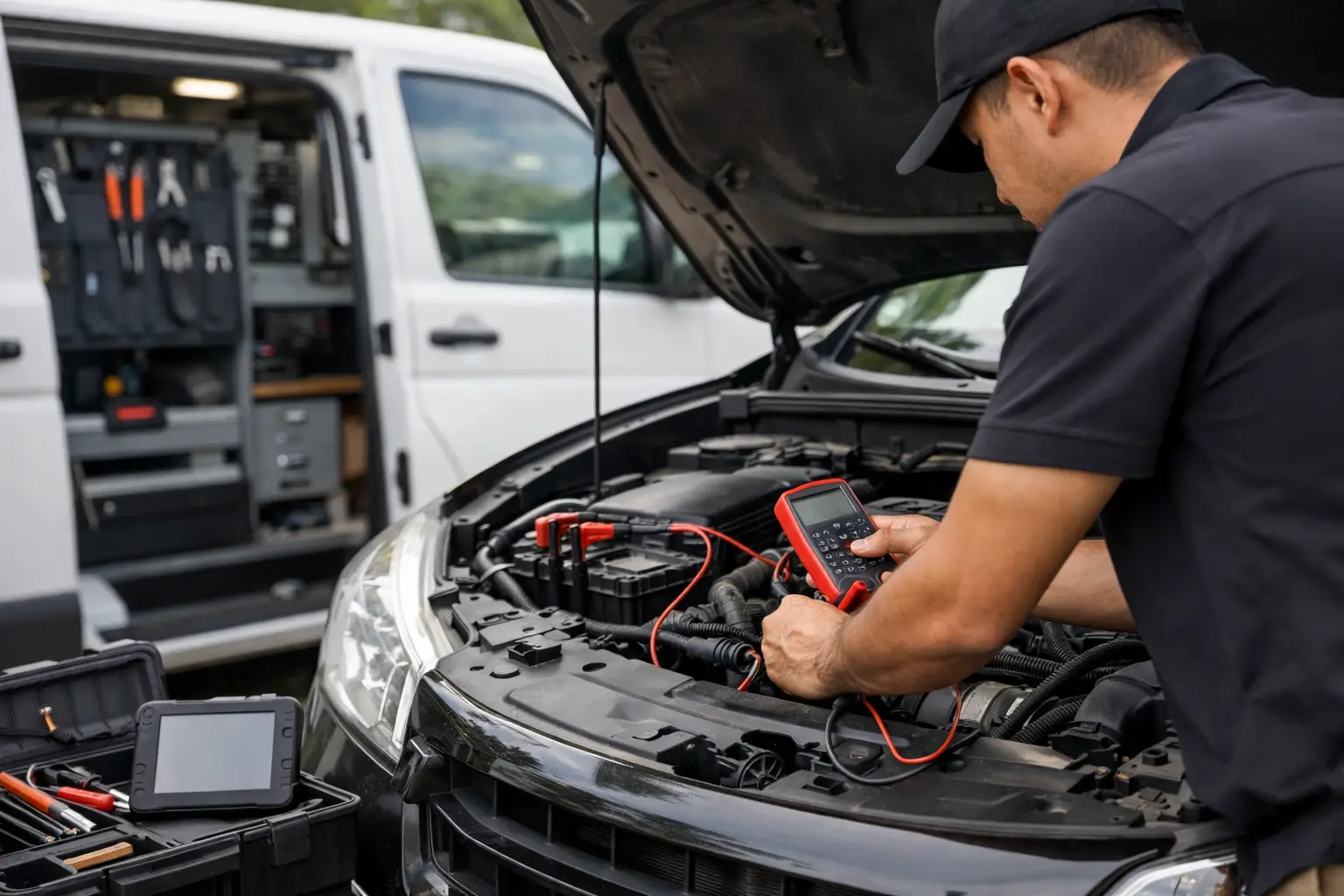
A flat battery in the driveway, a ute that will not start at a job site, or air conditioning that stops working on a hot Sydney afternoon can throw off the whole day. A mobile auto electrician brings qualified electrical diagnosis and repair to your location, helping you avoid towing, workshop queues and unnecessary disruption.
For many electrical problems, the real issue is not obvious. A warning light, intermittent starting fault or failing accessory may be caused by the battery, alternator, wiring, a fuse, a poor earth connection or another component entirely. The right repair starts with finding the fault properly, not simply replacing parts and hoping for the best.
What a Mobile Auto Electrician Can Help With
Vehicle electrical systems do far more than start the engine. They power charging systems, lighting, air conditioning controls, safety features, communications and the accessories that make work and family travel easier. When one part is not doing its job, the symptoms can range from mildly annoying to a complete no-start.
On-site auto electrical work is particularly useful for common faults such as batteries going flat, alternators not charging, starter motor issues, blown fuses, wiring faults, trailer plug problems and electrical faults affecting lights or central locking. It is also a practical option for fitting accessories without giving up a day to visit a workshop.
A mobile service can assess the vehicle where it is parked, test the relevant components and explain what has been found in plain English. If a repair or replacement can be completed safely on site, it can often be handled then and there. If the fault needs more extensive work, you will have clearer information before deciding on the next step.
Signs You Should Book an Auto Electrical Check
Electrical faults do not always arrive as a sudden breakdown. Small changes can be an early warning that a battery, charging system or connection needs attention. Booking a check early can reduce the chance of being stranded at home, at work or on the roadside.
Look out for these signs:
- The engine cranks slowly, clicks, or does not start consistently.
- The battery warning light stays on while the engine is running.
- Headlights dim or flicker, especially at idle.
- Your battery keeps going flat despite being recharged or replaced.
- The radio, dash cam, reverse camera or other accessories cut in and out.
- Air conditioning fans, controls or cooling performance are unreliable.
These symptoms can have more than one cause. For example, a flat battery may simply be old, but it could also be a sign that the alternator is not charging correctly or that something is drawing power while the vehicle is switched off. Testing matters because it helps prevent paying for a battery when the underlying issue is elsewhere.
Battery, Alternator or Starter: Why Diagnosis Matters
The battery, alternator and starter work together, but they do different jobs. The battery supplies power to start the vehicle. The alternator recharges the battery while the engine is running and supports the vehicle’s electrical load. The starter uses battery power to turn the engine over.
When the vehicle will not start, it is tempting to assume the battery is the problem. Sometimes it is. A battery that has reached the end of its life may no longer hold enough charge, particularly after cold mornings, short trips or extended time sitting unused.
However, fitting a new battery will not fix an alternator that is undercharging. Nor will it resolve a worn starter motor, corroded battery terminals, damaged cables or a parasitic drain. A qualified technician can test battery condition, charging voltage and starting performance to narrow down the cause before recommending a repair.
This approach is especially valuable for commuters, tradies and families who rely on their car every day. A quick jump-start may get you moving temporarily, but it does not tell you why the battery went flat in the first place.
On-Site Air Conditioning and Accessory Work
Auto electrical work is not only about breakdowns. A mobile technician can also help keep the vehicle comfortable and set up for the way you use it.
If your air conditioning is blowing warm air, has weak airflow or only works intermittently, the issue may involve more than refrigerant. Electrical switches, relays, fan motors, wiring and control systems can all affect performance. Proper assessment helps identify whether the fault is electrical, mechanical or related to the air conditioning system itself.
Accessory installation is another area where professional workmanship makes a difference. Dash cams, UHF systems, antennas, radios, sound systems, reverse cameras and other add-ons need to be fitted safely and neatly. Poor wiring can lead to flat batteries, intermittent faults, damaged trim or accessories that fail when you need them most.
A professional installation considers cable routing, fuse protection, mounting position and how the accessory will operate with the vehicle. For a work vehicle, that may mean a reliable UHF setup and charging points. For a family car, it may be a dash cam installed cleanly without loose cables across the windscreen or footwell.
When Mobile Service Is the Better Option
A workshop is still the right choice for some repairs, especially where a vehicle needs hoisting, specialised equipment or major mechanical work. But for many electrical faults and installations, mobile service is the simpler option.
It makes sense when the car will not start at home, the vehicle is parked at work, a fleet vehicle cannot easily be taken off the road, or you simply cannot spend hours arranging transport and waiting at a workshop. The convenience is not just about saving a trip. It is about getting an informed diagnosis where the fault has occurred and making a practical plan quickly.
For Sydney drivers, local availability also matters. A technician familiar with the Western Suburbs can provide useful on-site support for drivers in areas such as Blacktown, Penrith, Parramatta, Liverpool and surrounding suburbs, while mobile coverage across Sydney helps when the problem does not happen close to home.
People often type “Auto Electrician near me” into a search engine when the vehicle will not start and they need help quickly. It is worth looking beyond the closest result. Check that the provider handles the type of fault you have, can attend your location, explains the work clearly and has the equipment to test rather than guess.
You may also see searches such as “auto electrician Blacktown” when looking for nearby help. The spelling is less important than choosing a qualified, responsive technician who can assess the vehicle properly and provide straightforward advice.
How to Make Your Call-Out More Efficient
Before booking, have a few details ready: the vehicle make and model, where it is located, what it is doing or not doing, and when the problem started. If warning lights are showing, note which ones. Let the technician know whether the vehicle is accessible and whether it has had recent battery work, repairs or accessory installations.
These details help prepare for the job and may reduce time spent identifying basic information on arrival. Do not worry if you cannot describe the fault technically. “It clicks but will not start” or “the battery light came on while driving” is useful information.
Ray’s Auto Electrical provides mobile diagnostics, repairs, battery and alternator support, air conditioning services and accessory installation for Sydney vehicle owners. The focus is simple: professional workmanship, practical advice and help at your location when getting to a workshop is the last thing you need.
If your vehicle is giving you an electrical warning sign, acting early is usually the easiest option. A proper on-site check can turn an uncertain fault into a clear next step and help keep your day moving.