
Your car will often give you a warning before it stops altogether: slow cranking in the morning, dim headlights at idle, a battery light on the dash, or air conditioning that suddenly blows warm. So, what does an auto electrician do when these problems appear? They find the real cause in your vehicle’s electrical system, repair it properly, and help keep you safely on the road.
Modern vehicles rely on far more than an engine and a battery. Starting, charging, lighting, air conditioning, safety systems, accessories and many dashboard functions all depend on wiring, sensors, modules and electrical components working together. When one part fails, the symptoms can be confusing. That is where a qualified auto electrician saves time, guesswork and unnecessary replacement costs.
What Does an Auto Electrician Do?
An auto electrician diagnoses, repairs, installs and maintains the electrical systems in cars, 4WDs, utes, vans and other vehicles. Their work can range from replacing a worn battery terminal to tracing an intermittent wiring fault that only happens after rain or when the vehicle is hot.
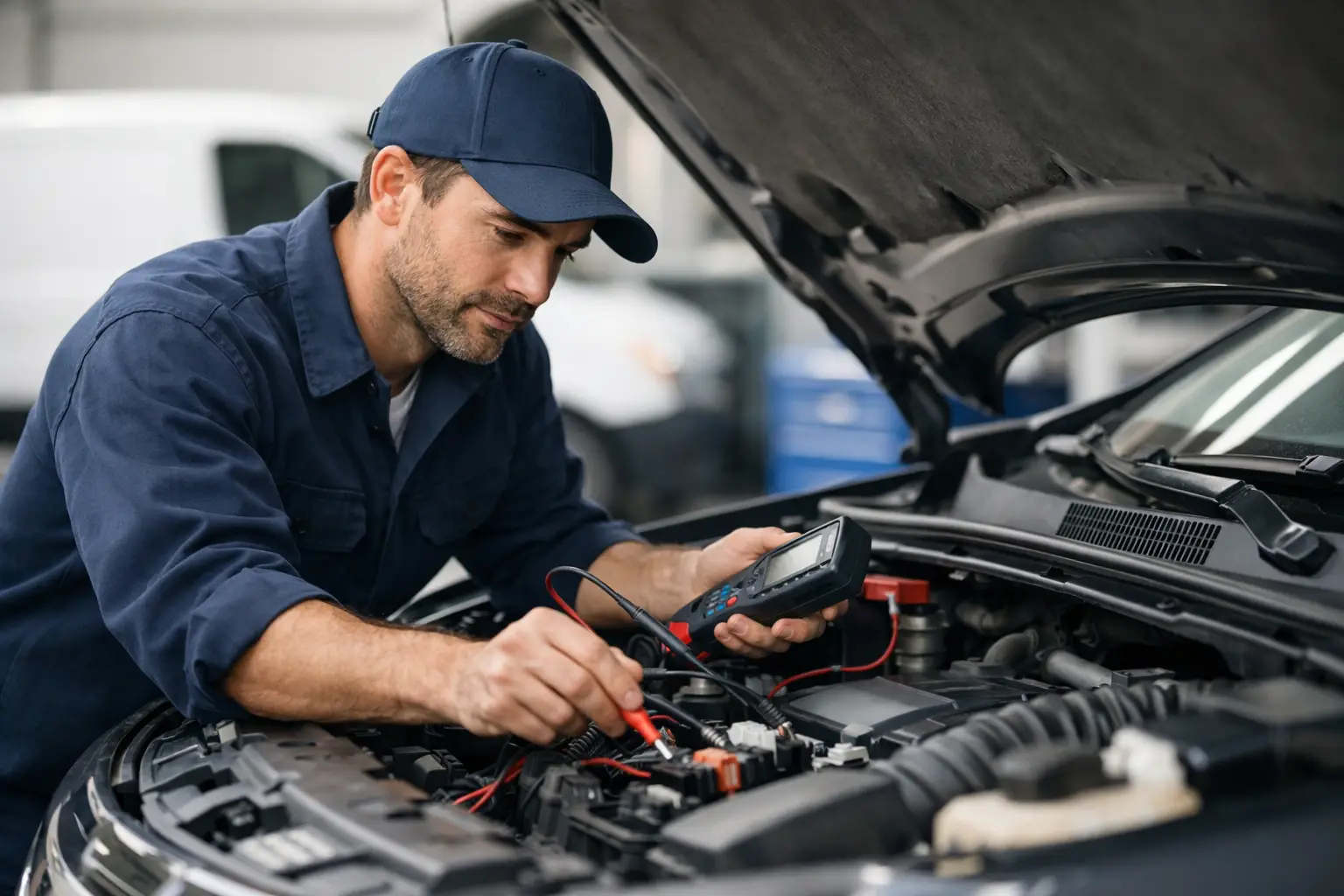
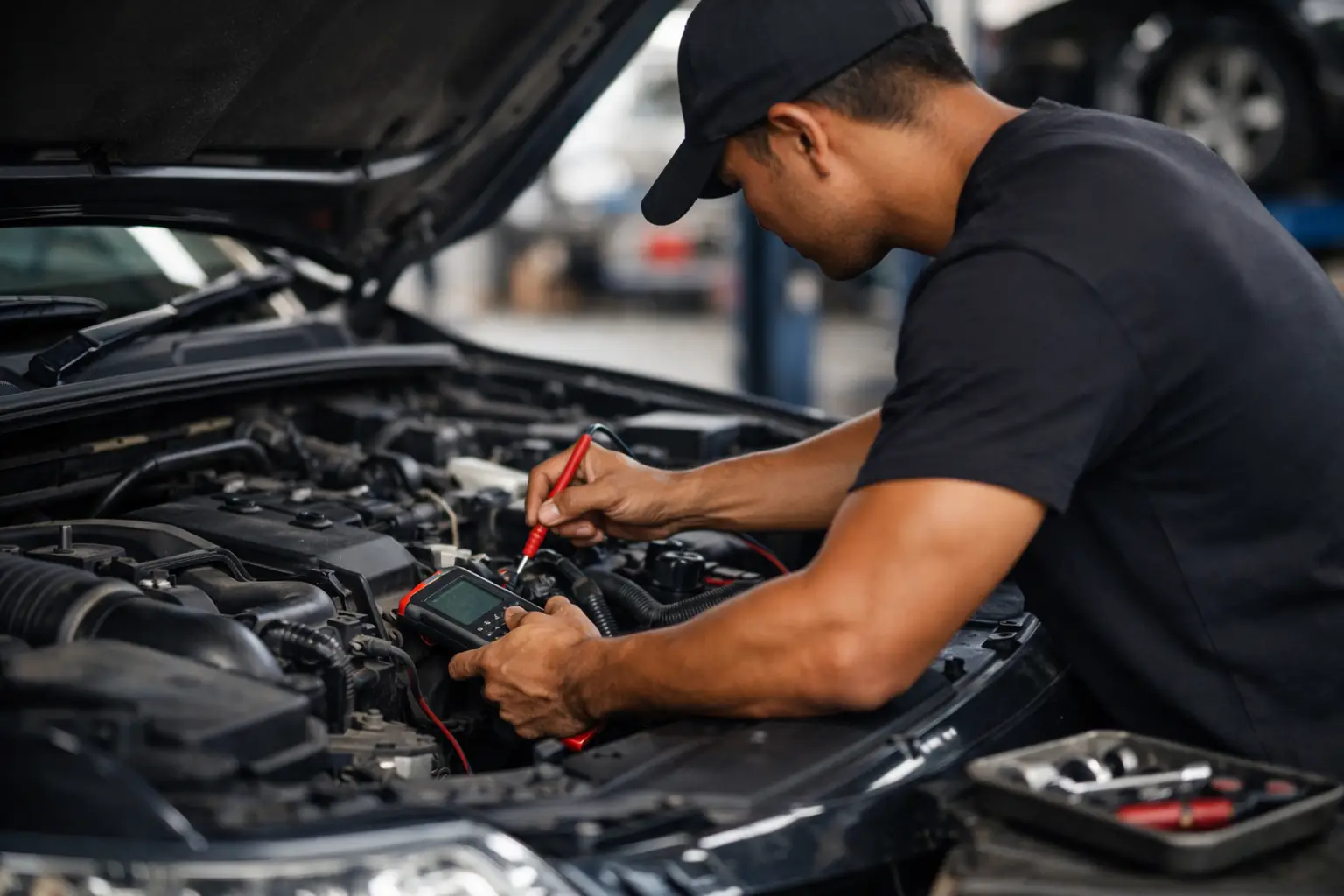
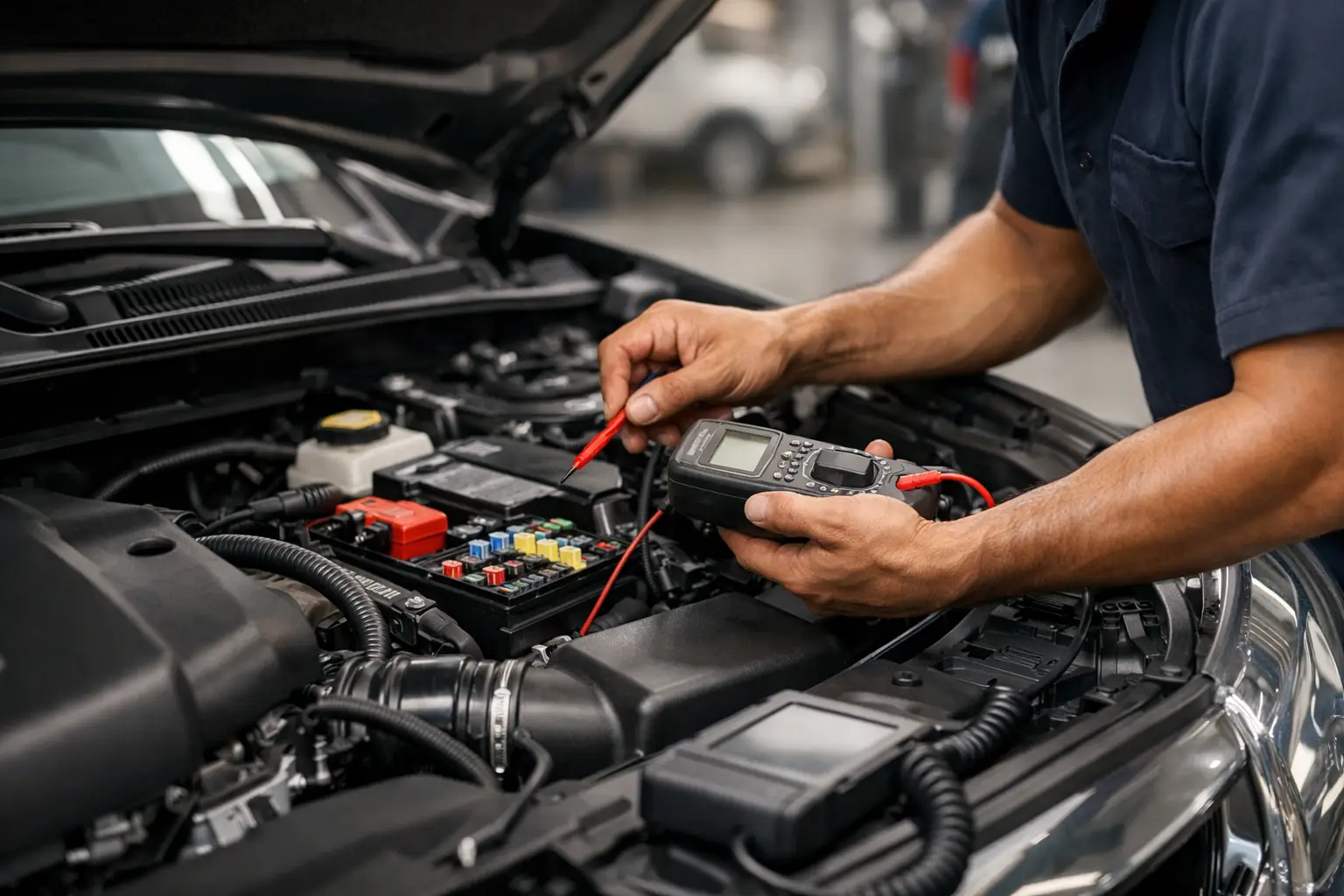
Unlike a general repair where a worn mechanical part may be visible, electrical faults often need testing before they can be confirmed. An auto electrician uses specialist diagnostic equipment to check voltage, current flow, battery condition, charging output, wiring continuity and fault codes stored by the vehicle.
The aim is not simply to replace the part that looks most likely. It is to identify why the fault happened. For example, a flat battery may be caused by an old battery, but it could also be an alternator that is not charging correctly, poor cable connections, a parasitic drain, or an accessory drawing power while the car is parked.
Electrical fault finding and diagnostics
Fault finding is a major part of an auto electrician’s job. A vehicle may fail to start, randomly lose power to an accessory, blow fuses, display warning lights or have lights that flicker. These faults can be frustrating because they may come and go.
A proper diagnostic process starts with the symptoms and a visual inspection. The electrician then tests the relevant circuits and components rather than relying on assumptions. This may involve checking fuses and relays, inspecting damaged wiring, testing earth points, scanning for fault codes and confirming whether voltage is reaching the component as it should.
This approach matters because replacing parts without testing can become expensive quickly. If a fuse keeps blowing, fitting a larger fuse is never the answer. The underlying short circuit or overloaded circuit needs to be found and repaired safely.
Battery, Starter and Alternator Repairs
Most drivers think of the battery first when the car will not start. Sometimes that is correct, especially if the battery is old or has been left flat. But a starting issue can also involve the alternator, starter motor, battery cables, terminals or ignition-related wiring.
An auto electrician tests the battery under load and checks whether the alternator is charging it at the correct rate. They can inspect cable connections for corrosion or looseness, which are common causes of poor starting. If replacement is needed, they can fit the correct battery or component for the vehicle and confirm the system is working properly afterwards.
This is particularly useful when a vehicle is stranded at home, work or on a job site. A mobile auto electrician can come to the vehicle, carry out testing on-site and, where practical, complete the repair without the need for towing or a workshop visit.
It does depend on the fault. Some major repairs may require workshop equipment or parts that need to be ordered. Even then, accurate mobile diagnosis gives you a clear next step instead of paying to tow a vehicle based on a guess.
Air Conditioning Electrical Work
Vehicle air conditioning is not only about refrigerant. Its operation relies on electrical controls, sensors, switches, wiring, relays, blower motors and compressor circuits. If the air con is weak, cuts in and out, makes unusual noises or does not switch on, an auto electrician can assess the electrical side of the system.
A repair may be as straightforward as a failed relay, damaged connector or faulty blower motor. Other times, the issue can relate to the compressor, pressure controls or a refrigerant leak. Testing helps separate an electrical fault from an air conditioning system fault, so the right repair is carried out.
For Sydney drivers dealing with hot afternoons and heavy traffic, working air conditioning is more than a comfort feature. It makes daily commuting, school runs and trade work far more manageable.
Installing Vehicle Accessories Properly
Auto electricians also install accessories that need safe, reliable wiring. This includes dash cams, UHF radios and antenna systems, head units, speakers, reversing cameras, driving lights, dual battery systems and other aftermarket equipment.
A quality installation is about more than getting the accessory to turn on. Wiring needs to be protected from heat, vibration and rubbing. Cables should be routed neatly, circuits fused correctly, and power sources selected to suit how the accessory will be used. Poorly fitted accessories can flatten a battery, interfere with other circuits, create annoying rattles or, in serious cases, become a safety risk.
For example, a dash cam may need a constant power feed for parking mode and an ignition-switched feed for normal driving. If it is wired incorrectly, it may keep drawing power after the car is parked and leave you with a flat battery. An auto electrician can set it up so it works as intended without compromising your vehicle’s electrical system.
Why Mobile Auto Electrical Service Makes Sense
Electrical faults do not always happen near a workshop. They happen in driveways before work, in shopping centre car parks, outside a client’s property or when a ute needs to be ready for the next job. Mobile service removes much of the disruption.
Instead of organising a tow or taking time off to drop your car at a workshop, a qualified technician can inspect the vehicle where it is. That is especially helpful for no-start issues, battery faults and accessory installations that can be completed at your home or workplace.
If you search for “Auto Electrician near me”, look for someone who can explain the issue in plain English, test before replacing parts and give clear advice about the repair. Fast service is valuable, but correct diagnosis and professional workmanship are what prevent the same problem from returning.
Drivers in the Western Suburbs may also search “Auto Electrician Blacktown” when a battery warning light comes on or their vehicle will not start. In these situations, local mobile support can mean less waiting and a quicker path back to normal.
When Should You Call an Auto Electrician?
Call an auto electrician if your vehicle has repeated starting trouble, a battery light that stays on, burning smells from wiring, regularly blown fuses, flickering lights, warning messages, flat batteries or accessories that are not working correctly. You should also arrange an inspection if rodents have damaged wiring, water has entered the cabin or engine bay, or you are planning to add electrical accessories.
Do not ignore electrical symptoms just because the car still drives. A charging problem can leave you stranded with little warning, while damaged wiring can worsen over time. Early testing is usually simpler and more affordable than waiting for a complete failure.
Ray’s Auto Electrical provides practical mobile diagnostics, repairs and installations for drivers across Sydney. Whether the issue is a battery that will not hold charge, an alternator fault, unreliable air conditioning or a new accessory you want fitted correctly, the right electrical repair starts with a clear diagnosis. Getting it checked early can save your day, your budget and the hassle of being stuck somewhere you do not want to be.