

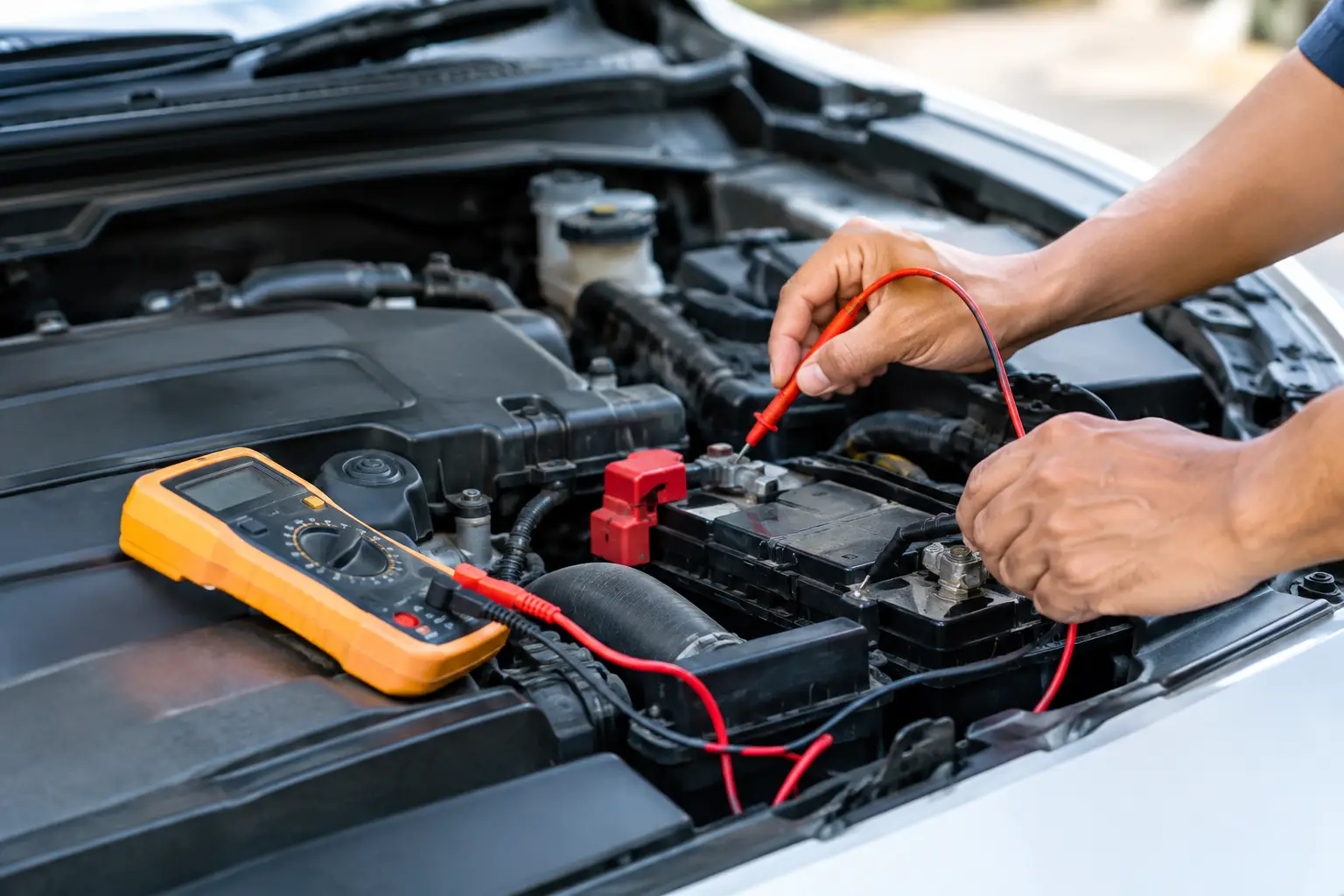
A car that starts normally after a drive but has a flat battery the next morning is frustrating, especially when you rely on it for work, school runs or getting around Sydney. Knowing how to diagnose parasitic drain helps separate a genuine electrical fault from a worn battery, charging issue or simple human error such as leaving an interior light on.
A parasitic drain is electrical current being drawn from the battery after the vehicle has been switched off. A small amount is normal. Your clock, alarm, central locking memory and computer systems still need a little power. The problem starts when an accessory, module or circuit stays awake when it should shut down.
Start by ruling out the obvious battery problems
Before testing for a parasitic drain, check whether the battery is actually healthy and being charged properly. A battery that is old, internally damaged or undercharged can look exactly like a drain fault.
Look for loose or corroded battery terminals, especially if there is white or blue-green build-up around the clamps. Check that the battery is secured firmly in its tray and inspect for swelling, leaks or a strong sulphur smell. Any of these signs can mean the battery needs attention before further diagnosis.
Think about the vehicle’s recent use as well. Short trips, long periods parked up and frequent stop-start driving may not give the alternator enough time to fully recharge the battery. If the battery goes flat after sitting for several days but is fine when driven daily, low usage may be contributing. If it goes flat overnight after a decent drive, an electrical drain becomes more likely.
A proper battery and alternator test is the sensible next step. Voltage alone does not tell the whole story. A battery can show reasonable voltage with no load, then collapse when asked to start the engine. Similarly, a weak alternator may run the vehicle but fail to replace the charge used during normal driving.
Common signs of a parasitic drain
Parasitic drains are not always constant. Some only appear after rain, when a door switch sticks, or when an aftermarket accessory begins to fail. Common warning signs include a battery that repeatedly goes flat, slow cranking after the car has been parked, or a battery that needs jump-starting despite being recently replaced.
You may also notice a glovebox, boot or interior light staying on longer than it should. A warm fuse box, clicking relay, running fan or screen that remains lit after locking the vehicle can point to the circuit causing the issue. In some newer cars, a control module may fail to enter sleep mode, so there may be no obvious light or noise at all.
Aftermarket accessories are often worth checking first. Dash cams, mobile chargers, driving lights, UHF radios, amplifiers, alarms and trailer wiring can all cause a drain if they have been connected to permanent battery power or wired incorrectly. That does not mean every accessory is at fault, but it gives a technician a useful place to begin.
How to diagnose parasitic drain with a multimeter
Testing current draw requires care. Incorrect multimeter setup can blow the meter fuse, disturb vehicle electronics or create a short circuit. If you are not comfortable working around battery terminals and vehicle wiring, arranging a qualified auto electrician is the safer and often faster option.
For a basic test, the battery should first be fully charged. Turn the engine off, remove the key or keep the keyless remote well away from the car, and switch off all accessories. Close the doors, bonnet and boot where possible. If you need to leave the bonnet open, manually latch the bonnet switch if fitted, so the vehicle believes it is closed.
The car then needs time to go to sleep. Depending on the vehicle, this can take anywhere from 15 minutes to more than an hour. Opening a door, unlocking the car or waking the infotainment system during this period can reset the process and give a misleading reading.
A multimeter set to measure DC amps is connected in series with the battery, normally between the negative battery terminal and negative cable. Start on the meter’s highest current range. Never try to start the car or operate high-current items while the meter is connected this way.
Once the vehicle has entered sleep mode, many conventional vehicles should settle to roughly 20 to 50 milliamps. Some late-model vehicles with security systems and multiple computers may draw a little more. What matters is not one universal number but whether the current remains excessively high after the proper sleep time.
If the reading sits at several hundred milliamps or more, the battery can be drained overnight or within a few days. A technician may use a clamp meter designed for low current, which can test the draw without disconnecting the battery and potentially resetting vehicle systems.
Finding the circuit causing the draw
Once excessive draw is confirmed, the next job is isolating the circuit. This is usually done by checking fuses one at a time while monitoring the current draw. When removing a fuse causes the reading to drop significantly, the fault is likely on that circuit.
This step requires patience and wiring information. One fuse can supply several components, and pulling it may wake other modules or temporarily alter the reading. The circuit might feed the stereo, body control module, interior lights, power outlets, door locks or an added accessory. Finding the fuse is a clue, not always the final answer.
A qualified technician then tests the components on that circuit. For example, a faulty boot latch switch may leave the boot light on, a relay may be stuck closed, or an amplifier may not turn off after the radio is switched off. On late-model cars, diagnosis may also involve scan tools to check which control module is refusing to sleep.
What not to do when your battery keeps going flat
Avoid repeatedly jump-starting the vehicle without finding the cause. Deeply discharging a lead-acid battery shortens its life, and a battery that has been flattened several times may need replacement even after the original drain is repaired.
Do not simply disconnect the battery every night as a long-term fix. It can erase radio settings, reset window or steering functions, trigger warning lights and may not suit vehicles with factory alarms or immobiliser systems. It also leaves you with the same underlying fault waiting to return.
It is tempting to replace the battery first because it is quick, but that can be wasted money if a faulty circuit is still draining it. On the other hand, an old battery may genuinely be the only problem. Testing both the battery condition and current draw prevents guesswork.
When mobile auto electrical diagnosis makes sense
If the vehicle will not reliably start, taking it to a workshop can be the hardest part. Mobile diagnostics are particularly useful when the car is parked at home, at work or stranded after a shift. A technician can test the battery, alternator and parasitic draw on site, then trace the fault rather than replacing parts blindly.
Ray’s Auto Electrical provides mobile auto electrical support across Sydney, including the Western Suburbs, for battery faults, charging issues and accessory-related electrical problems. If you are searching Auto Electrician near me because your vehicle is repeatedly flat, ask whether the service includes proper battery, alternator and parasitic draw testing. For local searches such as Auto electrician Blacktown, choose a qualified specialist who can explain what the tests show and what repair is actually needed.
A flat battery is often a warning, not the full diagnosis. Getting the current draw checked properly can protect your battery, prevent another missed morning and give you confidence that your car will be ready when you need it.