
A car that will not start is frustrating. A car that starts sometimes, blows fuses, loses headlights or has accessories cutting in and out can be even harder to deal with. Many of these faults come back to 12-volt vehicle wiring repairs, where a damaged wire, poor connection or incorrect installation disrupts power where it is needed.
Vehicle wiring faults are not always obvious from the driver’s seat. A battery may seem flat when the real problem is a loose earth. An alternator may be blamed when corrosion at a connection is preventing proper charging. The right diagnosis saves replacing good parts and gets your vehicle back to reliable operation sooner.
What 12-volt vehicle wiring repairs involve
Your vehicle’s 12-volt electrical system supplies power to essential components including the starter motor, lights, charging system, fuel system, dashboard, air conditioning controls and accessories. Wiring carries that power, while fuses and relays protect the system from overloads.
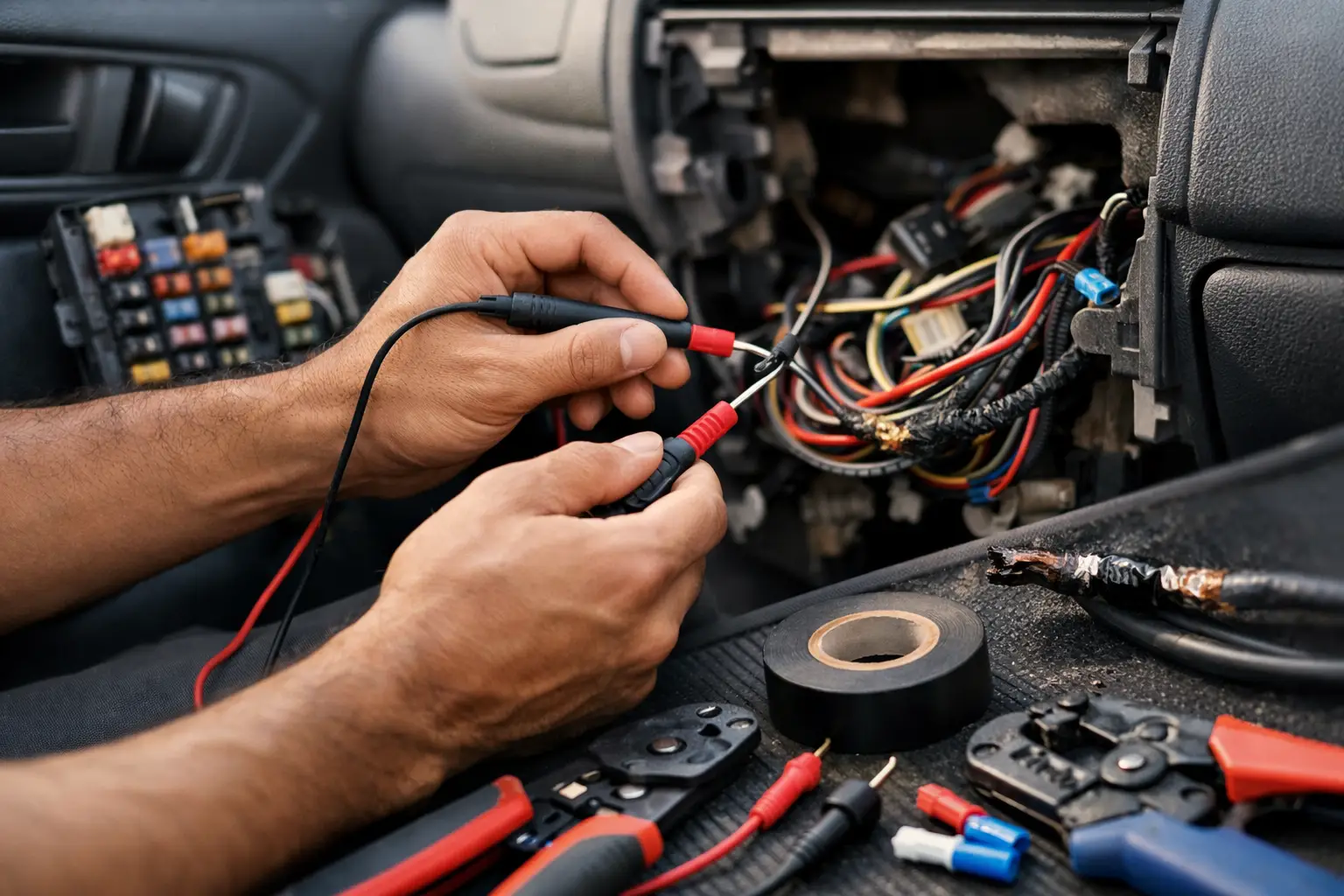
Repairs can range from securing a loose battery terminal to tracing a broken wire inside a door loom or behind the dashboard. The work may involve repairing terminals, replacing damaged sections of cable, cleaning corroded connections, fitting correctly rated fuses, or repairing earth points.
It is not simply a matter of joining two wires together. Automotive wiring is exposed to heat, vibration, water, road grime and movement. A proper repair needs the right cable size, secure connections, suitable insulation and routing that prevents the fault returning.
Common signs of a wiring fault
Electrical problems often give warning signs before they leave you stranded. If you notice one issue repeatedly, it is worth arranging a check rather than waiting for a complete failure.
Dim or flickering headlights can point to a poor earth, charging issue or damaged wiring. Interior lights that work intermittently, central locking that behaves unpredictably, or a radio that loses power over bumps may also indicate a loose connection.
Blown fuses are another common clue. A fuse is designed to protect the circuit, so replacing it without finding the cause can lead to another failure. If a new fuse blows straight away, there may be a short circuit, damaged insulation or an accessory drawing more current than the circuit can safely handle.
Starting issues can also be electrical. Clicking when you turn the key, no response from the starter, or a vehicle that starts after moving the battery leads can be caused by poor connections as well as a weak battery. A proper battery and alternator test helps separate a wiring problem from a component failure.
Other signs include a burning plastic smell, hot wiring, visible green or white corrosion around terminals, warning lights, or electrical faults after heavy rain. If you smell burning or see smoke, switch the vehicle off safely and do not keep trying to start it.
Why wiring faults happen
The most common cause is wear over time. Heat under the bonnet can make insulation brittle, while vibration can loosen terminals and rub wiring against metal brackets. In older vehicles, ageing connections and corrosion are particularly common.
Water is another major issue. Moisture can enter connectors around the engine bay, tail lights, doors, trailer plugs and accessories. Once corrosion forms inside a connector, electrical resistance increases. That can cause voltage drop, poor performance and intermittent faults that are difficult to reproduce.
Previous accessory work can also affect a vehicle’s wiring. Dash cams, driving lights, UHF radios, amplifiers, reverse cameras and trailer wiring all need to be installed correctly. Poorly fitted wiring, incorrect fuse ratings or cables run through sharp edges can create faults months after installation.
Rodent damage is less common but very real, particularly where a vehicle is parked for extended periods. Chewed insulation can expose wiring and cause a short circuit. Damage after accident repairs, off-road use or work carried in a ute can also affect looms and connectors.
What you can check safely before booking a repair
There are a few simple checks vehicle owners can make without dismantling electrical systems. Start with the battery terminals. They should be tight, clean and free from heavy corrosion. Do not use tools near the terminals unless you know how to avoid shorting the battery.
Check whether a fuse has blown and refer to the vehicle’s fuse chart before replacing it. Only use a fuse with the same rating. A larger fuse does not fix the problem. It can allow wiring to overheat and turn a manageable repair into a much bigger one.
Look for obvious damage around recently installed accessories, trailer sockets and battery cables. If an accessory only works when a wire is moved, do not keep wiggling it or tape it up as a permanent fix. Movement can worsen a loose terminal or expose bare cable.
It also helps to note exactly when the fault occurs. Does it happen only when the engine is running, when headlights are on, after rain, or when you use a particular accessory? These details give an auto electrician a useful starting point and can reduce diagnostic time.
Why a professional diagnosis matters
Modern vehicles contain multiple control modules, sensors and communications wiring. An apparent wiring fault may involve a battery drain, alternator output issue, relay, switch, module or accessory circuit. Guesswork can be expensive.
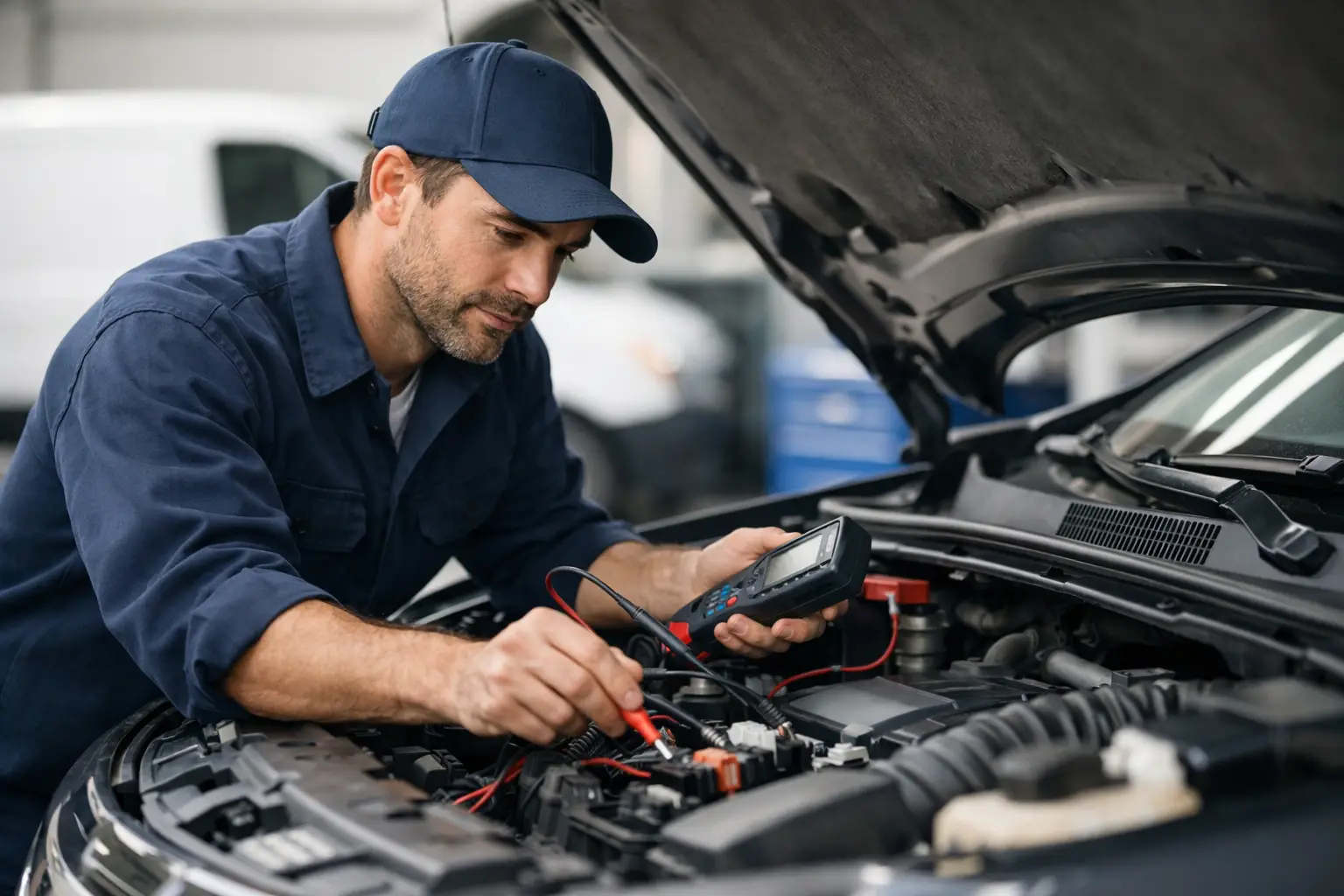
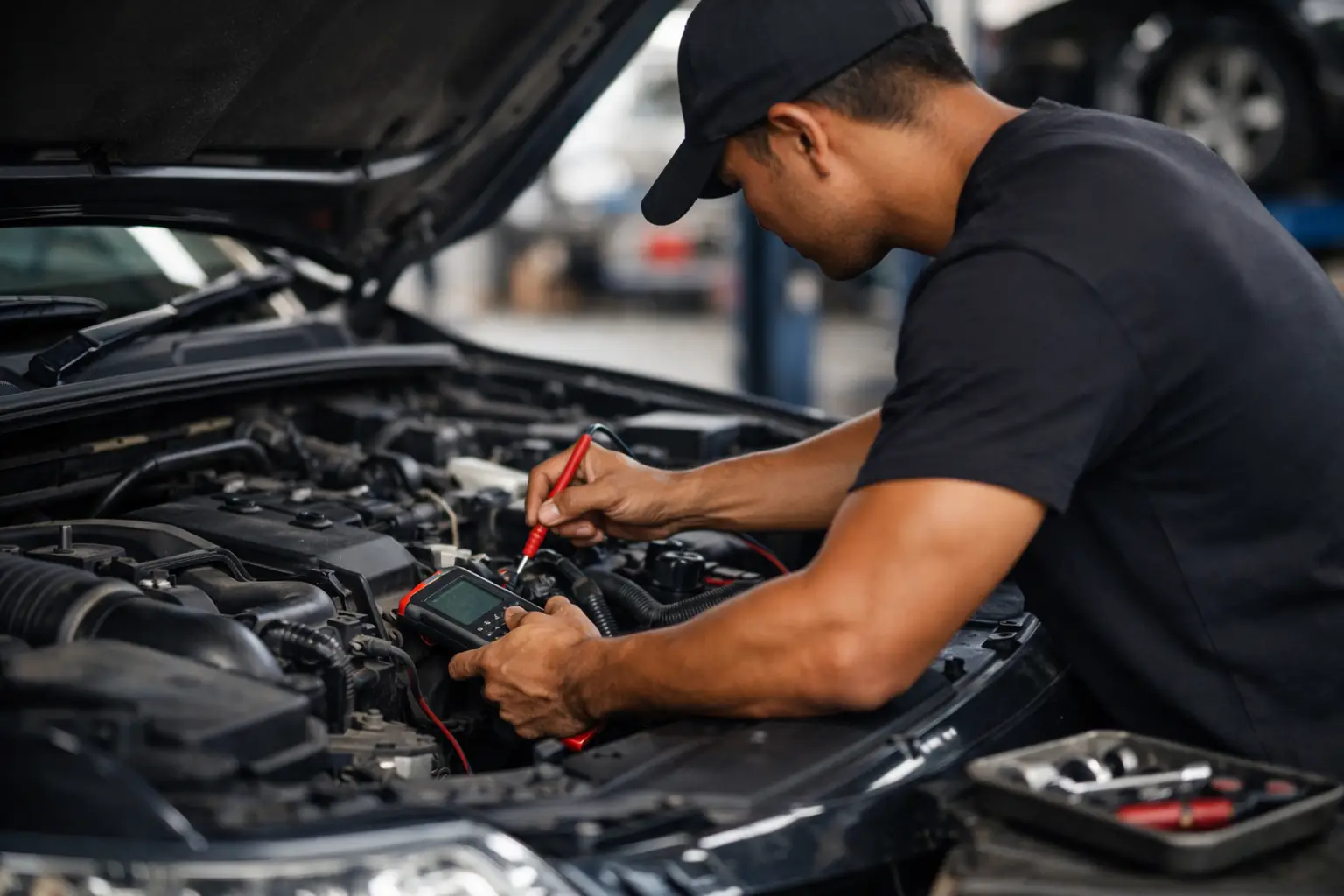
A qualified auto electrician uses testing equipment to check voltage, current flow, continuity, voltage drop and charging performance. This process identifies where power stops, where resistance is too high, or where a circuit is shorting. It is much more reliable than replacing parts based on symptoms alone.
The repair method matters just as much as the diagnosis. Correctly crimped or soldered connections, heat-shrink protection, suitable conduit and secure cable routing help a repair withstand Sydney heat, wet weather and daily driving. A quick twist-and-tape repair may work briefly, but it is rarely reliable or safe.
For many customers, mobile service is the practical choice. If your vehicle will not start at home, is parked at work, or has a fault that makes driving unsafe, a mobile auto electrician can assess the issue on site. Ray’s Auto Electrical provides mobile support across Sydney, including the Western Suburbs, helping avoid unnecessary towing and workshop delays.
Accessories need the right wiring too
Accessory installations should add convenience, not create future electrical problems. A dash cam should be wired with appropriate circuit protection. UHF systems need secure power and antenna connections. Sound systems, driving lights and auxiliary batteries may need heavier cable and relays to safely handle their current draw.
The right approach depends on the vehicle and the accessory. A small dash cam has very different power requirements from a high-output sound system or dual-battery setup in a work ute. Using the wrong wire gauge can cause voltage drop, overheating or poor accessory performance.
If you are searching online for an “Auto Electrician near me”, look for someone who can diagnose the original system as well as install new equipment properly. For local drivers needing an Auto Electrician Blacktown service, on-site testing can be especially useful when the vehicle cannot be moved or the fault is intermittent.
When to stop driving and call for help
Do not keep driving if electrical faults affect headlights, brake lights, indicators, windscreen wipers or engine operation. These systems are essential for safe driving. The same applies if fuses repeatedly blow, wiring is hot to touch, or you notice burning smells.
A vehicle that is draining its battery overnight also needs attention. It may be a light left on, but it can also be an accessory or circuit that is not switching off properly. Repeatedly jump-starting the vehicle may get you through the day, but it will not solve the underlying problem.
Reliable wiring is mostly invisible when it is working properly, which is exactly how it should be. If your vehicle is showing electrical warning signs, having the fault tested early is usually safer, quicker and more cost-effective than waiting for a roadside breakdown.