

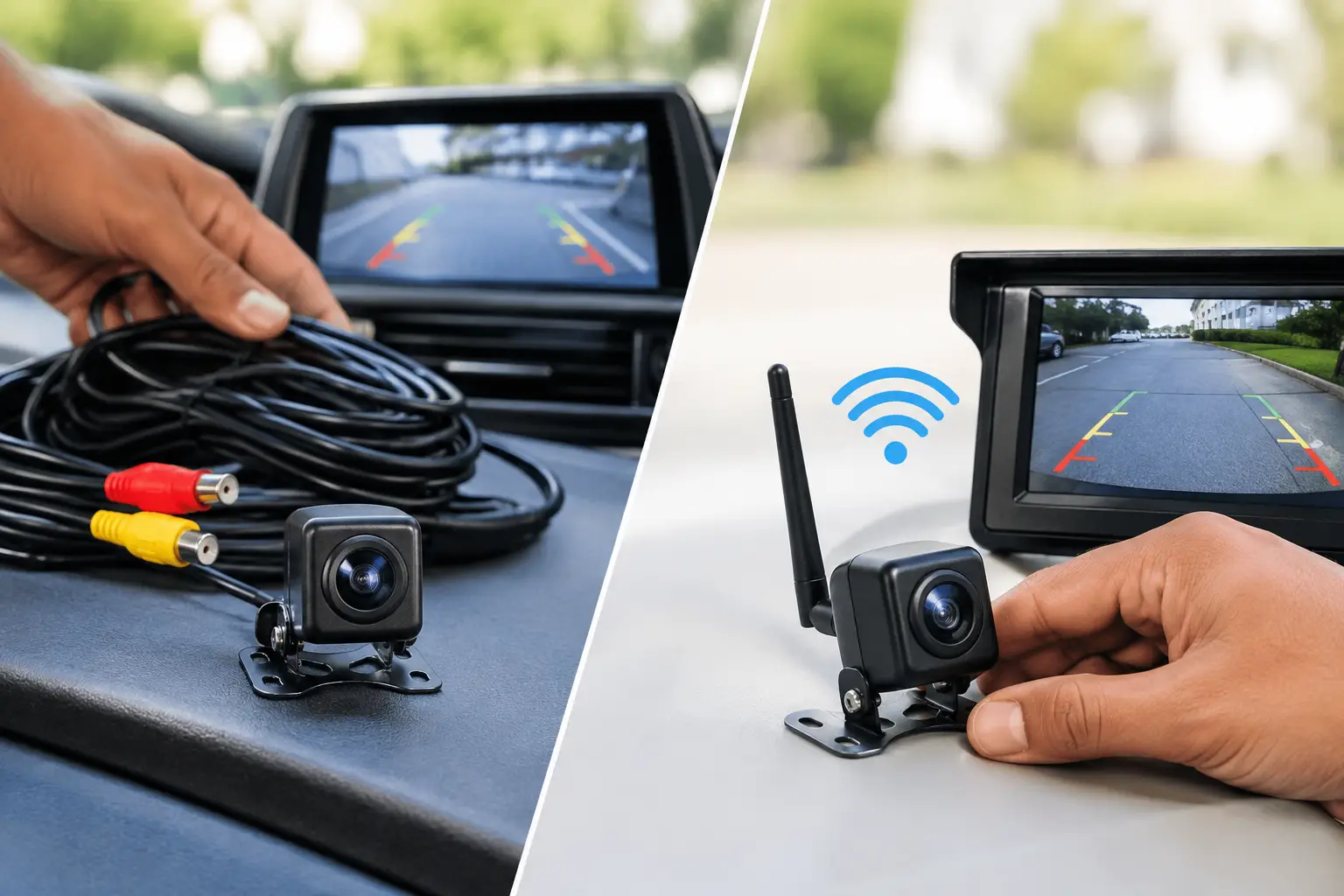
A reverse camera is most useful at the exact moment you cannot afford a fuzzy picture, delayed screen or signal drop-out. Whether you are reversing out of a busy Western Sydney driveway, lining up a ute to a trailer or parking a family SUV at the shops, the choice between wired versus wireless reverse cameras affects how reliably the system performs every day.
Both options can make reversing safer and less stressful. The right choice comes down to your vehicle, how you use it and whether you want the strongest long-term connection or a quicker installation. Here is what vehicle owners should know before fitting a reverse camera.
Wired versus wireless reverse cameras: the main difference
A wired reverse camera sends its video signal from the camera at the rear of the vehicle to the display at the front through a physical cable. The camera usually receives power from the reverse-light circuit, so it activates when reverse gear is selected. Depending on the system, the display may be a separate screen, a rear-view mirror monitor or the vehicle’s existing head unit.
A wireless reverse camera still needs power at the camera, but it transmits the video signal to the front screen using a wireless transmitter and receiver. This reduces the amount of cabling that needs to run the length of the vehicle.
That sounds like a simple choice, but installation quality matters as much as the camera type. A poorly positioned camera, an unprotected connection or incorrect wiring can cause problems with either setup.
Why a wired reverse camera is often the dependable choice
For many cars, utes, vans and work vehicles, a wired system is the best option when reliability is the priority. A direct cable connection gives a stable video feed that is less likely to suffer from interference, lag or intermittent reception.
This is particularly helpful on longer vehicles. The distance between the rear camera and front display in a van, wagon, large 4WD or caravan can make wireless transmission less consistent. With a wired camera, the signal remains dependable across that distance when the cable is installed and protected correctly.
Wired reverse cameras also tend to provide a clearer and faster image. There is generally less delay between what is happening behind the vehicle and what you see on the screen. When reversing around children, pets, bollards or a tight loading area, that immediate view is worth having.
The trade-off is installation time. The cable must be routed safely from the rear to the front, usually behind interior trims, under carpet or along existing wiring paths. On some vehicles, this can take more labour than fitting a wireless kit. It should never be rushed, as loose cables and poor connections can create faults later.
A wired setup is usually the better long-term investment if you keep your vehicle for years, drive daily or rely on it for work.
Best suited to
A wired reverse camera is a strong fit for trade vans, utes with canopies, family vehicles, 4WDs, caravans and vehicles where the camera is used regularly. It also makes sense for drivers who want the most consistent picture and do not want to think about signal performance after installation.
When a wireless reverse camera makes sense
Wireless reverse cameras are popular because they can reduce installation complexity. Instead of running a video cable through the entire vehicle, the installer connects a transmitter near the rear camera and a receiver near the front monitor or head unit.
This can be useful where access is difficult or where a vehicle has a layout that makes cable routing more time-consuming. It can also suit some trailers and caravans, especially where a temporary or removable camera arrangement is preferred.
A good-quality wireless system can work very well in the right vehicle. For a small car or short wheelbase vehicle, the transmission distance is limited, and there may be fewer obstacles between the camera and screen. Many drivers find the performance more than adequate for ordinary parking and reversing.
However, wireless does not mean completely wire-free. The camera still needs a proper power supply, and the monitor needs power as well. The main difference is that the video feed travels wirelessly rather than through a cable running from one end of the vehicle to the other.
Wireless systems can be affected by interference from other electronics, metal bodywork, tinted glass, distance and poor component quality. If the image freezes, flickers or drops out occasionally, it may be frustrating rather than dangerous, but it defeats the purpose of having a camera you can trust.
Best suited to
Wireless cameras can be a practical choice for smaller vehicles, occasional towing setups and owners who need a simpler installation. They are also worth considering when the vehicle’s design makes a full wired route unusually difficult. The key is choosing a quality system and having it fitted correctly.
Picture quality, delay and night vision
Do not choose a reverse camera based on whether it is wired or wireless alone. Camera quality has a major impact on what you see. Look for a wide but realistic viewing angle, good low-light performance and a screen that is clear in daylight.
An ultra-wide camera can show more of the area behind the vehicle, but it may distort distance. A picture that makes objects look further away than they really are can lead to poor judgement when parking. Parking guide lines can help, but they should be treated as a guide rather than an exact measurement.
Night vision matters for anyone who parks in a dark driveway, leaves work early or returns home late. A camera with decent low-light capability gives you more useful detail than one that only produces a grainy black-and-white image. Keep the lens clean too. Dust, road grime and water spots can quickly reduce visibility.
Delay is another consideration. Wired cameras typically offer the quickest response. Wireless systems have improved, but some can have a slight delay. For slow, controlled reversing this may not be noticeable. For a work vehicle operating around people, equipment or tight spaces, a near-instant feed is preferable.
Installation is where reliability is won or lost
A reverse camera should be mounted in a position that gives a useful view without being easily knocked, blocked by accessories or exposed to unnecessary damage. The number plate area is common, though the right location depends on the vehicle and camera style.
The electrical side also needs care. The system should be connected so it activates correctly in reverse, with wiring secured away from heat, sharp edges and moving parts. Exterior connections need protection from water and corrosion. On modern vehicles, incorrect accessory wiring can sometimes cause electrical faults, warning lights or battery drain.
For a caravan or trailer setup, the connection between the towing vehicle and trailer needs special attention. A camera must continue to work reliably through movement, vibration and changing weather. In some cases, a dedicated wired connection is the sensible option. In others, a purpose-built wireless kit may be more practical.
If you are searching for an Auto Electrician near me in a search engine, look for someone who can assess the vehicle before recommending a kit. The cheapest camera package is not always the cheapest outcome if it needs repeated repairs or replacement.
Which reverse camera should you choose?
Choose wired if you want the most stable signal, clearer performance over longer distances and a setup that will stand up to regular use. It is usually the best fit for work vehicles, larger vehicles, daily drivers and permanent caravan installations.
Choose wireless if you have a shorter vehicle, want to limit cable routing or need a practical solution for occasional use. It can be an excellent option, provided the equipment is good quality and the signal is tested properly after fitting.
It also depends on what you are connecting the camera to. An aftermarket screen may be straightforward, while integrating a camera with a factory head unit can require the correct interface and wiring knowledge. This is not a job to guess your way through, particularly on newer vehicles with sensitive electrical systems.
For drivers looking up “Auto electrician Blacktown”, a mobile auto electrician can inspect the vehicle at your home or workplace and recommend a reverse camera setup that suits how you actually use it. Ray’s Auto Electrical provides practical accessory installations across Sydney, with professional workmanship and the convenience of on-site service.
A reverse camera should make every reverse easier, not add another electrical problem to your vehicle. Pick the system that suits your vehicle’s size and use, then have it installed properly so the view behind you is there when you need it most.