
A car that will not start outside the school, at the worksite or in your own driveway can throw the whole day off course. Starter motors are a common cause of no-start problems, but they are not the only possibility. A proper test matters because a flat battery, poor cable connection or charging fault can produce similar symptoms.
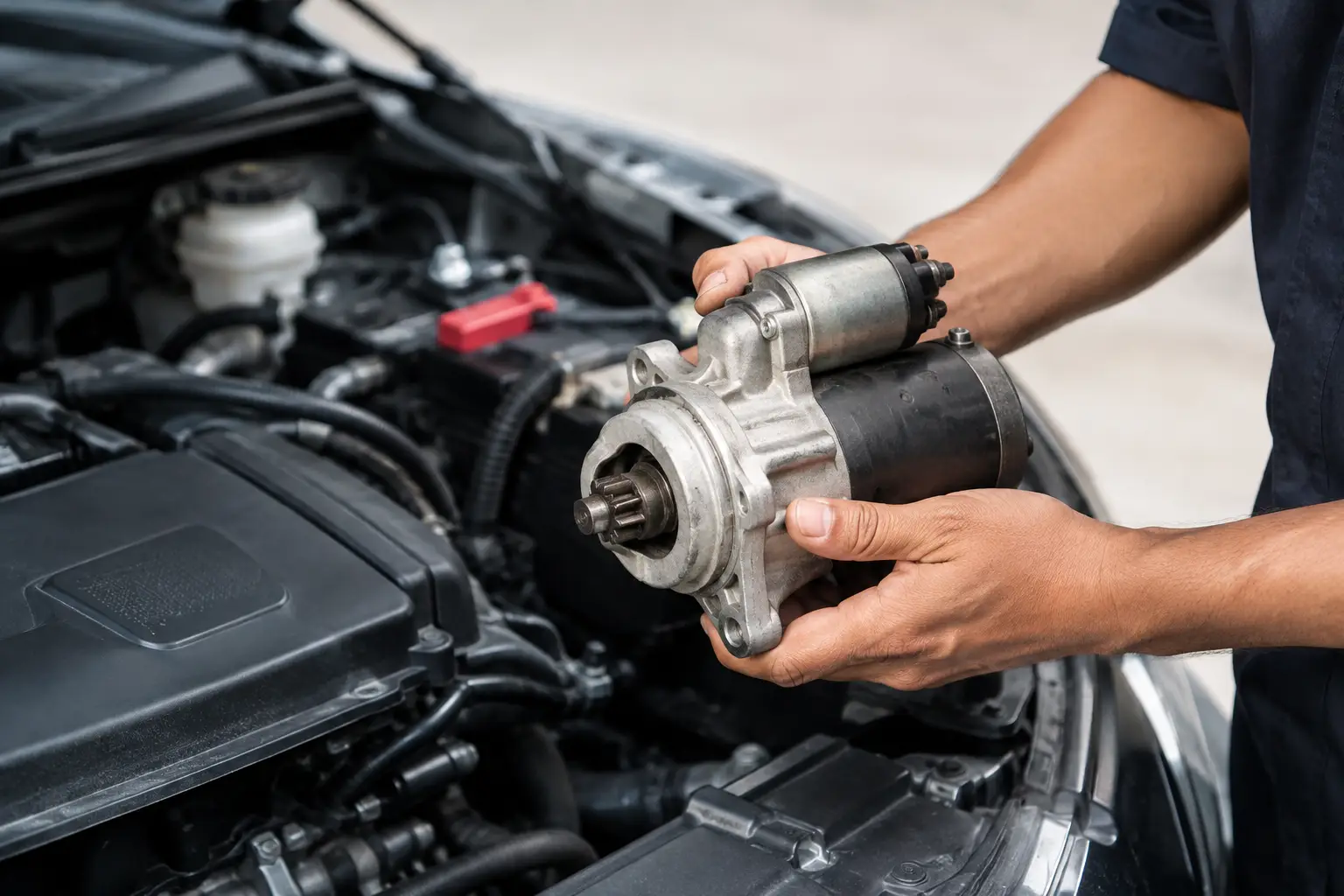
The starter motor is the part that turns the engine over when you turn the key or press the start button. Once the engine is running, the starter disengages and the alternator takes over to charge the battery. When the starter is worn or faulty, your vehicle may have power to the dash and accessories but still refuse to crank.
What starter motors do
Your starter motor uses electrical power from the battery to spin the engine fast enough for it to start. It works with a starter solenoid, which sends power to the motor and engages a small gear with the engine’s flywheel or flexplate.
This happens in a moment when everything is working as it should. But the starter motor handles a high electrical load every time you start the vehicle. Over time, internal brushes, contacts, bearings and the solenoid can wear out. Heat from the engine bay, oil leaks, water exposure and damaged wiring can also shorten its life.
A starter fault does not always mean the whole unit has failed without warning. Some vehicles will give intermittent signs for days or weeks before they stop starting altogether.
Common signs of a failing starter motor
The clearest symptom is a single click when you try to start the car, followed by no engine cranking. That click may be the starter solenoid attempting to engage, but the motor itself is not turning. However, a weak battery can cause a similar noise, so it is worth testing before replacing parts.
A slow, laboured crank can also point to a starter motor problem. If your battery tests healthy but the engine turns over more slowly than usual, the starter may be drawing too much current or struggling internally. This can be especially noticeable on cold mornings or after a long drive when heat has built up under the bonnet.
Intermittent starting is another warning sign. The vehicle may start normally one day, then only click the next, then start again after several attempts. It is tempting to ignore this when the car eventually fires up, but intermittent faults tend to become complete no-start faults at the most inconvenient time.
Other signs include a grinding noise during starting, a whirring sound with no engine crank, or a starter that continues running briefly after the engine starts. Grinding can mean the starter gear is not engaging properly. A starter that stays engaged needs prompt attention, as continued contact can damage the flywheel teeth.
Burning smells or smoke around the engine bay are less common but more serious. Stop trying to start the vehicle if you notice either. An electrical short, overheated cable or stuck starter can create a safety risk and requires professional inspection.
Is it the starter, battery or alternator?
These three parts are often blamed for the same problem, but they have different jobs. The battery stores electrical power, the starter motor cranks the engine, and the alternator recharges the battery while the engine runs.
If the dash lights are dim, the central locking is weak or you hear rapid clicking when starting, a flat or weak battery is a likely cause. Corroded battery terminals and loose connections can create the same result. A jump-start may get you moving, but it does not explain why the battery went flat in the first place.
If the vehicle starts with a jump but then goes flat again after driving, the alternator or charging circuit may be at fault. A battery warning light, flickering lights or electrical accessories behaving strangely can support that diagnosis.
If the battery is fully charged, cable connections are sound and the vehicle still gives a single click or will not crank, the starter motor becomes more likely. Modern vehicles can also have issues with ignition switches, starter relays, park or neutral safety switches, clutch switches and immobiliser systems. This is why accurate electrical diagnostics are more valuable than replacing the part that seems most likely.
Why a starter motor can fail
Normal wear is the most common reason. Brushes and internal contacts wear each time the starter operates, particularly on high-kilometre vehicles or cars used for frequent short trips. A starter motor can last many years, but there is no fixed replacement interval that suits every vehicle.
Heat is another factor. Starters are mounted close to the engine, and prolonged heat can affect internal electrical components. Oil leaks from the engine can contaminate the starter, while water and mud exposure can be hard on units fitted low in the engine bay, particularly in utes and four-wheel drives.
Electrical issues can also damage a good starter. Loose battery leads, corroded earth connections and undersized or damaged cables increase resistance. The starter then has to work harder to receive the current it needs. Repeatedly trying to start a car with a very flat battery can place extra strain on the system too.
What to do when your car will not crank
Start by checking the simple things safely. Make sure the vehicle is in Park or Neutral for an automatic, or that the clutch is fully depressed in a manual. Check that battery terminals are not visibly loose or badly corroded. If you have a push-button start, hold the brake pedal firmly and make sure the key fob battery has not gone flat.
Avoid repeatedly turning the key or pressing the start button. Multiple attempts can drain the battery further and may overheat cables or a faulty starter. Do not hit the starter motor with a tool. That old workaround can damage components, cause injury or mask a fault that still needs repair.
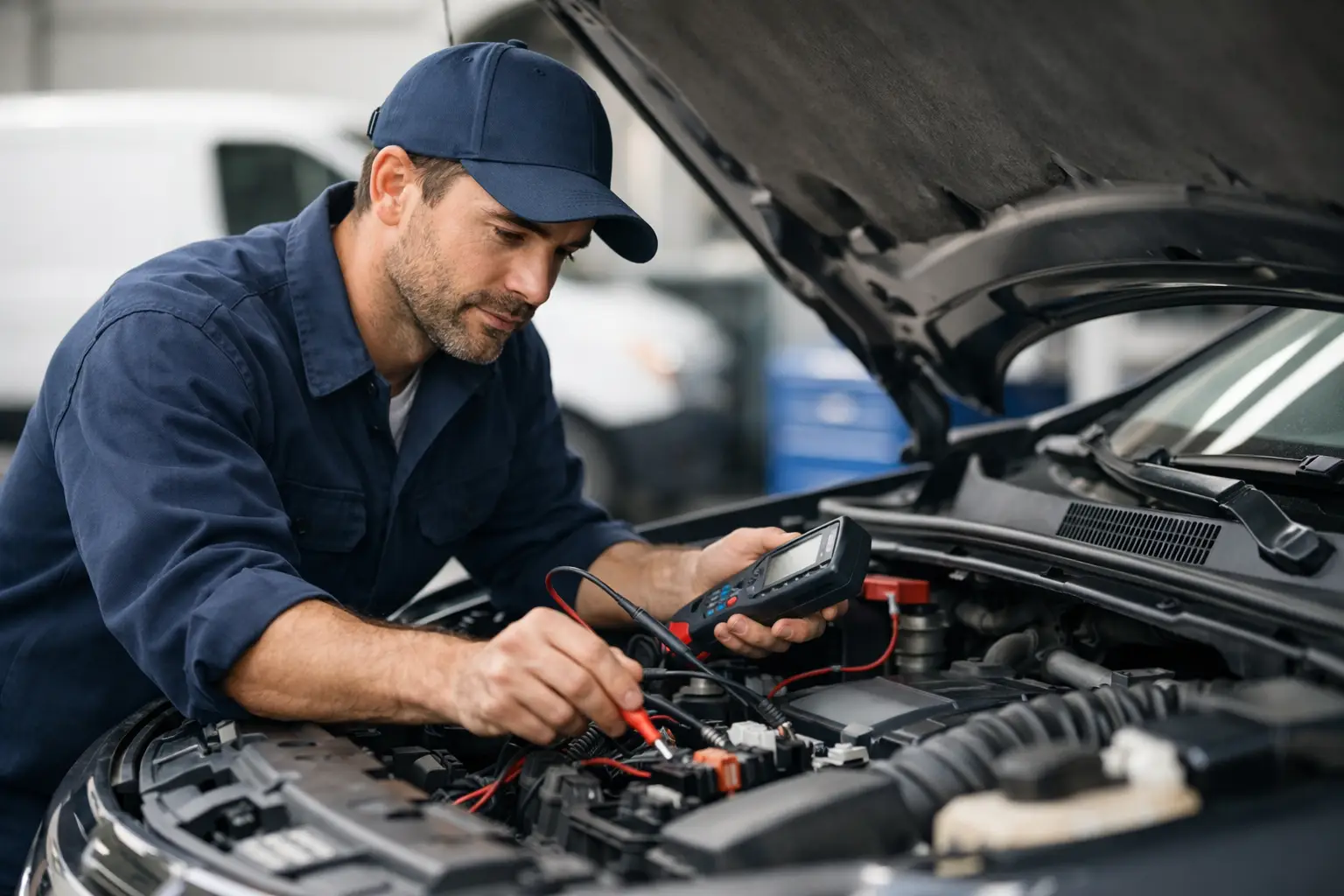
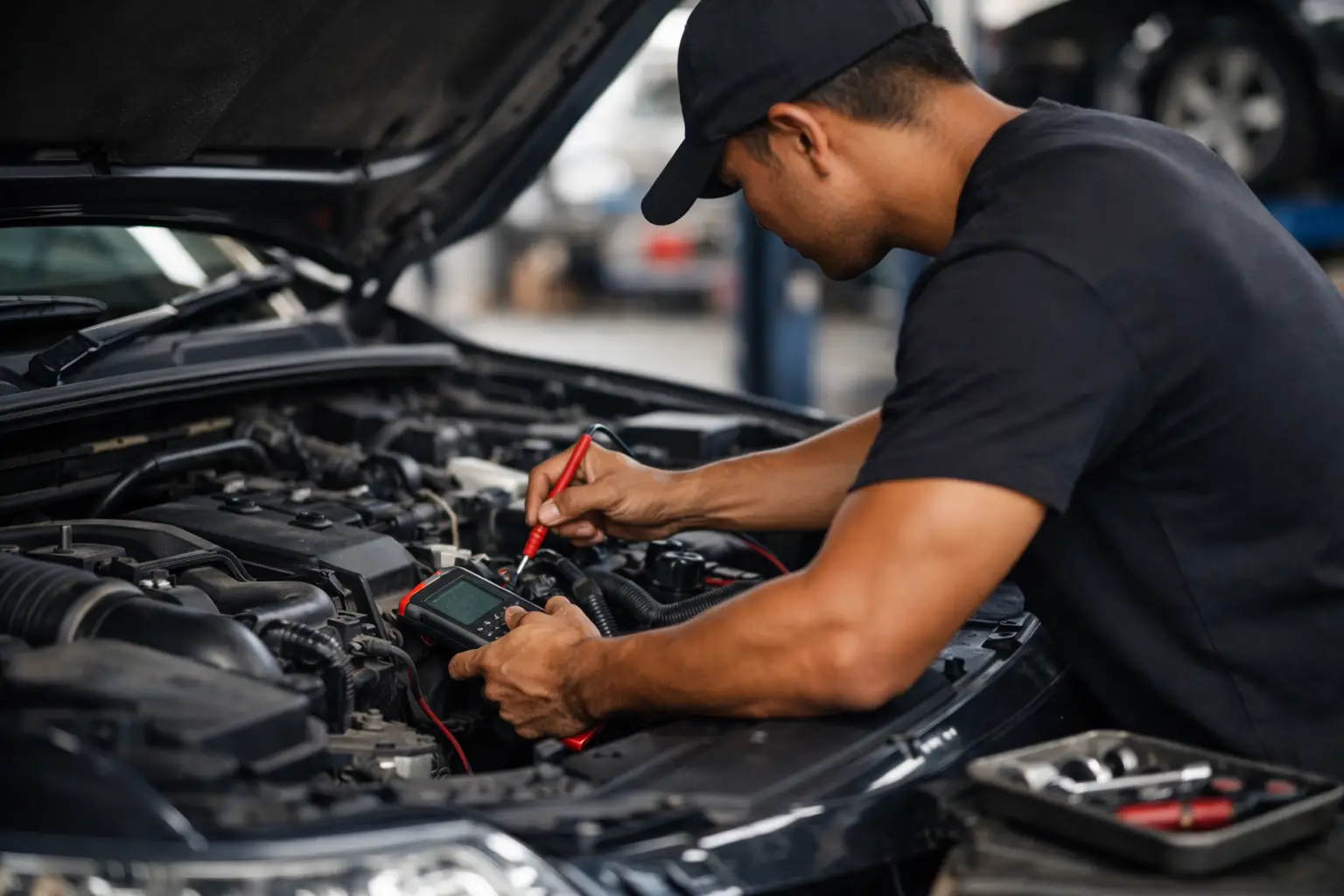
If you need the vehicle urgently, mobile testing can save the hassle of arranging a tow to a workshop. A qualified auto electrician can test battery condition, charging voltage, voltage drop through cables and earths, starter current draw, and the control signal to the starter. Those checks narrow down the fault before any replacement is recommended.
Repair or replace the starter motor?
Whether a starter can be repaired depends on its condition, the vehicle and the availability of quality parts. Some units can be rebuilt with new brushes, solenoid contacts or other components. In many late-model vehicles, replacement with a quality new or reconditioned unit is the more practical option.
The cheapest part is not always the best value. A poor-quality starter may fit initially but fail early, create fitment issues or offer limited reliability. The right choice balances the vehicle’s age, how long you plan to keep it, parts availability and the quality of the warranty.
A proper replacement should also include inspection of the battery cables, terminals and earth points. If the underlying wiring issue is left in place, it can affect the performance and lifespan of the replacement starter.
Get help where the vehicle has stopped
For Sydney drivers, a no-start fault is often more than an inconvenience. It can mean missed work, school runs, appointments and jobs. Ray’s Auto Electrical provides mobile fault finding and repairs, so the problem can be assessed at your home, workplace or roadside location where practical.
When searching online, many drivers type “Auto Electrician near me” when a car will not start. If you are in the western suburbs, you may also see searches such as “Auto electrician Blacktown”. What matters is choosing a qualified technician who tests the full starting system instead of guessing at the cause.
If your car has started slowly, clicked intermittently or needed repeated attempts lately, arranging a check before it fails completely can spare you a far more stressful morning. A quick, accurate diagnosis is the best place to start.