

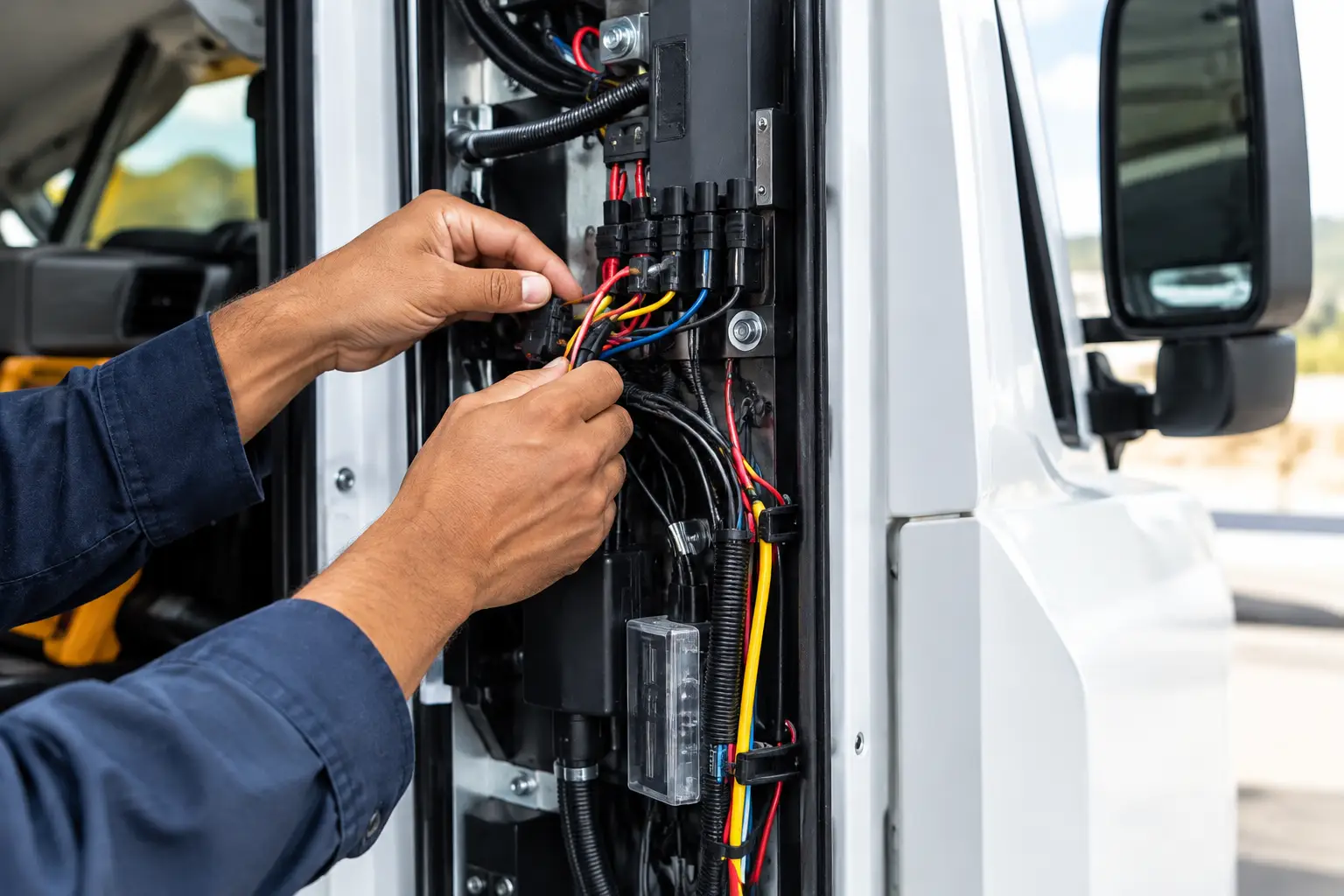
A work vehicle can have a new light bar, UHF, dash cam and fridge fitted, yet still develop a flat battery or intermittent starting fault if the wiring has been added without a proper plan. This fleet wiring example shows what a tidy, safe accessory installation should look like and why the details matter when vehicles need to stay on the road.
For a business with several utes, vans or service vehicles, electrical work is not just about adding accessories. It is about reducing downtime, protecting the vehicle’s factory wiring and making sure every driver can rely on the equipment when it counts.
A practical fleet wiring example
Consider a service ute that needs a UHF radio, dash cam, work lights and a dual-battery system to run a fridge or charge cordless-tool batteries. Rather than connecting each accessory directly to the starter battery, a qualified auto electrician will build separate, protected circuits around the vehicle’s intended use.
The starter battery supplies power through a correctly sized main fuse, fitted as close to the battery as practical. From there, heavy-duty cable runs to a fused distribution point or auxiliary battery system. Each accessory receives its own fuse and cable size based on its current draw and cable length.
The UHF may be wired through an ignition-switched supply, so it does not stay on after the driver parks. The dash cam can use a purpose-built hardwire kit with low-voltage cut-off protection. Work lights are normally controlled through a relay and switch circuit, rather than asking the dashboard switch or factory wiring to carry the full load.
That arrangement is more than neat. It isolates faults, makes later repairs easier and reduces the risk of heat damage, blown fuses or a vehicle that will not start in the morning.
What the circuit layout may look like
A basic layout can be described like this:
`Starter battery > main fuse > relay or isolator > auxiliary battery/distribution box > individual fused accessory circuits`
The control side is separate from the power side. For example, the work-light switch activates a relay, while the relay carries the heavier current from the protected power supply to the lights. The dash cam and UHF have their own fuse positions, and all earth points are clean, secure and suitable for the load.
The exact layout depends on the vehicle, the accessories fitted and how the vehicle is used. A courier van that idles through Sydney traffic has different needs from a tradesman’s ute travelling to regional jobs, or a security fleet requiring multiple cameras and warning lights.
Why fleet wiring needs more than a quick connection
Factory vehicle electrical systems are designed around the original equipment. Modern vehicles also have sensitive control modules, airbags, cameras, parking sensors and communication networks. Tapping into the wrong wire can cause warning lights, erratic accessory operation or faults that are difficult to trace.
A professional installation avoids guesswork. Wiring is routed away from heat, moving parts and sharp metal edges. Cables passing through panels are protected with grommets or conduit. Connections are crimped or terminated correctly, sealed where needed and secured so they cannot rub loose on rough roads.
Fuse selection is equally important. A fuse protects the cable, not simply the accessory. Installing an oversized fuse because a smaller one keeps blowing can allow a cable to overheat before the fuse operates. The correct fix is to identify why the circuit is overloaded, then repair or redesign it properly.
For a fleet manager, these measures can mean the difference between a small planned repair and a vehicle off the road with an electrical fault during a busy day.
Common problems found in work vehicles
Mobile auto electrical work often reveals the same issues in vehicles that have had accessories added over time. One installer may fit a radio, another adds beacon lights, and a third connects a charging system years later. Before long, the battery terminal is crowded with extra cable lugs and inline fuses that are difficult to identify.
Common issues include poor earth connections, undersized cable, loose battery terminals, unfused power feeds, damaged wiring beneath the tray or behind interior trims, and accessories that remain powered after the ignition is switched off. These faults may not show up straight away. They can appear after rain, vibration, hot weather or a long day of stop-start driving.
A recurring flat battery is a good example. The cause might be a dash cam left in parking mode, a relay that has stuck on, a dual-battery isolator fault, a failing battery or an alternator that is not charging properly. Replacing the battery without testing the complete system can leave the real issue unresolved.
Planning wiring for your fleet
Before fitting accessories across multiple vehicles, decide what each vehicle genuinely needs. Standardising equipment where possible makes servicing simpler. If every vehicle has the same UHF model, fuse layout and dash cam wiring method, drivers know how to use the equipment and technicians can diagnose faults faster.
It also helps to keep a simple record for each vehicle. Note the accessories fitted, fuse locations, battery type and any electrical repairs carried out. This is particularly useful when a vehicle changes drivers or comes in for maintenance months later.
There are a few decisions that should be made upfront:
- whether accessories need constant power, ignition power or both
- how much current each accessory draws at maximum load
- whether an auxiliary battery is needed to protect starting capacity
- where switches, cameras and antennas can be fitted without affecting safety systems
- how cables will be protected in trays, canopies, roof racks and vehicle cabins
This planning does not need to be complicated, but it prevents costly add-ons later. A vehicle fitted with work lights today may need a canopy fit-out, inverter or extra charging capacity next year. Leaving room for safe expansion is usually better than rebuilding the entire installation.
When a mobile auto electrician is the right call
Some simple accessory kits are designed for owner installation, but fleet wiring is rarely a good place to cut corners. If the work involves battery cables, relay circuits, high-current equipment, trailer wiring, dual batteries, cameras or wiring near airbags, professional installation is the safer option.
A mobile auto electrician can inspect the vehicle where it is parked, test the battery and charging system, trace existing accessory wiring and complete repairs or upgrades without taking the vehicle out of service for a workshop visit. That convenience is valuable for trades, delivery vehicles and families who rely on their car every day.
If you are typing “Auto Electrician near me” after a flat battery, flickering work lights or an accessory fault, ask whether the technician will test the underlying circuit rather than only replace the obvious part. For local vehicle owners searching “Auto electrician Blacktown”, on-site diagnostics can save the hassle of towing or arranging transport to a workshop.
Ray’s Auto Electrical can assess accessory wiring, battery and alternator performance, and electrical faults across Sydney. The aim is straightforward: find the cause, explain the repair in plain English and get the vehicle operating reliably again.
Keep the wiring ready for the next job
A good installation should look organised, but the real test is what happens after months of daily use. Accessories should operate when needed, the starter battery should retain enough charge to start the vehicle, and the wiring should remain protected from vibration, heat and weather.
If your fleet has grown one accessory at a time, a wiring inspection can be a sensible preventative job before the next breakdown chooses the timing for you.