
A new amplifier can make a big difference to your music, but poor wiring can quickly turn a sound upgrade into a flat battery, blown fuse or unreliable starting problem. If you plan to install car amplifier equipment, the job is about far more than connecting a few cables. The wiring needs to suit the amplifier, the vehicle and the way you use it every day.
For many Sydney drivers, especially those who rely on their car for work, school runs or commuting, it pays to get the installation right from the start. A correctly fitted amplifier should deliver cleaner sound without putting unnecessary strain on your vehicle’s electrical system.
Choose the Right Amplifier and Power Setup
Before any wiring begins, check that the amplifier suits your speakers and head unit. An amplifier that is too powerful can damage speakers if it is not set correctly. One that is underpowered may be pushed too hard, causing distortion and overheating.
The key figures are RMS power, speaker impedance and the number of channels. RMS is the continuous power an amplifier can supply, which is more useful than peak-power advertising figures. Your speakers should be able to handle the amplifier’s RMS output at the correct impedance, commonly 2 or 4 ohms.
You also need to consider what you want the system to do. A compact four-channel amplifier can improve front and rear speaker sound, while a mono-block amplifier is commonly used for a subwoofer. Some drivers choose a five-channel model to run both speakers and a subwoofer from one unit. The best option depends on your vehicle, available space and listening preferences.
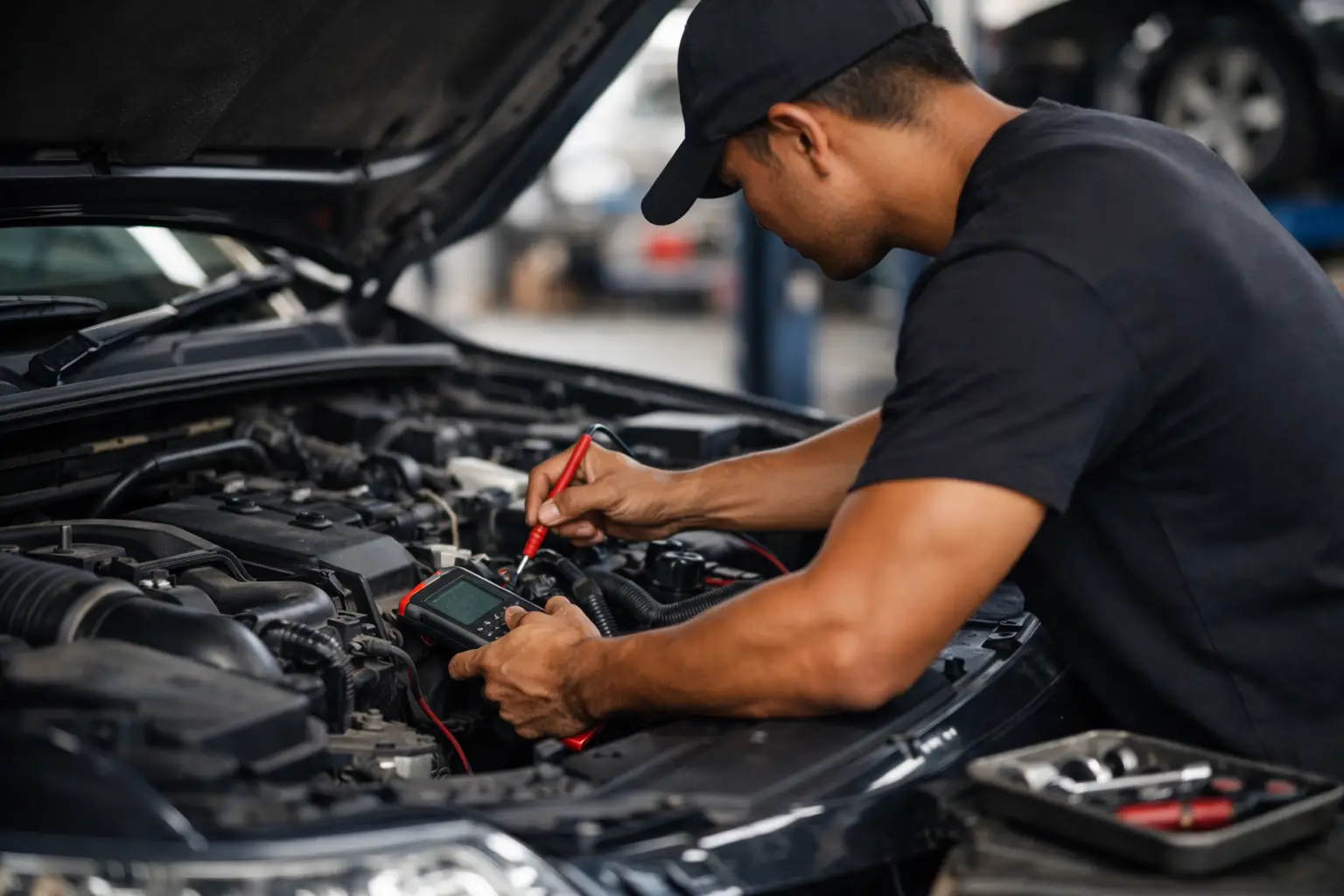
An amplifier draws significant current, particularly at higher volume. Older batteries, weak alternators and corroded connections may cope with normal driving but struggle once extra audio equipment is added. Testing the battery and charging system before installation can prevent trouble later.
What You Need to Install a Car Amplifier Safely
A professional installation uses the correct cable size, proper circuit protection and secure mounting. These details are not extras. They protect your vehicle and help the amplifier perform as it should.
The power cable must be sized for the amplifier’s current draw and the length of the cable run. If the cable is too thin, it can heat up, create voltage drop and limit amplifier performance. The earth cable should be short, thick and attached to clean, bare metal on the vehicle body. Paint, rust or a loose bolt can cause noise, cut-outs and overheating.
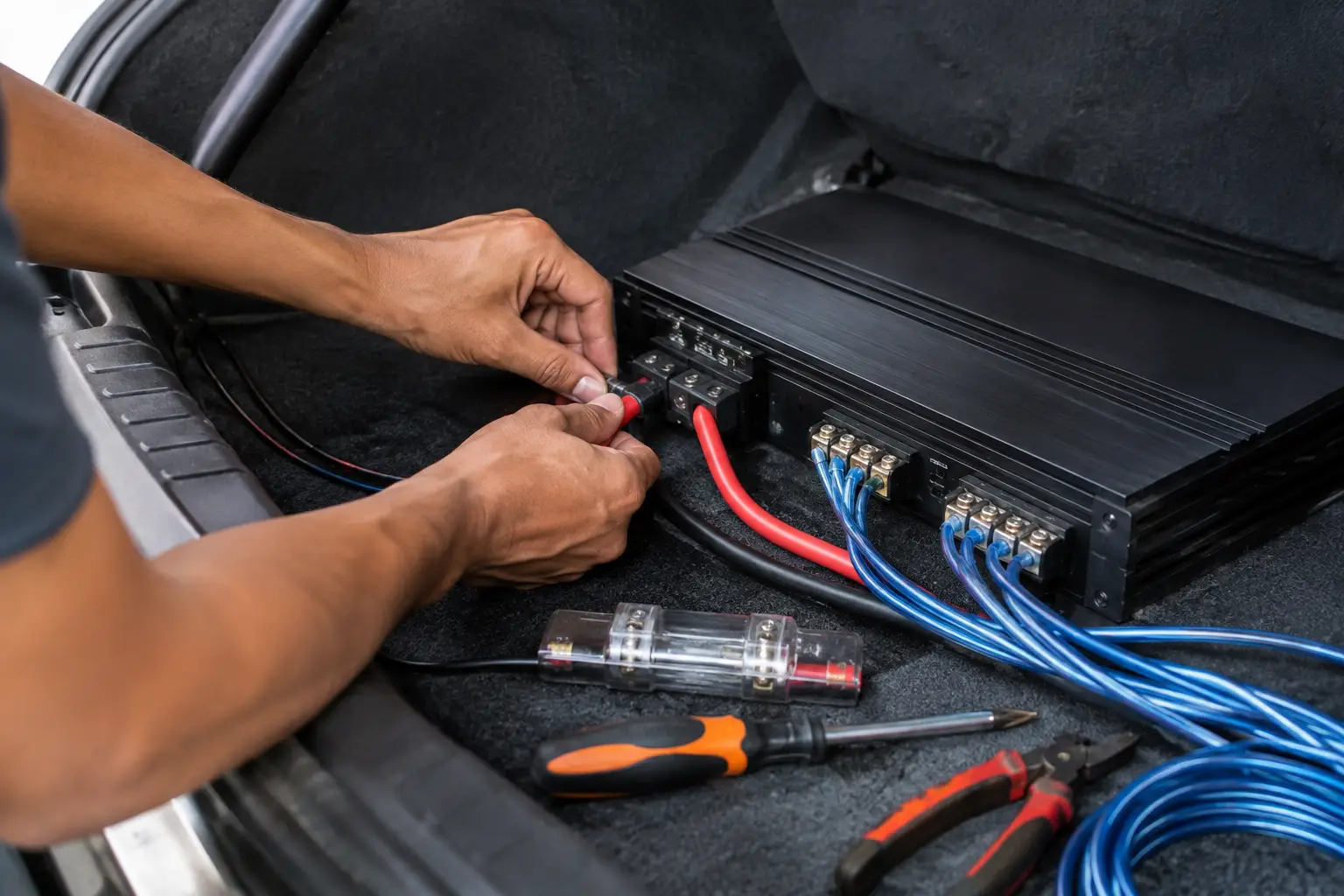
A fuse must be fitted close to the battery on the positive power cable. Its job is to protect the cable if there is a short circuit. Without a correctly rated fuse, damaged wiring can become a serious fire risk. The amplifier itself may have fuses, but those do not replace the main fuse at the battery.
A typical installation includes a suitable power cable and fuse holder, earth cable, remote turn-on wire, RCA leads or a line output converter, speaker cable, terminals, split tubing and mounting hardware. Quality materials are worthwhile because they handle heat, vibration and daily use better than cheap, undersized wiring kits.
Plan the Cable Route First
Most amplifier power cables run from the battery, through a factory grommet in the firewall, along the side of the cabin and into the boot or under-seat area. Never force a cable through bare metal or drill holes without protecting the cable with a rubber grommet.
Keep power wiring separate from RCA signal leads where practical. Running them alongside each other can introduce alternator whine or electrical interference through the speakers. If they must cross, crossing at a right angle can help reduce noise.
Avoid routing cables near seat rails, pedals, sharp brackets, airbags or areas where they may be crushed. In utes and SUVs, take extra care where wiring passes into the tray or rear cargo area, as exposed sections need protection from weather and movement.
Mount the Amplifier Where It Can Stay Cool
Amplifiers generate heat, so they need airflow. The boot is a common location, but an amplifier can also be mounted under a seat or behind a trim panel if there is enough space and ventilation. Do not mount it directly onto loose carpet, against insulation or in a tightly enclosed cavity where heat cannot escape.
The unit should be firmly secured. A loose amplifier can damage its wiring, rattle over bumps and become dangerous in a sudden stop. Mounting screws must not penetrate fuel lines, wiring looms, the fuel tank or the vehicle floor without checking what sits underneath.
If your car has a compact interior, the size of the amplifier matters as much as its power output. A smaller, efficient Class D amplifier is often a sensible choice because it uses less space and generally produces less heat than older designs.
Connect the Signal and Speaker Wiring Correctly
If your head unit has RCA outputs, the connection is relatively straightforward. RCA leads carry the audio signal to the amplifier, while a remote wire tells the amplifier when to turn on and off with the radio.
Factory head units may need a line output converter or an amplifier with high-level speaker inputs. This allows the amplifier to receive a signal from the original speaker wiring. Modern vehicles can have integrated infotainment systems, steering-wheel controls, reverse cameras and warning chimes, so cutting into factory wiring without a plan can create faults that are expensive to sort out.
Speaker wiring must match the amplifier channels and polarity. Positive and negative terminals need to remain consistent from the amplifier to each speaker. Reversing polarity on one speaker may not stop it working, but it can make the sound weak and reduce bass response.
Set the gain carefully. Gain is not a volume knob. It matches the amplifier’s input sensitivity to the head unit’s output. Setting it too high causes clipping, which sounds harsh and can damage speakers even if the amplifier is not particularly large. Start low, use clear music you know well, then increase gradually until the system is loud and clean without distortion.
Common Problems After an Amplifier Installation
A system that will not turn on may have a blown main fuse, poor earth connection, missing remote signal or a wiring fault. If the amplifier stays on after the vehicle is switched off, the remote wire may be connected to a constant 12-volt source instead of an accessory or radio-controlled source. This can drain the battery overnight.
Whining that changes with engine speed usually points to an earthing issue, poor cable routing or interference in the signal path. A clicking noise, intermittent sound or amplifier protection mode can also be caused by a loose connection, damaged speaker wire or incorrect speaker impedance.
Do not keep replacing fuses if they blow repeatedly. A fuse is responding to a fault, not causing one. Continued use can damage the amplifier or wiring and may leave you without a reliable vehicle.
When a Mobile Auto Electrician Is the Better Option
Installing an amplifier is manageable on some older, simpler vehicles if you have the right tools and experience. It becomes more involved when the vehicle has a factory infotainment system, sensitive electronics, limited mounting space or an existing battery and charging issue.
A qualified mobile auto electrician can check the vehicle’s electrical condition, choose safe cable routes, protect the wiring and tune the system properly at your location. This is often more convenient than losing a day at a workshop, particularly when the car is needed for work or family commitments.
If you are searching for an “Auto Electrician near me”, look for someone who can diagnose the whole system rather than simply fit the amplifier. For local drivers typing “Auto electrician Blacktown” into a search engine, an on-site specialist can assess the installation where the vehicle is parked and identify any issues before they become a bigger repair.
Ray’s Auto Electrical provides mobile sound system and accessory installation across Sydney, with practical advice and workmanship focused on safe, reliable results. A properly installed amplifier should make every drive more enjoyable, not give you another electrical problem to worry about.