

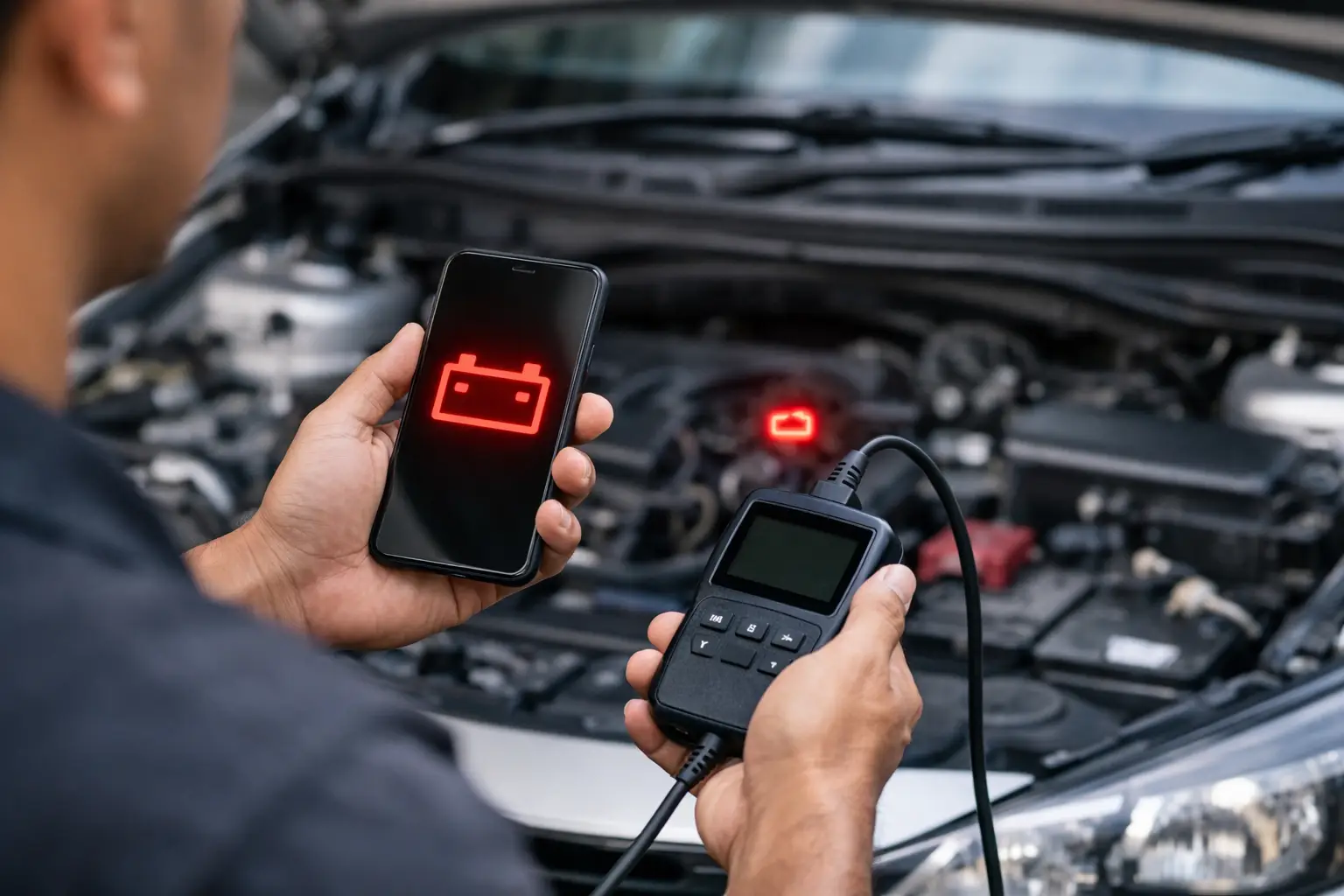
You turn the key, the car starts, but that battery symbol stays on. Or worse, it flickers on while you are driving home from work, doing the school run, or heading between jobs. In most cases, battery warning light diagnosis mobile service is the quickest way to find out whether the issue is the battery itself, the alternator, wiring, or something else in the charging system.
A lot of drivers assume the battery light means they just need a new battery. Sometimes that is true. Just as often, it is not. The warning light usually points to a charging fault, which means the vehicle may be running only on stored battery power. If that is happening, you might still have enough charge to keep going for a short time, but you may also end up stranded with very little warning.
What the battery warning light usually means
The battery warning light is really a charging system warning light. It tells you the battery is not being charged properly while the engine is running. That can happen because of a weak or failed battery, but it can also be caused by a faulty alternator, a worn drive belt, bad connections, damaged wiring, or a problem with the voltage regulation.
This is why guessing can get expensive. Replacing the battery without testing the rest of the system may not fix the problem. The new battery can go flat again if the alternator is not doing its job.
Some vehicles will show other signs at the same time. Headlights may look dimmer than normal. The dash may flicker. Power windows can slow down. You might notice trouble starting, warning lights for other systems, or the engine cutting out altogether. On newer vehicles, low voltage can also trigger a string of fault messages that look unrelated at first glance.
Battery warning light diagnosis mobile – why on-site testing helps
When a charging issue appears, getting the vehicle to a workshop is not always practical. If the alternator has stopped charging, every extra kilometre drains the battery further. If the fault is intermittent, it may even disappear by the time you arrive, making it harder to diagnose properly.
That is where battery warning light diagnosis mobile service makes sense. Testing can be done where the vehicle has failed or where it is parked at home or work. It saves the hassle of towing, waiting in a queue, or trying to risk one more trip with a warning light on the dash.
A proper on-site diagnosis should include more than a quick battery swap. The battery condition needs to be tested, but so does charging output, voltage drop, cable condition, terminal integrity, and the way the system behaves under load. If the issue is with the alternator, the battery, or a poor electrical connection, that needs to be confirmed before parts are fitted.
The most common causes of a battery light
A failed alternator is one of the most common causes. The alternator keeps the battery charged and powers the vehicle’s electrical systems while the engine is running. If it stops producing enough output, the battery warning light will usually come on.
Battery problems are also common, especially in older vehicles or cars that do a lot of short trips. A battery can test flat, weak, or unable to hold charge, but that result still needs context. A weak battery might be the main fault, or it might be the result of a charging issue that has been building for days.
Loose or corroded battery terminals can create their own problems. So can damaged earths and charging cables. These faults are easy to overlook because they can mimic more serious component failures.
A worn or slipping drive belt is another possibility. If the belt is not turning the alternator properly, charging voltage can drop. In some cases, the light may come and go, especially when the vehicle is under load or idling.
Then there are less common faults, such as internal regulator issues, blown fuses, wiring loom damage, and faults in smart charging systems on newer vehicles. These take proper testing to confirm.
Why the light should not be ignored
Some warning lights can wait until the weekend. The battery light usually should not. Once the charging system stops working, the vehicle is effectively using up reserve power. How long it lasts depends on battery condition, vehicle type, electrical load, and how far you are driving.
A simple older car with a healthy battery may keep going longer than a modern vehicle with lots of electronics. Air conditioning, headlights, demisters, mobile chargers, and audio systems all add to the load. Night driving makes the situation worse. So does stop-start traffic.
That is why the safest option is usually to limit driving and get it checked as soon as possible. If the car is already struggling to start, dimming lights, or showing multiple electrical faults, continuing to drive may leave you stuck.
What happens during a mobile diagnosis
A proper mobile auto electrician will not just plug in a tester and guess. The job starts with checking symptoms, the warning light behaviour, and whether the issue is constant or intermittent. From there, the battery is tested for state of charge and health, then the charging system is checked with the engine running.
Voltage readings are only part of the picture. A good diagnosis also looks at current delivery, load response, cable losses, terminal condition, and whether the alternator is charging consistently. If a parasitic drain or connection fault is involved, that needs to be traced properly.
In practical terms, the goal is simple: identify the actual fault, explain it clearly, and sort it out without wasting time or replacing parts that are still serviceable.
When it is the battery and when it is not
This is where experience matters. If the battery warning light comes on and the battery is old, it is tempting to blame the battery straight away. But batteries and alternators often fail together or one exposes the weakness of the other.
For example, a failing alternator may undercharge the battery for weeks. The battery then becomes weak and struggles to start the vehicle. By the time help arrives, both parts are under suspicion. If only the battery is replaced, the charging problem remains. If only the alternator is replaced, a badly damaged battery may still let you down.
There is no one-size-fits-all rule here. It depends on age, test results, vehicle use, and how long the fault has been present.
Why many drivers search for Auto Electrician near me
When the battery light comes on, most people are not looking for a long technical explanation. They want someone local, qualified, and able to get to them without turning the day upside down. That is why so many people type Auto Electrician near me when the problem shows up suddenly.
The value is not just convenience. It is also about getting the fault checked in the real-world conditions where it happened. If the car is hard to start at home in the morning, parked at work, or stuck in a driveway, on-site diagnosis can save a lot of time and guesswork.
For drivers in busy areas, especially if the vehicle is a family car, work ute, or daily commuter, mobile service is often the most practical option.
A note for drivers searching Auto Electrician Blacktown
If you are looking for an Auto Electrician Blacktown service because the battery light has come on, speed matters, but so does proper testing. A quick battery replacement may get the car moving again for now, but if the real issue is the alternator or wiring, the problem will return.
This is why a mobile auto electrician who handles charging system faults regularly is worth calling. The right diagnosis at the start usually costs less than trial-and-error repairs.
Can you still drive with the battery warning light on?
Sometimes yes, but it is a risk assessment, not a green light. If the car has just started showing the light and everything else seems normal, you may have a short window before it becomes a non-starter. If the vehicle is losing power, struggling to start, or showing dim lights and other warnings, driving further is a poor bet.
If you do need to move it a short distance, reduce electrical load where possible. Turn off accessories you do not need. But the better choice is usually to stop and arrange testing before the battery is fully drained.
Choosing the right help
A charging system fault is one of those jobs where clear answers matter more than flashy language. You want someone who can test properly, explain the issue in plain English, and fix what actually needs fixing. That might be a battery, an alternator, a cable repair, or a connection issue. It might also be a combination.
For Sydney drivers, especially across the western suburbs, mobile auto electrical support makes life easier because the vehicle can be tested where it sits instead of adding towing costs or workshop delays to the problem.
If that battery light is on, treat it like a warning worth acting on now, not after the next failed start.