
You turn the key, the engine cranks over, and it sounds like it wants to go – but it never actually starts. A car that cranks but won’t start is an electrical problem that is frustrating because it can feel close to working, yet you are still stuck in the driveway, at work, or on the side of the road.
When an engine cranks, it tells you part of the starting system is doing its job. The battery has enough power to turn the engine, and the starter motor is likely engaging. But starting a vehicle needs more than cranking alone. The engine also needs the right electrical signals to fire the ignition system, power the fuel system, and allow the ECU to do its work.
Why a car cranks but won’t start electrical fault happens
In simple terms, cranking means the engine is physically turning. Starting means combustion is actually happening. If the engine turns but does not fire, there may be an electrical interruption stopping spark, fuel delivery, or communication between key components.
This is why these faults can be tricky without proper testing. A flat battery is easy to recognise. A crank-no-start fault is different. The battery may seem fine, the dash may light up, and the engine may sound strong, but one failed relay, sensor, fuse, earth, or control circuit can stop the vehicle completely.
Modern vehicles are especially sensitive to this. Older cars might have a simpler ignition fault or coil issue. Newer vehicles often rely on multiple modules and sensors working together before the engine will start.
The most common electrical causes
A failed crank angle sensor is one of the most common causes. This sensor tells the ECU the engine position and speed. If that signal is missing, the ECU may not trigger spark or fuel injection properly. In many cases, the engine will crank normally but never catch.
Ignition coil or ignition power supply faults can cause the same result. If there is no spark reaching the plugs, the engine has no way to ignite the air-fuel mixture. Sometimes this fault is sudden. Other times it starts as intermittent hard starting before becoming a full no-start issue.
Fuel pump electrical faults are another big one. The pump itself might be worn out, but just as often the problem is electrical – a blown fuse, failed relay, poor connection, damaged wiring, or voltage drop to the pump. The car will crank because the starter circuit still works, but it will not fire because fuel pressure is missing.
Immobiliser problems can also be part of the issue. If the key transponder, immobiliser module, or related wiring is not communicating properly, the engine may crank but the system may block fuel or spark. Drivers often miss this because the car sounds healthy while cranking.
Then there are power supply and earth faults. A weak earth strap, corroded battery terminal, damaged fuse box connection, or failing ignition switch can all create enough electrical loss to stop the engine management system from operating correctly. These faults are easy to overlook because they do not always stop cranking.
What to check before calling for help
There are a few simple checks worth doing first, especially if you want to rule out the obvious.
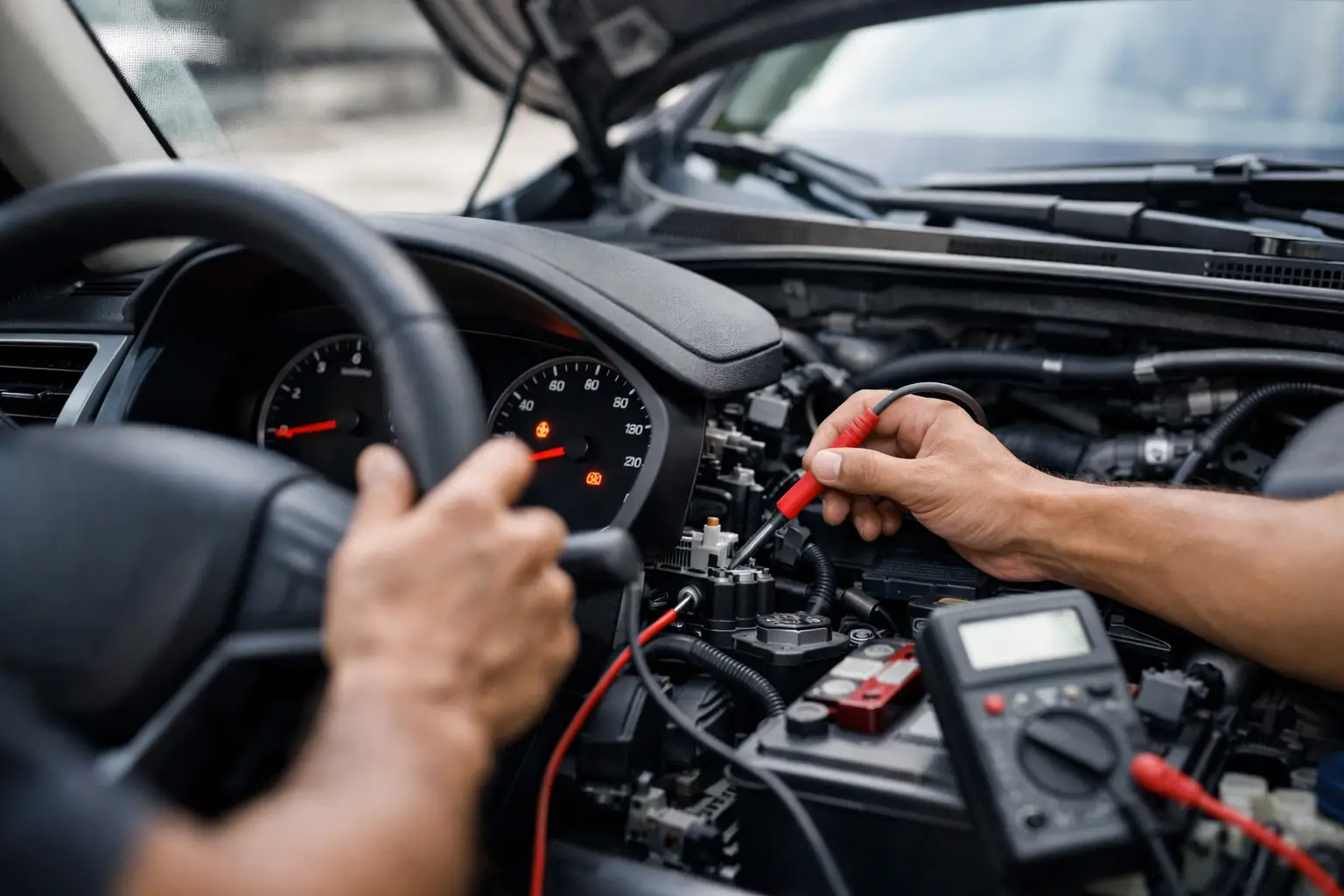
Start by looking at the dash. If warning lights are behaving strangely, flickering, or not appearing as usual when the ignition is turned on, that can point to a supply issue. If the immobiliser light is flashing or staying on, there may be a key recognition problem.
Next, listen carefully when the ignition is switched on. In many vehicles, you should hear a brief hum from the fuel pump. No sound does not automatically confirm a failed pump, but it can be a useful clue.
Check battery terminals for looseness or corrosion. Even if the engine cranks, poor terminal contact can still affect voltage to other electrical systems. If you recently changed the battery, look for disturbed connections, loose clamps, or blown fuses near the battery.
If safe to do so, check the main fuses and engine-related fuses. A blown fuse may be tied to the ignition system, ECU supply, injector circuit, or fuel pump. Replacing a fuse without finding the cause is not always the answer, but it can help identify where the problem sits.
Also think about what happened before the fault. Did the car cut out while driving, start poorly for a few days, or have intermittent dash issues? Those details matter. They often point towards sensor failure, relay trouble, or wiring faults rather than a fuel quality issue.
When it is not just the battery
A lot of drivers assume every no-start issue is battery related. That makes sense because batteries fail often. But if the engine is cranking at normal speed, the battery may not be the main problem.
That said, low voltage can still cause misleading symptoms. Some vehicles need stable voltage for the ECU, fuel system, and immobiliser to operate properly. A battery can have enough power to crank and still drop voltage under load. This is why proper battery and alternator testing matters, rather than guessing.
There is also a difference between a bad battery and a charging issue. If the alternator has not been charging properly, the vehicle may start one day and refuse the next. Electrical testing can separate those faults quickly.
Car cranks but won’t start electrical diagnostics need proper testing
The biggest mistake with a car cranks but won’t start electrical fault is replacing parts based on guesswork. People often start with spark plugs, the battery, or a fuel pump because they are common suspects. Sometimes they get lucky. Often they spend money and still end up with the same problem.
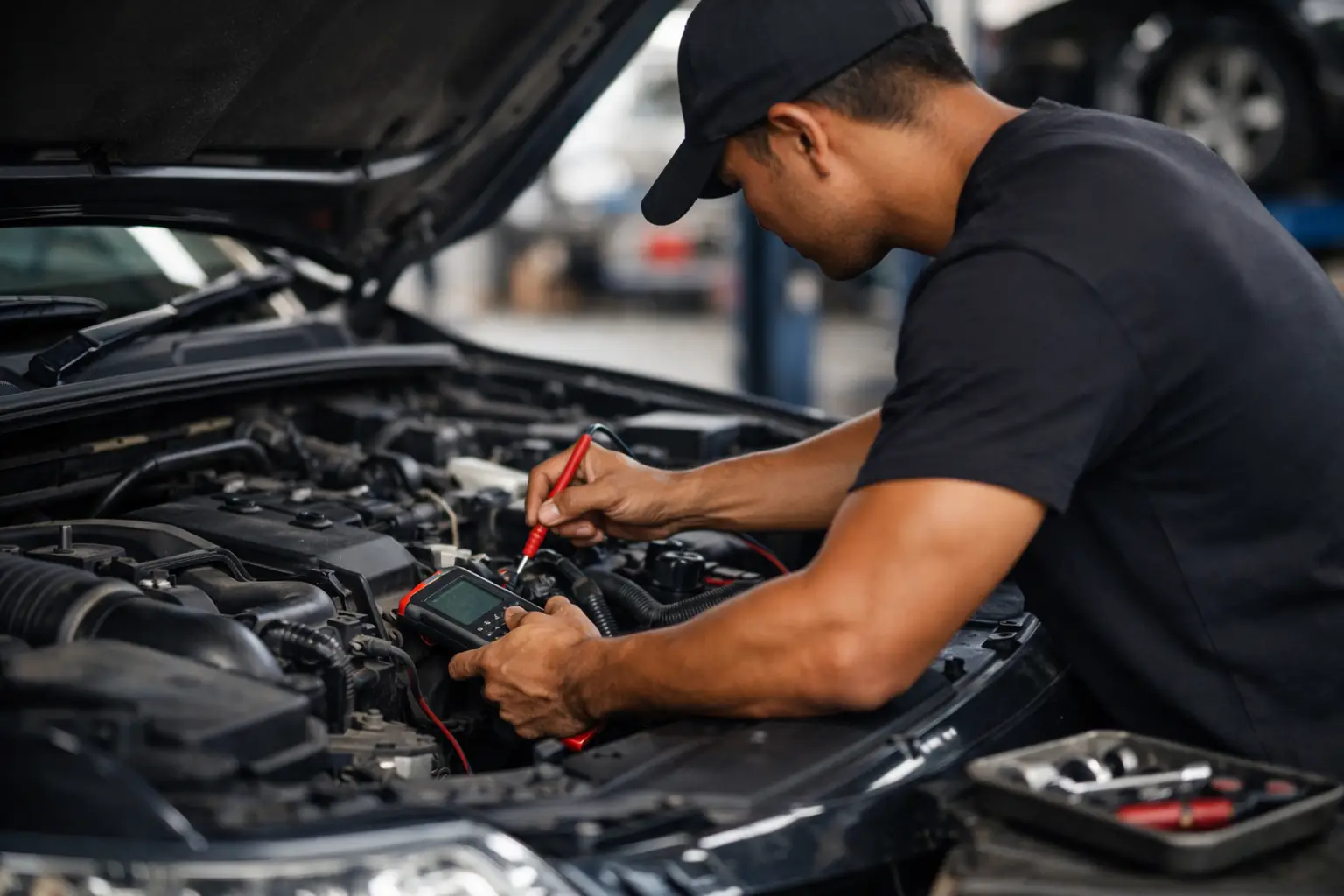
A proper diagnosis usually starts with voltage testing, fuse and relay checks, scan tool fault reading where available, and confirming whether spark, injector pulse, and fuel pump operation are present. From there, the fault can be narrowed down instead of chasing random parts.
This matters even more in modern vehicles. A failed sensor may not always log a clear fault code. A relay may work one minute and fail the next. Wiring damage may be hidden inside a loom or near a hot engine component. That is where hands-on electrical testing saves time.
For everyday drivers, the practical question is not whether the fault is a crank sensor, relay, or ECU feed. It is whether the issue can be found quickly and fixed without towing the car around Sydney or losing half the day at a workshop.
Why mobile auto electrical help makes sense
When your car will not start, convenience matters. If the engine cranks but will not fire, you may be stuck at home, at the shops, or in a work car park. A mobile auto electrician can test the vehicle on-site, which is often the fastest way to get answers.
That is one reason many drivers search Auto Electrician near me when a starting fault happens. They want someone who can come out, diagnose the issue properly, and tell them whether it is a battery problem, a charging fault, a blown fuse, a failed sensor, or something more involved.
For drivers in the west, an ‘auto electrician Blacktown‘ search is also common because local response time makes a difference when you rely on your vehicle every day. If the fault turns out to be something straightforward like a relay, fuse, battery terminal, or wiring repair, it may be sorted on the spot.
When to stop trying and book a professional
If the car has already been cranking repeatedly, it is best not to keep flattening the battery or risking further issues. Continuous cranking can overheat the starter motor, flood some engines, and make diagnosis harder.
You should also stop if there is a burning smell, visible wiring damage, signs of rodent chewing, or if the vehicle recently had accessory work done and the fault started soon after. In those cases, an electrical inspection is the safer option.
If your vehicle is essential for work, school runs, or daily travel, fast diagnosis is usually the most cost-effective move. Waiting and hoping it starts later can turn a minor fault into a bigger inconvenience.
At Ray’s Auto Electrical, this is exactly the kind of issue a mobile diagnostic service is built for – practical testing, clear answers, and repairs where possible without the workshop runaround.
If your engine is cranking but not starting, treat it as a fault with a cause, not a mystery with a guess. The sooner the right checks are done, the sooner you can get back on the road with confidence.