

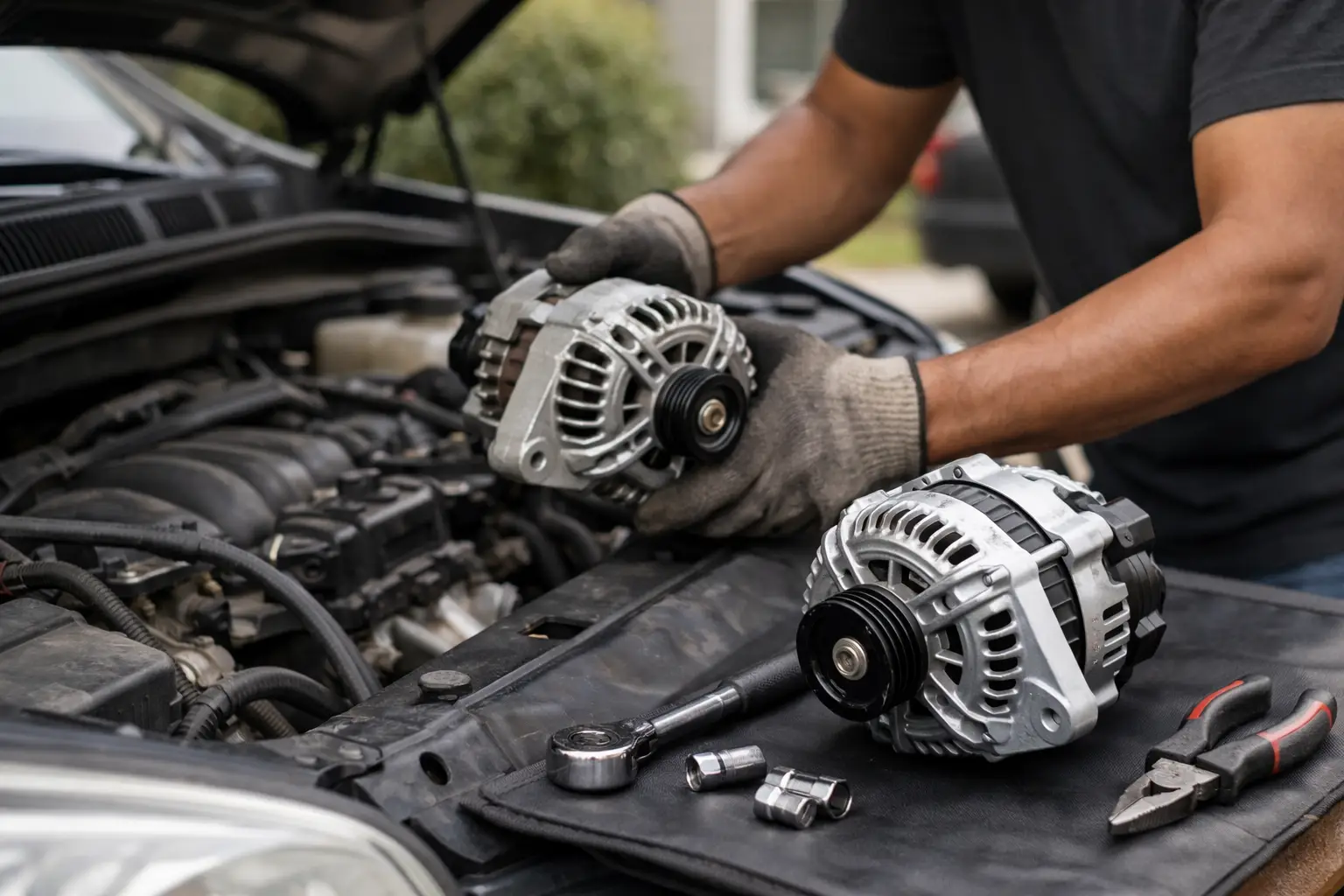
That flat battery feeling usually starts the same way – slow cranking, dim lights, or a warning light on the dash when you least need it. If you are thinking about car alternator replacement at home, the main question is not just whether you can do it. It is whether the fault has actually been confirmed, and whether the job will save you time rather than turn into a driveway headache.
For plenty of Sydney drivers, alternator trouble gets blamed for every no-start problem. Sometimes that is right. Sometimes it is a battery at the end of its life, a poor earth, a damaged belt, or a charging system fault that sits somewhere else entirely. Before you pull tools out, it helps to know what the alternator does, when home replacement makes sense, and when getting a qualified mobile specialist out is the safer option.
Is car alternator replacement at home worth doing?
In some cases, yes. If your vehicle is older, the alternator is easy to access, and the diagnosis is already confirmed, replacing it at home can be straightforward enough for someone confident with basic mechanical work. On many newer vehicles, though, the job is tighter, more time-consuming, and more sensitive than people expect.
An alternator is not just a bolt-on part you swap and forget. It works as part of the charging system, alongside the battery, drive belt, tensioner, wiring, fusible links, and the vehicle’s control systems. If one of those has caused the issue, fitting a new alternator may not fix anything. Worse, a poor-quality replacement part can create fresh problems straight away.
That is why a proper test matters first. A charging voltage reading, battery condition check, belt inspection, and wiring check can save a lot of guesswork. If you have ever typed Auto Electrician near me into a search engine because the car would not start outside home or work, that convenience becomes very relevant here. A mobile auto electrician can often confirm the fault on-site before any unnecessary parts are fitted.
Signs your alternator may be failing
The most common sign is a battery warning light on the dash, but that light does not always mean the alternator itself has failed. It means the charging system is not behaving as it should.
You might also notice headlights dimming at idle, power windows moving slowly, the stereo cutting out, or the engine struggling to crank even after the battery has been charged. Some vehicles will stall once the battery voltage drops too low because the ignition and fuel systems cannot keep up.
There can also be noise. A worn bearing inside the alternator may cause a growl or whine, and a seized alternator can affect the belt. In other cases, the smell of overheating wiring or visible belt dust points to a charging system issue that needs attention quickly.
The catch is that these symptoms overlap with battery and wiring faults. That is why testing comes before replacement.
What to check before replacing the alternator
If you are considering doing the job yourself, start with the basics. Check the battery terminals for corrosion or looseness. Inspect the belt for cracking, glazing, or poor tension. Look for damaged wiring around the alternator and battery, especially if the vehicle has had previous repairs or accessories fitted.
Then check charging voltage properly. A healthy system often sits around the mid-13 to mid-14 volt range while running, but exact readings vary by vehicle and load conditions. A low reading can suggest the alternator is not charging. A high reading can point to a regulator issue. Neither should be guessed.
It also helps to know whether the battery is still serviceable. A battery with a dead cell can make a charging system look worse than it is. Likewise, a fresh alternator paired with a failing battery can leave you thinking the replacement did not work.
How car alternator replacement at home usually goes
On a simple vehicle, the job usually starts with disconnecting the battery, removing any covers or intake pieces in the way, releasing tension on the belt, disconnecting the alternator wiring, and unbolting the unit from its bracket. The replacement then goes in reverse order, with attention paid to belt routing, bolt torque, cable condition, and final charging tests.
That sounds manageable because, at a basic level, it is. The trouble is in the details. Some alternators are buried low in the engine bay. Some require underbody access. Some have awkward mounting bolts, tight clearances, or nearby components that are easy to damage. On some vehicles, cheap aftermarket units do not sit properly or fail early.
Then there is the wiring. The main charging cable carries serious current. If a connection is loose, damaged, or shorted, it can lead to poor charging or blown protection circuits. That is not the sort of mistake most drivers want to discover after the car still will not start.
The risks of doing it yourself
The biggest risk is replacing the wrong part. That is more common than most people realise. A battery light does not automatically equal a failed alternator, and a flat battery after sitting overnight may point to a parasitic drain rather than a charging problem.
The next risk is fitment. Even if the alternator looks similar, the output rating, plug type, pulley setup, and regulator compatibility all need to match the vehicle. An incorrect part can cause charging faults, warning lights, or belt alignment issues.
There is also the practical side. If the car is your daily transport, a driveway repair that stretches into the evening can create more stress than savings. Many people start the job expecting an hour or two, then run into a seized bolt, a wrong part, or a system fault that still needs proper diagnosis.
That is often where a mobile specialist makes more sense. Instead of towing the car or risking a half-finished repair, you get on-site testing and, where suitable, replacement at your location.
When a mobile auto electrician is the better option
If the fault is not confirmed, the vehicle has modern charging controls, access is poor, or you simply need the car sorted quickly, calling a professional is usually the smarter move. A mobile technician can test the battery, alternator output, wiring, and related electrical systems before recommending replacement.
That matters for working families, commuters, pensioners, and trade customers who cannot afford guesswork. If your car is stuck at home, at work, or in a car park, getting proper help on-site is often easier than arranging workshop time around your day.
For drivers in the west, searching Auto electrician Blacktown is often less about location alone and more about getting someone local enough to respond quickly and fix the issue properly. Convenience only matters if the diagnosis is right and the workmanship holds up.
Cost versus value
Doing the job yourself can reduce labour costs, but only if everything goes smoothly and the diagnosis is right. Once you add the cost of tools, possible mistakes, replacement belts or terminals, and time off the road, the savings can narrow quickly.
Professional replacement can cost more upfront, but it often includes testing that prevents misdiagnosis. That has real value. So does having the repair completed where the vehicle is parked, especially if it is not safe or practical to drive.
There is also a quality difference between parts. The cheapest alternator available is not always the best value. Reliability matters, particularly if the vehicle is used daily for work, school runs, or long commutes.
A practical way to decide
If you have the tools, confidence, confirmed diagnosis, and an accessible alternator, replacing it at home may be reasonable. If you are unsure about the cause, the vehicle has a more complex setup, or you need the job done without trial and error, professional on-site help is usually the better call.
A good repair is not just about fitting a new part. It is about making sure the charging system is working as it should, the battery is in suitable condition, and the car is dependable when you turn the key tomorrow morning.
For most drivers, that is the real goal. Not just getting through the job, but getting the vehicle back to normal without wasting a weekend, buying the wrong part, or ending up stranded again a few days later. If you are weighing up car alternator replacement at home, trust the signs, but trust proper testing more.