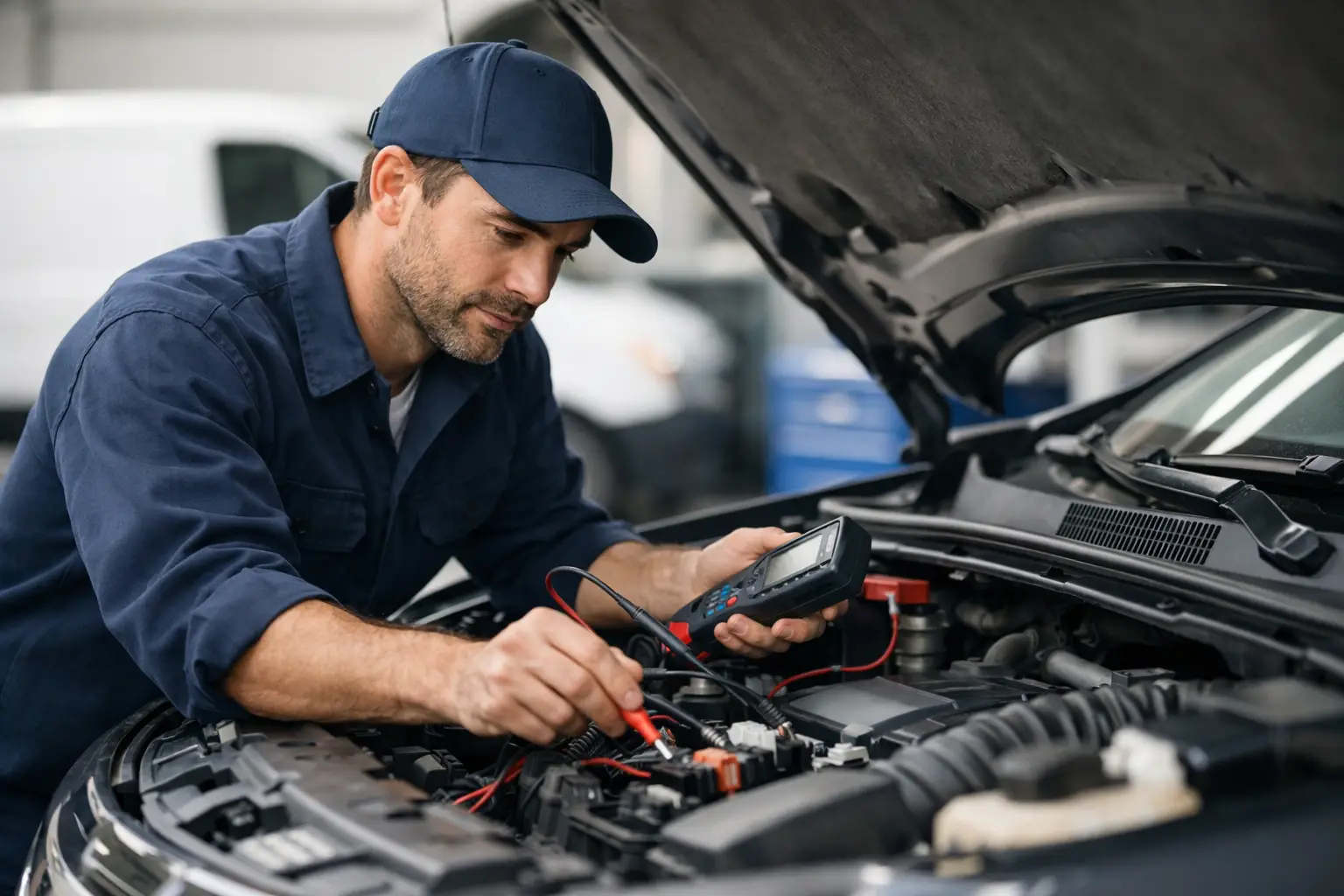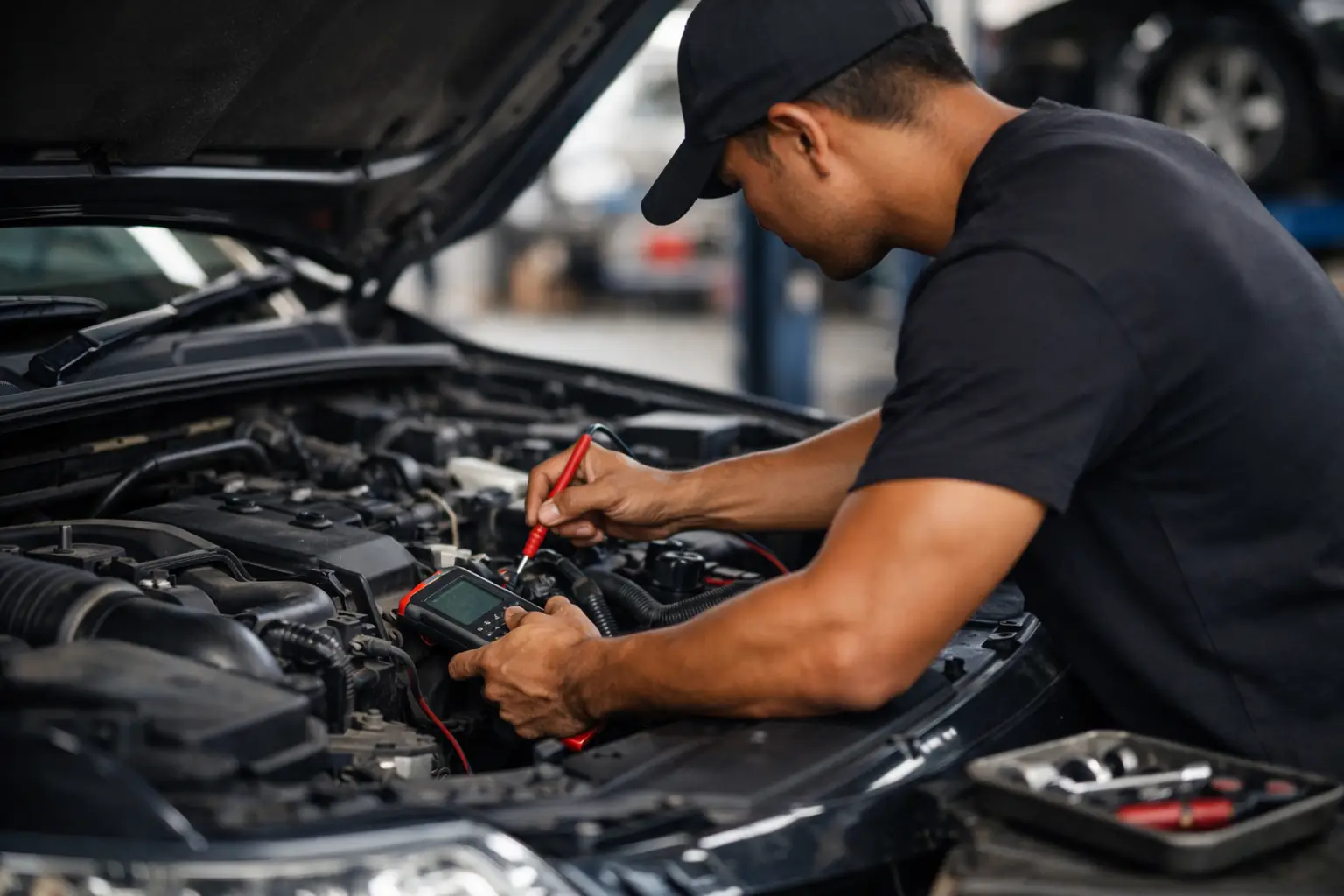

A car that will not start in the driveway before work is more than frustrating. It can throw off the school run, delay a job, or leave you stranded at the shops. The signs you need an auto electrician are not always as obvious as a completely flat battery, but acting early can often prevent a breakdown and a larger repair bill.
Modern vehicles rely on a complex network of wiring, sensors, charging components and computer-controlled systems. When something electrical is not working as it should, a qualified auto electrician can test the cause properly rather than replacing parts based on guesswork.
1. Your Vehicle Struggles to Start
Slow cranking, repeated clicking when you turn the key, or needing several attempts to start can point to an electrical fault. A weak battery is a common cause, but it is not the only one. Loose battery terminals, damaged cables, a failing starter motor or an alternator that is not charging correctly can produce similar symptoms.
If the engine starts after a jump-start but goes flat again soon after, the charging system needs attention. Replacing the battery without testing the alternator may only provide a short-term fix. An auto electrician can test the battery, alternator and starting circuit to find out what is actually causing the issue.
2. Battery Warning Light Stays On
The battery light on the dash does not always mean the battery itself is faulty. In many cases, it means the battery is not receiving the charge it needs while the engine is running. A worn alternator, faulty voltage regulator, damaged drive belt or wiring problem may be responsible.
Do not keep driving for days hoping the light will disappear. Once the battery loses enough charge, the vehicle can stop without much warning. This is especially inconvenient in Sydney traffic or when you are travelling between jobs.
Signs You Need an Auto Electrician for Lighting Problems
Headlights that dim while idling, flicker over bumps, or change brightness when you accelerate are worth checking. So are brake lights, indicators or reverse lights that work intermittently. Apart from being unsafe, faulty vehicle lighting can attract unwanted attention on the road.
Sometimes the solution is simple, such as a blown globe or corroded connector. Other times, the issue can be a poor earth connection, damaged wiring, a relay fault or a problem inside the vehicle’s electrical control system. Proper testing saves time and helps avoid replacing parts that were not the problem.
3. Fuses Keep Blowing
A fuse is designed to protect a circuit when there is too much electrical current. Replacing one blown fuse may be all that is needed, particularly after an accessory fault. But if the same fuse blows again, there is a reason for it.
Repeated blown fuses can indicate a short circuit, damaged wiring, water ingress or a failing component. Using a larger fuse or continually replacing fuses is not a safe solution. It can allow wiring to overheat and create a more serious fault. An auto electrician can trace the circuit and repair the underlying cause.
4. Your Battery Goes Flat Overnight
If your battery is relatively new but goes flat after the vehicle has been parked overnight, there may be a parasitic drain. This happens when something continues drawing power after the ignition has been switched off.
Common causes include interior lights, faulty door switches, an aftermarket accessory, a stuck relay or a module that does not shut down correctly. Finding the drain requires accurate testing, as the fault may not be visible from outside the vehicle. A mobile auto electrician can test the system at your home or workplace, where the problem is happening.
5. Electrical Features Work Only Sometimes
Power windows, central locking, electric mirrors, windscreen wipers, dashboard displays and reversing cameras should work consistently. When they cut in and out, the cause may be as minor as a loose plug, or as involved as damaged wiring in a door loom or a control module fault.
Intermittent issues are easy to put off because they may disappear for a few days. However, they can become worse over time and make it harder to use the vehicle safely. For example, unreliable wipers in heavy rain or a reversing camera that fails when parking can quickly become a practical problem.
6. You Can Smell Burning or See Damaged Wiring
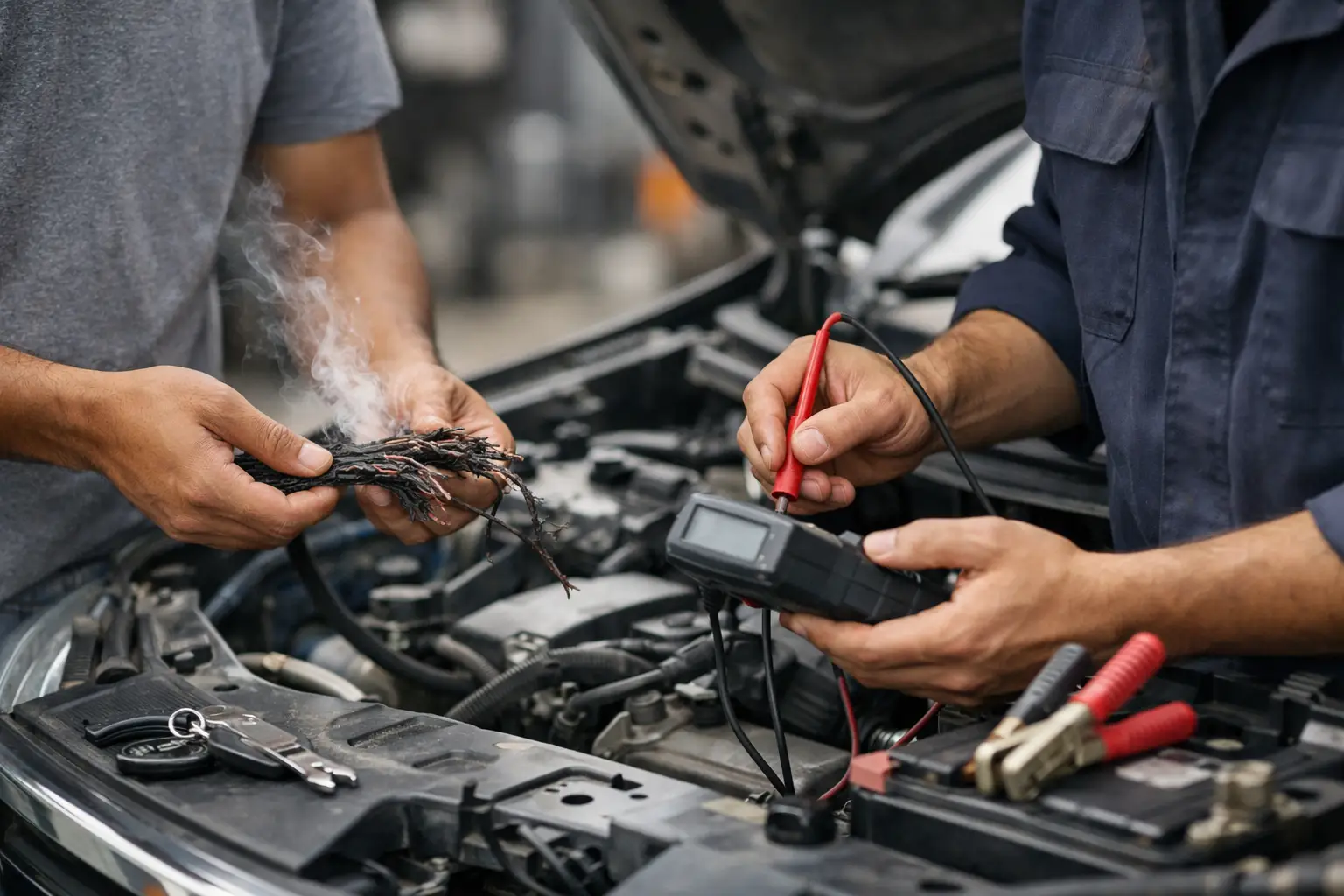
A burning plastic smell, smoke near the dash, melted connectors or visibly damaged wiring should be treated as urgent. Turn the vehicle off if it is safe to do so and avoid driving it until the fault has been assessed.
Electrical wiring can be damaged by heat, vibration, rodents, accident repairs or poorly fitted accessories. The repair may involve more than wrapping exposed wires with tape. A professional repair needs the correct cable, terminals, insulation and circuit protection so the fault does not return.
7. Your Air Conditioning Has Stopped Working Properly
Not every air conditioning problem is electrical, but many are. If the fan only works on certain speeds, the compressor does not engage, the climate controls are unresponsive, or the system cuts in and out, an electrical component could be involved.
A lack of cold air can also be caused by low refrigerant or a mechanical issue, so it depends on the symptoms. Accurate diagnosis matters because air conditioning systems combine electrical controls, sensors, pressure switches and mechanical components. Guessing can lead to unnecessary regassing or replacement parts that do not fix the fault.
8. Warning Lights and Error Messages Keep Appearing
A warning light may relate to the engine, ABS, airbags, traction control, charging system or another safety feature. Some warnings are triggered by sensor faults, while others can be linked to low voltage, bad connections or charging problems.
If a warning disappears after restarting but returns regularly, it still deserves attention. Diagnostic scanning is useful, but the fault code is only part of the picture. An experienced auto electrician checks the relevant wiring, power supply and components before recommending repairs.
9. You Need Accessories Installed Properly
Dash cams, UHF radios, antenna systems, driving lights, sound systems and dual-battery equipment all need safe installation. A loose wire behind the dash or an incorrectly connected accessory can cause flat batteries, blown fuses, interference or damage to vehicle electronics.
Professional installation is particularly worthwhile for late-model vehicles with sensitive electrical systems and airbags behind interior trims. The aim is a neat, reliable setup that works when you need it and does not create a fault elsewhere in the vehicle.
When to Call for Mobile Auto Electrical Help
Some minor issues can wait for a convenient booking, such as a single faulty power window or an accessory upgrade. Starting faults, battery warnings, burning smells, repeated blown fuses and safety-related warning lights should be checked promptly.
For busy drivers, a mobile service can make the process far easier. Instead of organising a tow or losing time at a workshop, testing and repairs can often be completed at home, at work or wherever the vehicle has stopped. Ray’s Auto Electrical provides practical mobile diagnostics, repairs and installations across Sydney, including the Western Suburbs.
If you are searching for an “Auto Electrician near me”, look for a qualified technician who can explain the likely cause, test before replacing parts and give you clear options. Local searches such as “Auto electrician Blacktown” are often made when a problem cannot wait, so choose a service that can respond with straightforward advice and professional workmanship.
Your vehicle usually gives warning signs before an electrical fault becomes a complete breakdown. Paying attention to those changes and arranging a proper inspection early can keep your day moving and help protect the safety and reliability of your car.