

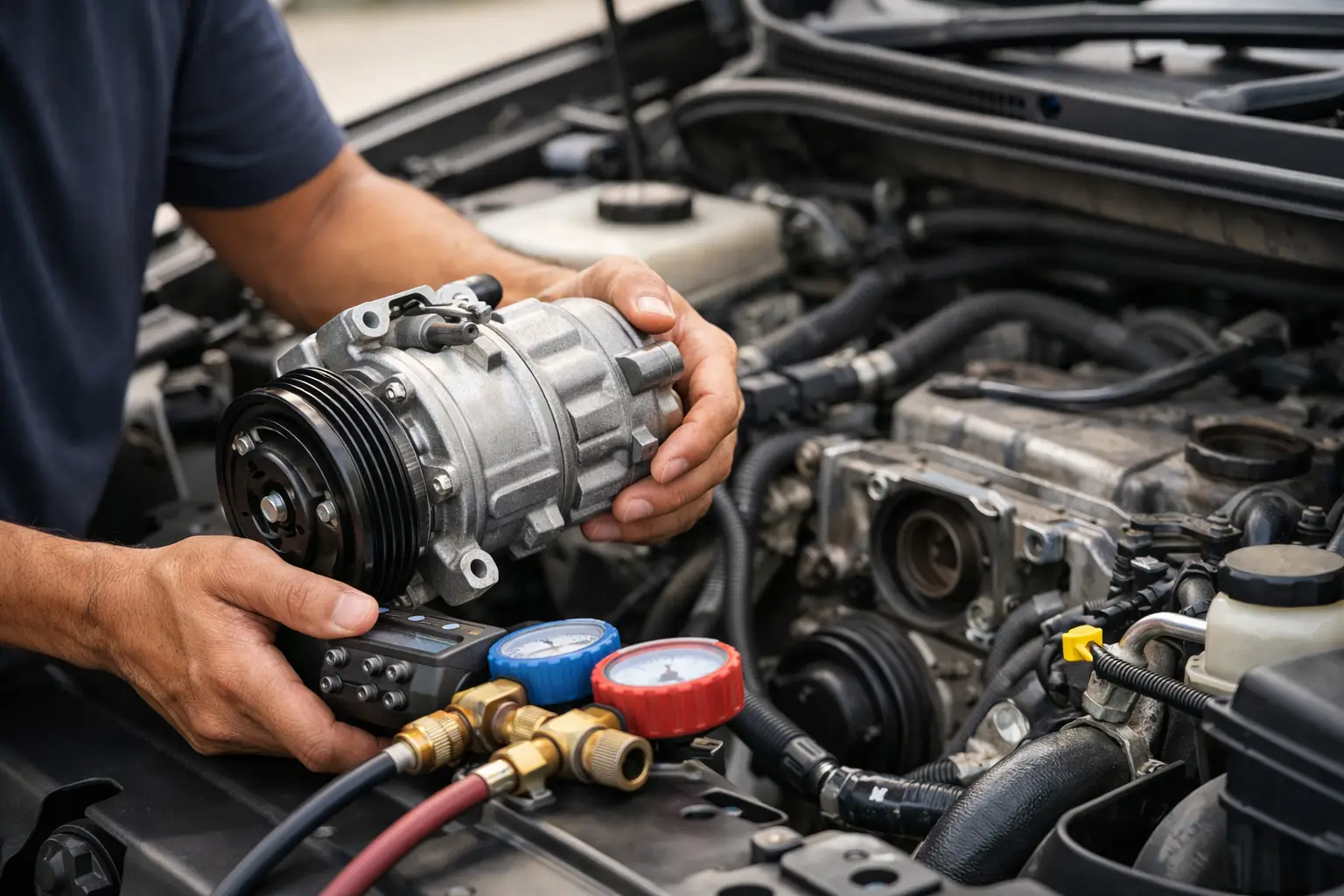
You usually notice car aircon compressor problems on the worst possible day – stuck in Sydney traffic, heat coming through the vents, and the cabin refusing to cool down no matter how low you set the temperature. When that happens, the compressor is one of the first components worth checking, because it sits at the centre of how your vehicle’s air conditioning system actually works.
The compressor’s job is to pressurise and circulate refrigerant through the air conditioning system. If it stops working properly, cooling performance drops off quickly. Sometimes the issue is obvious, like warm air or loud noises. Other times, the fault builds slowly and gets mistaken for a gas issue, an electrical problem, or general wear and tear.
What the compressor actually does
Your car’s air conditioning system relies on pressure changes to remove heat from the cabin. The compressor takes low-pressure refrigerant gas and compresses it into a high-pressure state so it can move through the condenser, receiver drier, expansion device and evaporator. That process is what allows the system to blow cold air into the cabin.
Because the compressor is driven by the engine belt or controlled through an electric setup in some vehicles, it works under constant load. It also depends on the right refrigerant charge, proper lubrication and sound electrical control. If one part of that chain is off, the compressor can suffer or appear to be faulty even when the root cause sits elsewhere.
Common signs of car aircon compressor problems
One of the clearest signs is air that is no longer cold, or only gets mildly cool after a long drive. A healthy system should start dropping cabin temperature within a short time. If it struggles, the compressor may not be engaging, may be weak internally, or may be affected by low refrigerant pressure.
Noise is another giveaway. Clicking, squealing, rattling or grinding from the front of the engine can point to compressor clutch trouble, pulley bearing wear or internal compressor damage. Not every noise means full compressor failure, but unusual sounds should never be ignored. They tend to get worse, not better.
You may also notice the air conditioning cycling on and off too often. Short cycling can happen when pressure readings are out of range, when sensors are reporting incorrect data, or when the compressor is overheating. In some cases, the system cuts out to protect itself.
A burnt smell, visible oil staining around air conditioning fittings, or a seized belt can also indicate a compressor-related issue. If the compressor locks up mechanically, it can affect the drive belt and create bigger repair problems beyond the air conditioning system.
Why car aircon compressor problems happen
Wear and age are part of it, especially in older vehicles or cars that have done plenty of stop-start driving. Compressors contain moving internal parts, seals and bearings. Over time, those components can wear down, lose efficiency or fail completely.
Low refrigerant is another common cause. People often say the system just needs a regas, but if refrigerant is low, there is usually a leak somewhere. Refrigerant also carries oil through the system, and without enough of it, compressor lubrication suffers. Running an undercharged system for too long can damage the compressor.
Electrical faults matter just as much. A failed relay, faulty pressure switch, damaged wiring, blown fuse or control module issue can stop the compressor clutch from engaging. On newer vehicles, the system may rely on several sensor inputs before it allows compressor operation. That means a compressor can look dead when the actual fault is electrical.
Contamination inside the system is one of the more expensive scenarios. If a compressor starts breaking down internally, metal particles can spread through the air conditioning lines and other components. At that point, replacing only the compressor is often not enough. The system may also need flushing, additional parts, and careful reassembly to avoid repeat failure.
Not every compressor fault means replacement
This is where proper diagnosis matters. Some car aircon compressor problems are caused by the clutch, pulley or external controls rather than the compressor internals. In the right case, the repair may be more straightforward than people expect.
Other times, replacement is the only sensible option. If the compressor has seized, is leaking badly, or has suffered internal damage, replacing it is usually more reliable than trying to patch it up. The trade-off comes down to cost, condition of the rest of the system, and whether contamination has spread.
That is why guessing can get expensive. Replacing parts without confirming the actual cause often leads to repeat faults and more downtime.
How a technician checks compressor issues
A proper air conditioning diagnosis starts with the basics. System pressures are checked to see whether the refrigerant circuit is operating within range. Electrical testing confirms whether the compressor is receiving the correct signal and power supply. Visual inspection helps identify leaks, oil residue, damaged connectors, belt issues and obvious component wear.
From there, the technician can narrow down whether the fault sits with the compressor itself, the clutch, the pressure controls, refrigerant loss or another part of the system. On many vehicles, scan tool data also helps, especially where climate control is electronically managed.
For everyday drivers, this is the main point: warm air does not automatically mean you need a new compressor. But it also does not mean a regas will solve everything. A proper diagnosis saves time and usually saves money as well.
When to stop using the air conditioning
If the system is blowing warm air but otherwise quiet, you may still be able to drive the vehicle while arranging repairs. If there is grinding, squealing, smoke, a burning smell, or signs the belt is under strain, switch the air conditioning off and have it checked sooner rather than later.
A noisy or partially failing compressor can sometimes turn into a seized unit with very little warning. That can leave you dealing with a bigger repair bill than if the issue had been caught early.
Preventing compressor trouble
Air conditioning systems do better when they are used regularly, even in cooler weather. Running the aircon helps keep seals lubricated and can reduce the chance of parts drying out. It also helps clear moisture from inside the cabin.
Regular servicing makes a difference too. If the system has a small leak, weak pressure, or electrical issue, finding it early can prevent compressor damage later on. Skipping checks for years at a time is often what turns a manageable repair into a major one.
If your cooling has dropped off, the smartest move is to get it inspected before summer really hits. Waiting until the first run of hot days usually means more stress, longer booking times and a less comfortable drive in the meantime.
Car aircon compressor problems and mobile diagnosis
For many drivers, the biggest hassle is not just the repair – it is getting the vehicle to a workshop, waiting around, or losing half a day over a fault that still needs proper testing. That is why mobile diagnosis can be a practical option, especially when the issue may involve both electrical and air conditioning components.
A qualified mobile technician can test whether the compressor is engaging, inspect the related wiring and controls, and work out whether the fault is likely mechanical, electrical or refrigerant-related. For people searching Auto Electrician near me when the aircon stops working at home or at work, that convenience can make a real difference.
It is the same for drivers in busy areas who want a local option that understands vehicle electrical systems as well as air conditioning faults. If you have been looking up Auto electrican Blacktown after noticing warm air, strange noises or intermittent cooling, the key thing is choosing someone who diagnoses properly rather than guessing.
Car aircon compressor problems rarely fix themselves, but they do not all lead to the worst-case outcome either. Catch the signs early, get the system tested properly, and you give yourself the best chance of a simpler repair and a cooler drive when you need it most.