

A car air conditioner that blows warm air on a 35-degree Sydney afternoon is more than an inconvenience. It can make school runs, work travel and long trips uncomfortable fast. This automotive air conditioning service guide explains what a proper service involves, what common faults look like and when it is time to call a qualified technician.
Your vehicle’s air conditioning system relies on refrigerant, pressure, airflow, electrical controls and mechanical components all working together. A weak system is not always just low on gas. Getting the cause checked first can prevent repeat repairs and unnecessary costs.
What an automotive air conditioning service should include
A proper air conditioning service is not simply a quick regas. Refrigerant does not normally get used up like fuel. If the system is low, there may be a leak, a failed component or an issue affecting how the system is operating.
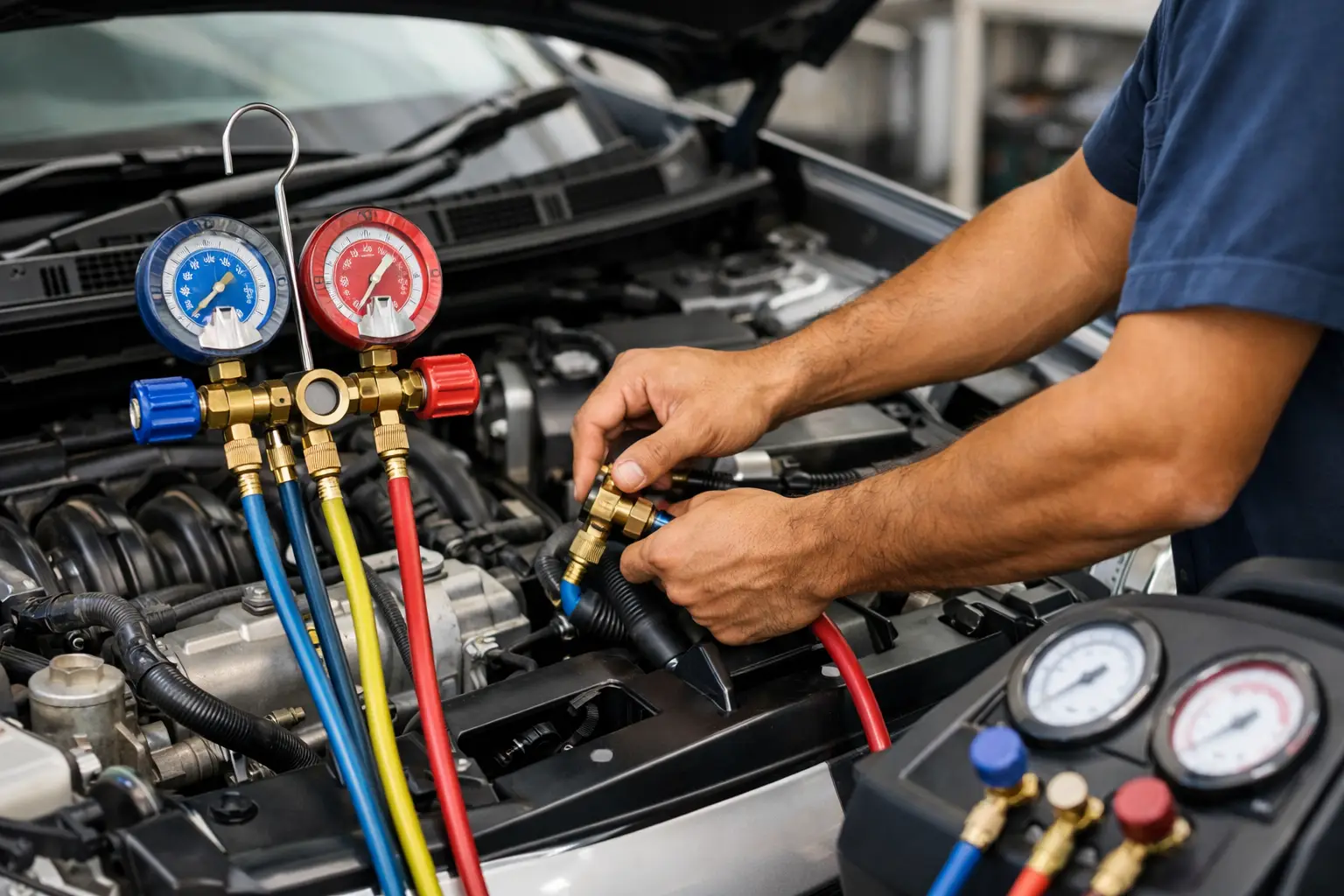
A qualified technician should start by checking the system’s performance. This includes measuring vent temperature, inspecting hoses and fittings, checking refrigerant pressures and looking for signs of leaks or damage. They should also inspect the compressor, condenser, cabin filter where fitted, drive belt and cooling fans.
The electrical side matters just as much. Modern vehicles use pressure sensors, relays, fuses, control modules and switches to manage the air conditioner. A faulty pressure sensor or a weak cooling fan can stop the compressor from operating, even when the refrigerant charge is correct.
Why diagnosis comes before a regas
Adding refrigerant without finding the underlying fault can provide short-term cold air, but it may not last. If a hose connection is leaking, for example, the refrigerant can escape again and the air conditioner will soon lose performance.
Diagnosis also protects the compressor. Running an air conditioning system with incorrect pressure or insufficient refrigerant oil can contribute to expensive compressor damage. A professional service identifies whether a regas is appropriate or whether the vehicle needs a repair first.
In Australia, refrigerant must be handled correctly by an appropriately licensed technician. This is better for your vehicle, your wallet and the environment.
Signs your car air conditioner needs attention
The most obvious sign is warm air from the vents, but faults often start with smaller changes. Your system may take longer to cool the cabin, work well while driving but turn warm when idling, or produce a musty smell when first switched on.
Listen for unusual noises too. A clicking sound can be normal as the compressor engages, but ongoing rattling, squealing or grinding needs inspection. A squeal may come from a worn belt, while grinding can indicate a compressor problem.
Other warning signs include water dripping inside the cabin, weak airflow from the vents, windows that take too long to demist and an air conditioning system that cuts in and out. Weak airflow may be as simple as a blocked cabin filter, but it can also point to a blower motor, resistor or electrical fault.
If you notice a burning smell, smoke, damaged wiring or a repeatedly blown fuse, turn the air conditioner off and arrange professional help. Electrical faults should not be ignored.
Common causes of poor cooling
Low refrigerant is common, particularly in older vehicles, but it is only one possible cause. Small leaks can develop around seals, hose joints, service ports, condensers and evaporators. The condenser sits at the front of the vehicle and can be damaged by road debris or become blocked with dirt and insects.
A failed cooling fan is another regular cause of poor performance in Sydney traffic. When the vehicle is moving, air flows through the condenser naturally. At traffic lights, the fan needs to do the job. If it is not operating, the system pressure can rise and the air conditioner may blow warm at idle.
Compressor faults, worn belts, blocked expansion valves and electrical problems can cause similar symptoms. That is why guessing based on vent temperature alone is risky. The right repair depends on what testing finds.
Simple habits that help your air conditioner last
Using the air conditioner regularly is generally better than leaving it off for months. Even in cooler weather, run it for a few minutes every week or two. This helps circulate oil through the system and can keep seals in better condition.
Keep leaves and debris clear from the area at the base of the windscreen, and do not ignore a cabin filter that is overdue for replacement. A clean filter supports airflow and can reduce dust, odours and strain on the blower system.
On very hot days, air the car out briefly before switching the air conditioner on. Then use recirculation once the cabin begins to cool. Recirculation helps the system cool already-conditioned cabin air rather than continuously cooling hot outside air. It is effective for cooling, but switch back to fresh air if windows fog up.
Parking in shade where possible, using a sunshade and keeping the condenser area clear can also reduce the load on the system. These steps will not repair a fault, but they can make the system work more efficiently.
How often should air conditioning be serviced?
There is no single schedule that suits every vehicle. The manufacturer’s service schedule is the best starting point. For many drivers, an annual performance check before summer is a sensible way to find minor issues before the first heatwave.
A full service or regas should be based on the system’s condition, not performed automatically just because a certain number of months has passed. If the air conditioner is cooling properly, has no unusual noises or smells and testing shows correct pressures, it may not need refrigerant added.
Vehicles that spend long hours on the road, sit in heavy traffic, tow regularly or operate in dusty conditions may need closer attention. The same applies to older cars, utes and vans where hoses, seals and electrical connections have had more time to deteriorate.
When an air conditioning issue is really an electrical issue
Your air conditioner depends on the vehicle’s electrical system. A flat or weak battery, alternator charging issue, faulty relay, blown fuse or damaged wiring can all affect air conditioning operation.
For example, the compressor clutch may not engage because the control circuit has lost power. In newer vehicles, the compressor may be electronically controlled and the fault could be stored in a module rather than visible under the bonnet. A diagnostic scan and electrical testing can identify faults that a basic regas will not fix.
This is especially relevant if the air conditioner problem appears alongside other issues such as warning lights, slow starting, intermittent fans or accessories that stop working. Treating the vehicle as a complete electrical system leads to a more accurate repair.
Need an Auto Electrician near me for air conditioning?
Searching “Auto Electrician near me” usually means you need someone who can come to you, diagnose the problem properly and get you back on the road without the hassle of a workshop visit. Mobile service can be particularly useful when a vehicle is not practical to drive, your workday is full, or the fault needs to be checked at home or on site.
If you have searched “Auto electrician Blacktown”, choose a technician who can test both the air conditioning and the electrical controls behind it. Ray’s Auto Electrical provides mobile auto electrical and air conditioning support across Sydney, including the Western Suburbs, with practical diagnosis before recommending repairs.
Do not wait until the hottest day of summer to find out your air conditioner has stopped working. If cooling has changed, airflow is weak or the system is making unfamiliar noises, arranging an inspection early gives you the best chance of a straightforward repair and a comfortable drive when you need it most.