

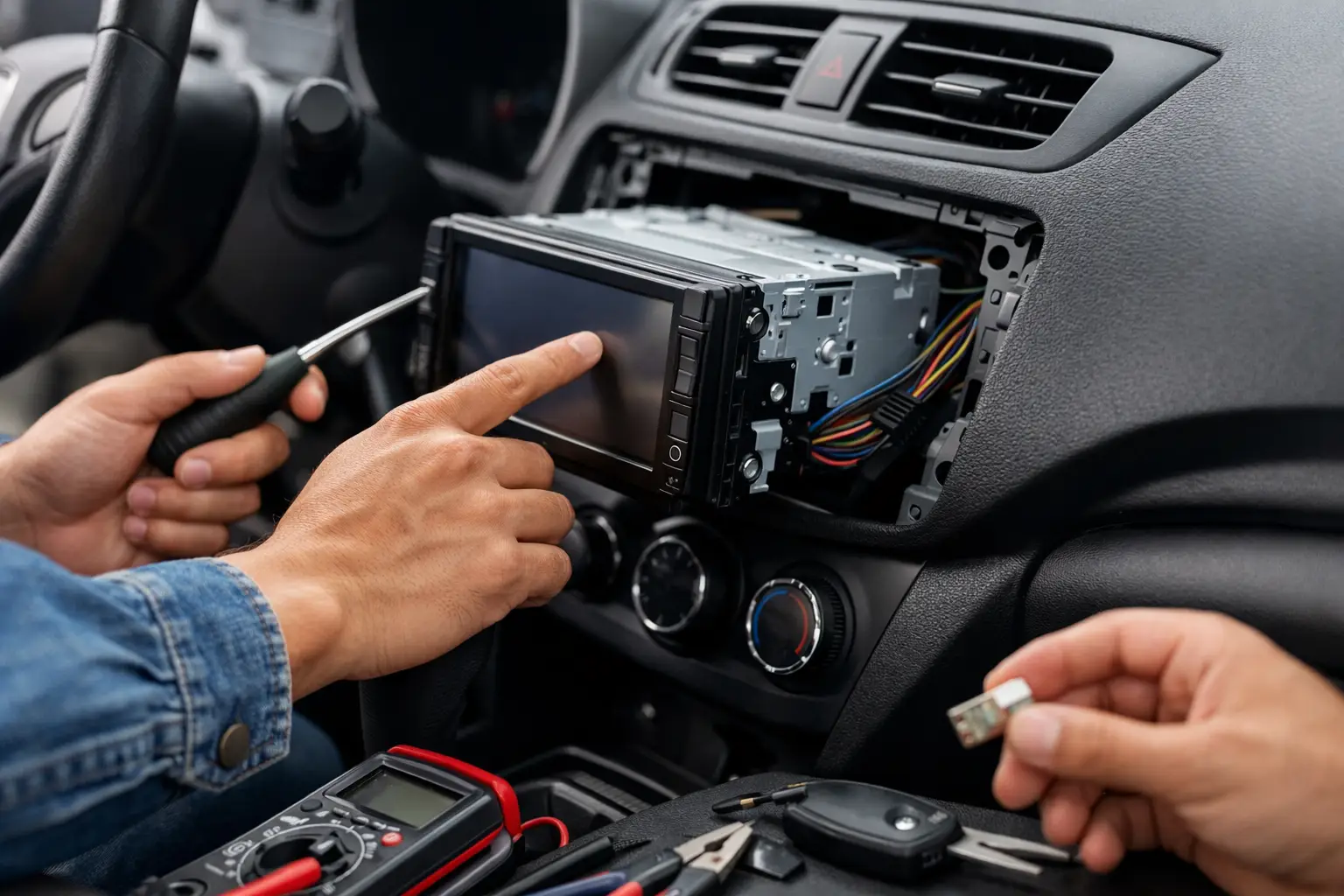
A silent stereo can make even a short trip feel longer. If you are asking, why is my car stereo not working, the cause may be as simple as a muted setting or blown fuse – but it can also point to a wiring, battery, amplifier or head unit fault that needs proper testing.
The key is not to guess or start pulling apart the dash. Modern vehicles often have stereo systems connected to steering wheel controls, reversing cameras, Bluetooth modules and factory security systems. A quick, accurate diagnosis can save time, money and damage to trim or wiring.
Why Is My Car Stereo Not Working?
Most car stereo faults fall into one of two groups: the unit has no power at all, or it turns on but there is no sound. Knowing which one you have helps narrow down the problem.
If the screen is completely blank and no buttons light up, the stereo may not be receiving power or earth. If the display works but the speakers are silent, the issue could be a setting, speaker wiring, an external amplifier or the speakers themselves.
A fault that comes and goes is also worth taking seriously. A stereo that cuts out over bumps, works only after starting the car, or resets its clock and saved stations may have a loose connection, poor earth or voltage issue.
A blown stereo fuse
A blown fuse is one of the most common reasons a stereo suddenly stops working. Many cars have more than one relevant fuse: one for constant battery power that keeps memory settings, another for accessory power when the ignition is on, and sometimes a separate fuse for an amplifier.
Check the vehicle owner’s manual or fuse cover diagram before removing anything. Replace a fuse only with one of the same rating. Fitting a larger fuse can overheat wiring and create a far more expensive repair. If the replacement fuse blows again, there is an electrical fault that needs to be traced rather than masked.
Low battery voltage or charging problems
Your stereo relies on stable voltage. A weak battery, failing alternator or corroded battery connection can cause the radio to shut down, restart, lose memory or refuse to power up. You may also notice slow cranking, dim lights, battery warning lights or other electrical accessories behaving strangely.
This is why a stereo problem is not always a stereo problem. Testing the battery and charging system is often the sensible first step, particularly if the fault appeared after a flat battery, jump-start or alternator issue.
The anti-theft code may be required
Some factory radios enter security mode after the battery has been disconnected or gone flat. The unit may display a code message, remain locked, or show limited functions until the correct code is entered.
Avoid repeatedly entering random numbers. Too many incorrect attempts can lock some units for longer. The correct code may be in the vehicle handbook or supplied with the car, though a technician may need to confirm the unit details if it is missing.
A loose plug, damaged wiring or poor earth
Vibration, previous stereo work and age can loosen connections behind the head unit. Wiring can also be damaged by water leaks, rodents, an incorrectly fitted accessory or a poor-quality installation.
A poor earth connection is especially common in intermittent faults. The stereo may switch on and off, make popping noises, lose Bluetooth connection or work only when the vehicle is moving. These faults need testing with the right equipment, as a plug can look connected while still having a poor terminal contact.
An aftermarket stereo installation issue
If the problem started soon after a new radio, speakers, dash cam, reversing camera or amplifier was fitted, the installation should be checked. Modern vehicles may need the correct wiring harness, antenna adaptor, fascia kit or interface module to retain features such as steering wheel controls and factory cameras.
Cutting into factory wiring can create unreliable connections and make future repairs harder. A professionally installed stereo system costs a little more upfront, but it avoids many of the common faults caused by unsuitable adaptors, loose joins and overloaded circuits.
Speaker or amplifier faults
When the head unit powers up but there is no audio, test whether the problem affects every speaker or only one area of the vehicle. A single silent door speaker may have a failed speaker, damaged wiring through the door hinge area, or a loose connection. No sound from all speakers may indicate an amplifier, audio module or head unit issue.
Some factory premium audio systems use a separate amplifier, often located under a seat, behind a side trim panel or in the boot. Water damage, a failed power supply or a blown amplifier fuse can leave the screen working while the entire system stays silent.
Safe Checks You Can Do Before Booking a Repair
A few simple checks can help without removing dashboard panels. Start by confirming the volume is up, the unit is not muted and the correct source is selected. It sounds obvious, but Bluetooth, USB, radio and Apple CarPlay or Android Auto can each have their own volume setting.
Try another source as well. If the radio has no sound but music from your mobile works, the issue may be with reception, antenna wiring or the tuner rather than the whole stereo. If Bluetooth calls work but music does not, check the mobile’s media audio setting.
Next, turn the vehicle off, lock it and leave it for a few minutes before restarting. Some infotainment systems can freeze and recover after a full power cycle. Check whether other electrical items are affected, including interior lights, power sockets, reverse camera and central locking. That information gives an auto electrician useful clues.
If the stereo has stopped after a battery change, jump-start or flat battery, look for a security code message before doing anything else. If you can safely identify the correct fuse, inspect it. Do not probe wiring with makeshift tools, force trim clips, or disconnect yellow airbag-related connectors around the dash.
When a Mobile Auto Electrician Is the Better Option
Book professional diagnosis if the fuse continues to blow, the unit has no power, the problem is intermittent, there is a burning smell, wiring has been altered, or the stereo fault comes with battery or starting issues. These symptoms can be connected, and swapping parts without testing may not fix the cause.
A mobile auto electrician can test power, ignition feed, earth, fuses, charging voltage, speaker circuits and amplifier operation at your home, workplace or job site. That is particularly helpful when the vehicle will not start, the stereo is part of a larger electrical issue, or you simply cannot spare time for a workshop visit.
For Sydney drivers, Ray’s Auto Electrical provides practical on-site fault finding and repairs for vehicle electrical systems, radios and sound system installations. The goal is to identify the actual failed component or connection first, then explain the repair options clearly.
What to Tell the Technician
A clear description can speed up diagnosis. Let them know when the fault started, whether the stereo display lights up, whether it happened after battery work or an accessory installation, and whether all speakers are affected. Mention any warning lights, flat battery symptoms, water leaks or recent work behind the dash.
If you are searching for an Auto Electrician near me or even typing Auto Electrician Blacktown into a search engine, choose someone who can diagnose the vehicle’s electrical system, not just replace the radio. The right repair depends on whether the fault sits in the unit, the wiring, the power supply or another connected module.
Your car stereo should be simple to use and reliable every time you get in the driver’s seat. If the basic checks do not bring it back to life, an accurate electrical test is the quickest way to get your music, calls and hands-free features working properly again.