

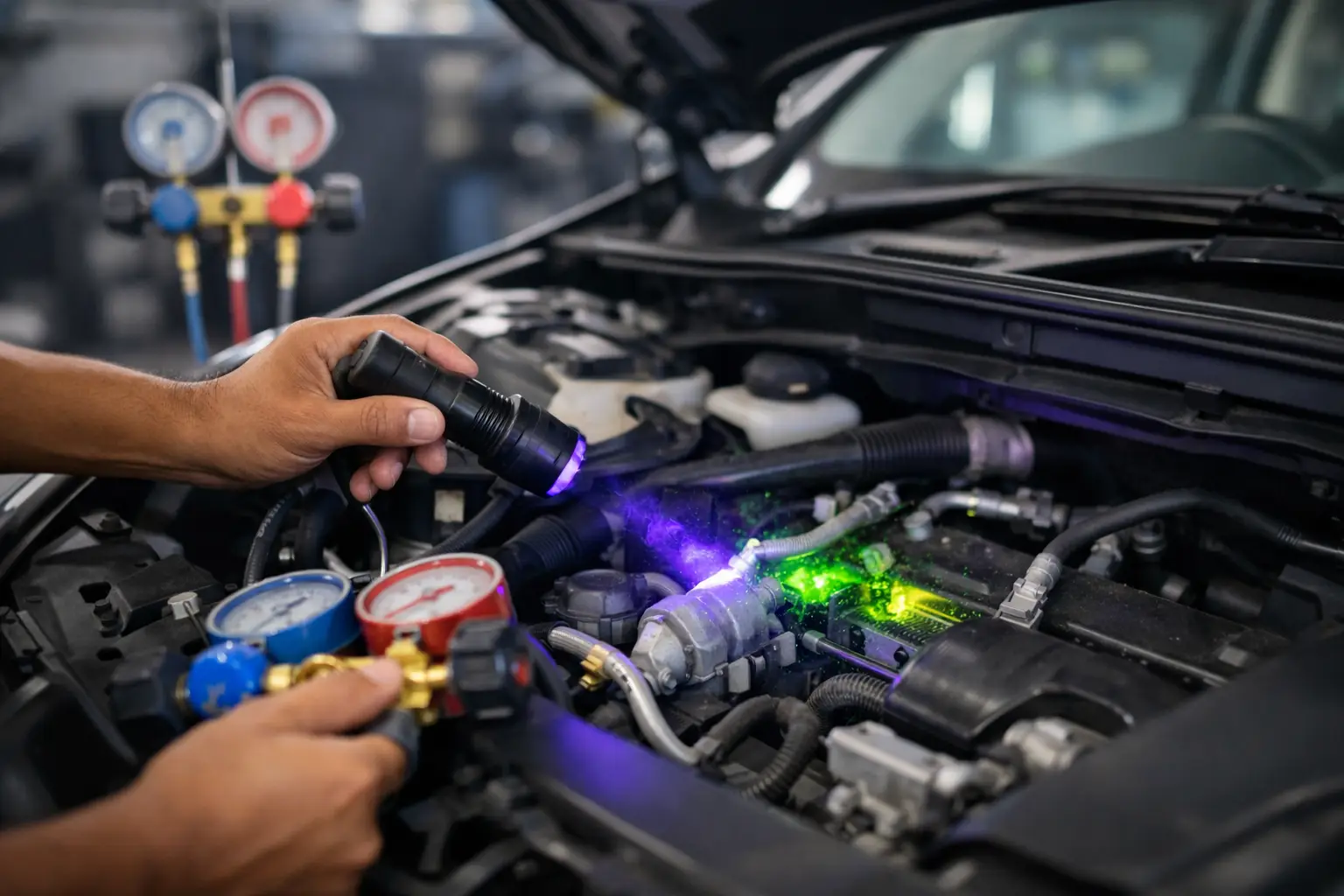
Your aircon may still blow air, but if it is no longer properly cold, takes longer to cool the cabin or needs a regas every summer, there is usually a reason. A professional car aircon leak diagnosis service finds where refrigerant is escaping before money is spent on a refill that may not last. For Sydney drivers, that means a clearer repair plan and less chance of being caught in traffic on a hot afternoon with warm air coming through the vents.
When a car aircon leak diagnosis service is the right next step
Vehicle air conditioning is a sealed system. Refrigerant should not need regular topping up as part of normal use. A very small amount of loss can occur over many years, but noticeable loss of cooling, particularly within a season or two of a regas, points to a leak or another fault that needs checking.
A leak is not always obvious. It may come from a worn seal at a hose connection, a damaged condenser at the front of the vehicle, a cracked hose, a compressor seal or an evaporator hidden behind the dash. Some leaks leave an oily residue, while others are too small to see without the right testing equipment.
Arrange an inspection if you notice any of these signs:
- The aircon is cool at first, then becomes warm after days or weeks.
- The system was regassed recently but the cold air did not last.
- Cooling is weak at idle or in slow traffic, even though the fan is working.
- You can hear unusual cycling or clicking as the compressor repeatedly switches on and off.
- There is visible damage around the condenser, hoses or fittings after a minor front-end impact.
Poor cooling does not automatically mean a refrigerant leak. A faulty fan, pressure switch, compressor, blend-door motor or electrical connection can cause similar symptoms. That is why diagnosis matters. Replacing parts or adding refrigerant based on a guess can turn a straightforward repair into an avoidable expense.
What happens during an aircon leak diagnosis
A qualified auto electrician starts by checking the basics: vent temperature, compressor operation, cooling fans, system pressures and visible condition of hoses, fittings and components. These checks help separate an electrical or mechanical fault from a likely refrigerant loss.
The next method depends on the vehicle and the symptoms. A technician may use electronic leak detection equipment around accessible components, inspect for traces of refrigerant oil, or introduce an approved UV dye where suitable. UV dye can make a leak easier to identify later under a UV light, especially when it is slow and intermittent.
Pressure testing can also be useful, but it needs to be interpreted carefully. A system can hold pressure while stationary yet leak when heat, vibration and normal operating pressures are present. The best approach is not one test for every car. It is a logical inspection using the right method for the suspected area.
If the leak is at an accessible hose, fitting, condenser or compressor seal, the repair may be relatively direct. If the evaporator is leaking behind the dashboard, more labour can be required because interior trim and dash components may need to be removed. A proper diagnosis gives you that information before major work begins.
Why a regas alone is not always the answer
A regas restores the correct refrigerant charge, which may bring cold air back temporarily. It can be appropriate where there is no evidence of a significant leak and the system has slowly lost performance over a long period. But if a leak is present, refrigerant will escape again and the aircon will gradually stop working.
There is also a practical environmental reason to locate the fault. Automotive refrigerants must be recovered and handled correctly. Releasing refrigerant or repeatedly refilling a leaking system is not a responsible fix. Repairing the leak first protects the system, reduces waste and gives the new refrigerant charge a better chance of lasting.
Be wary of a quick answer that skips testing. The lowest upfront price is not always the most cost-effective option when it leads to another regas a few months later. The right repair depends on the source of the leak, the condition of the rest of the system and the age of the vehicle.
Common leak points in Sydney vehicles
The condenser is one of the most exposed parts of an aircon system. It sits near the front of the car and can be damaged by stones, road debris or a minor bump. Blocked airflow from leaves and dirt can also place extra strain on the system during hot weather.
Rubber hoses and O-rings age over time, particularly in vehicles that spend long periods in heat. Vibrations can loosen fittings, while seals in a system that has not been run for months may dry out. Running the aircon periodically in cooler weather helps circulate oil through the system seals, although it will not prevent every fault.
Compressor leaks and evaporator leaks are less visible. A compressor may show oil staining around its body or shaft seal. An evaporator leak can be harder to confirm because the component sits inside the HVAC housing behind the dashboard. In these cases, accurate testing is valuable because replacing hidden parts without proof can be costly.
Mobile diagnosis saves the workshop runaround
When your vehicle is at home, at work or unable to leave the driveway comfortably, mobile testing can make the process easier. Ray’s Auto Electrical provides practical on-site diagnostics across Sydney, including the Western Suburbs, so you can have the initial fault checked without rearranging your whole day around a workshop booking.
Mobile service is especially useful when aircon performance has dropped but the car is otherwise driveable. The technician can assess the system where the vehicle is parked, explain what has been found in plain English and advise whether an on-site repair is suitable.
There are limits to any mobile service, and it is better to be upfront about them. Some repairs, such as an evaporator replacement that requires extensive dashboard removal, may need a workshop setting. Even then, identifying the likely fault first avoids sending the car in with no clear direction.
If you have searched for “Auto Electrician near me” after your aircon suddenly stopped cooling, look for a technician who checks both the aircon system and the electrical controls that make it operate. Searches for “Auto electrician Blacktown” often come from drivers who need quick local help, but the best result is an accurate diagnosis, not simply the closest available regas.
What to do before your appointment
You do not need to dismantle anything or attempt a DIY recharge. Make a note of when the cooling problem started, whether it happens only at idle or while driving, and whether the vehicle has had aircon work or a front-end repair recently. These details can help narrow down the cause.
If you notice an unusual smell, water on the passenger-side floor, noisy operation or warning lights, mention it when booking. Water under the car after running aircon is often normal condensation, but moisture inside the cabin is worth checking. Keep the area around the front of the vehicle accessible so the condenser and engine bay components can be inspected safely.
A clear diagnosis does more than bring back cold air. It helps you decide whether the repair is worthwhile, what parts are genuinely needed and how to prevent the same issue from returning. Getting a small aircon leak checked early is usually easier than waiting until the system stops cooling completely in the middle of summer.