
A car air conditioner that starts blowing warm air on a 35-degree Sydney afternoon is more than an inconvenience. The question is usually aircon regas vs repair: does the system simply need refrigerant, or is there a fault causing it to lose its cooling ability? The right answer can save you from paying for a regas that works briefly, then leaves you sweating again a few weeks later.
A proper air conditioning service starts with diagnosis, not guesswork. Refrigerant does not get used up like fuel. If your system is low, there is often a leak or a component issue that needs attention.
Aircon Regas vs Repair: The Key Difference
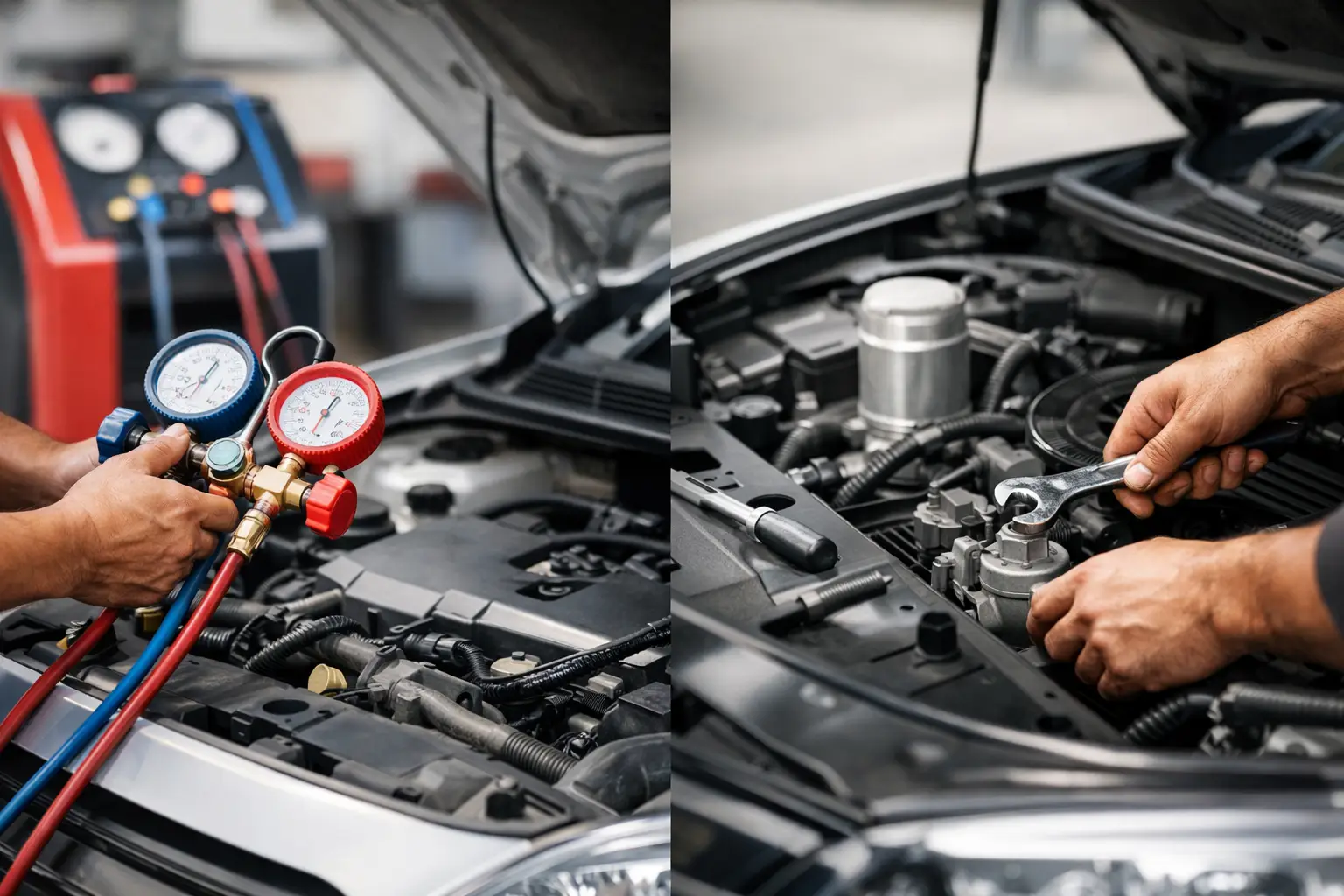
An aircon regas restores the refrigerant gas and oil in your vehicle’s air conditioning system to the manufacturer’s specified level. During a professional service, the old refrigerant is recovered, the system is vacuum tested, and the correct amount of approved refrigerant is added. This can restore cold air if the system has slowly lost charge over time and has no significant leak.
An aircon repair fixes the reason the system is not working properly. That may involve locating and repairing a refrigerant leak, replacing a damaged hose or seal, repairing wiring, fitting a new pressure switch, condenser, compressor, receiver drier, evaporator or cooling fan component.
The distinction matters. A regas can be the right service for an otherwise healthy system that is slightly undercharged. But if a leak, electrical fault or failed mechanical part is present, a regas alone is only a short-term result at best.
When a Regas May Be Enough
If your aircon has gradually become less cold over a number of years but still blows evenly and the system shows no obvious signs of damage, a regas may be all it needs. Many vehicles naturally lose a small amount of refrigerant over a long period, particularly as seals age.
A regas can also make sense after a repair has already been completed. For example, once a leaking hose or faulty valve has been replaced, the system must be evacuated and recharged with the correct refrigerant quantity before it can cool properly again.
Even then, it should not be treated as a simple top-up. Overcharging an air conditioning system can create poor cooling performance and place unnecessary strain on components. A qualified auto electrician uses the correct equipment to recover, measure and recharge the refrigerant safely.
Signs Your Car Needs an Aircon Repair Instead
Some problems point clearly to repair work rather than a regas. If your aircon suddenly stopped working overnight, a gradual loss of gas is less likely to be the only cause. There could be an electrical issue, a failed compressor clutch, a blown fuse, a pressure sensor fault or a problem with the cooling fan.
Other warning signs include rattling or squealing when the aircon is switched on, a burning smell, oily residue around aircon lines, visible damage at the condenser behind the grille, or warm air that comes and goes. Water inside the cabin can also indicate a blocked evaporator drain, while a musty smell may mean mould has built up in the ventilation system.
If the compressor is noisy or seized, simply adding refrigerant will not fix it. If a hose has split or the condenser has been damaged by road debris, the new gas will escape. That is why leak detection and system testing are worth doing before approving a regas.
What a Proper Diagnosis Checks
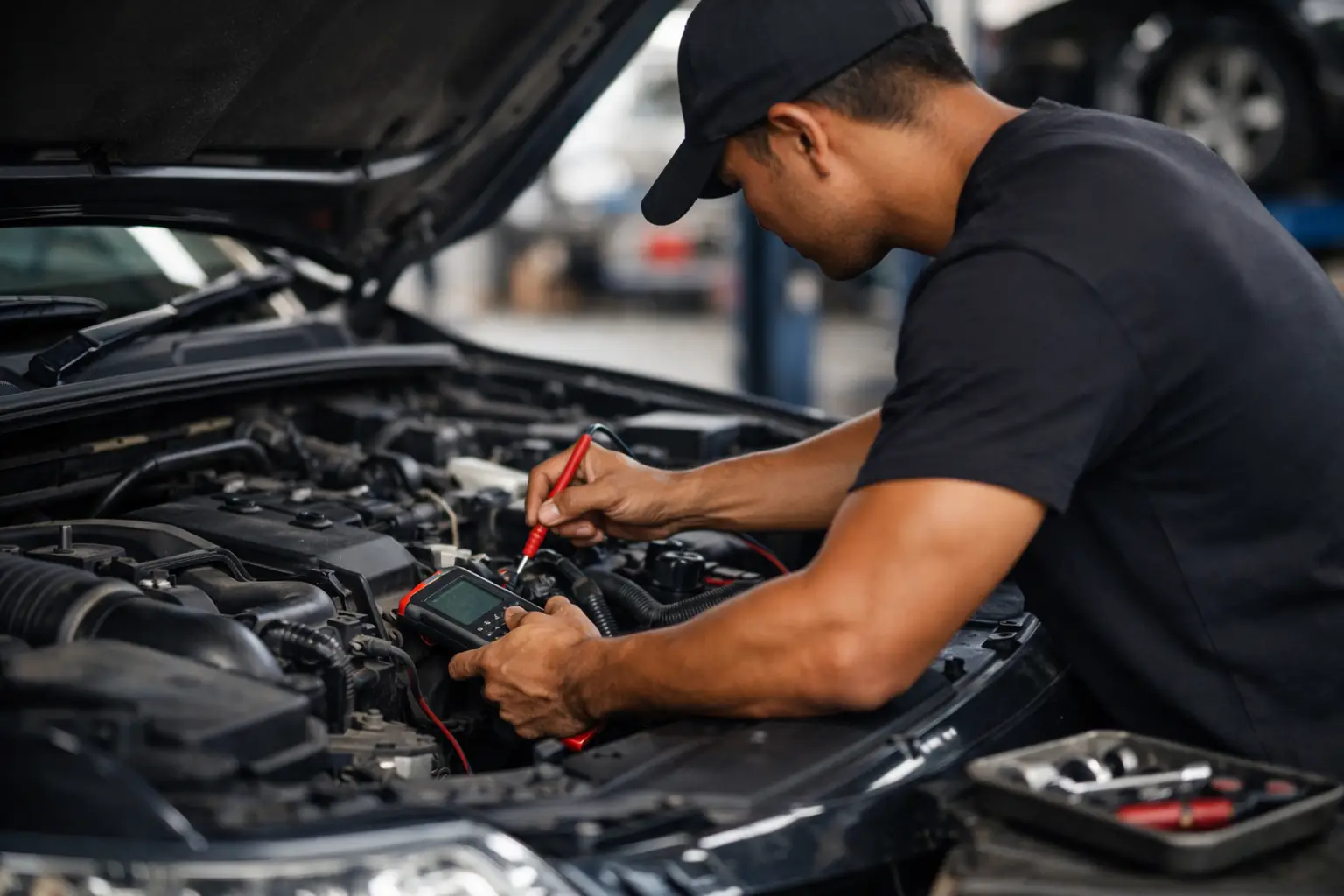
A reliable diagnosis looks at both the refrigeration side and the electrical side of the system. Modern vehicle air conditioning relies on sensors, relays, control modules, fans and wiring as well as pipes, seals and refrigerant.
An auto electrician can check whether the compressor is being commanded to operate, whether power and earth are reaching the relevant components, and whether pressure readings are within range. They can inspect the drive belt, condenser, fittings and hoses for damage or leaks. Depending on the fault, leak detection may involve electronic equipment, UV dye or a pressure test.
This approach is especially useful when the aircon works intermittently. A loose connection, failing relay or weak cooling fan may only show up once the engine bay gets hot. Replacing parts without testing can become expensive quickly, particularly on newer vehicles with electronically controlled compressors.
Why the Cheapest Regas Is Not Always the Best Value
A low-priced regas can look attractive when you just want cold air back. The issue is what happens if the system is empty or very low because of a leak. Recharging it without identifying the cause may deliver cold air for a day, a month or a season, but it does not solve the underlying fault.
There is also an environmental reason to take leaks seriously. Refrigerant must be handled correctly and recovered using approved equipment. Releasing it into the atmosphere is not acceptable, and a professional service should follow proper procedures rather than simply adding more gas.
The best value is the service that accurately identifies the fault and recommends only the work your vehicle needs. Sometimes that will be a straightforward regas. Sometimes it will be a small repair first. In more serious cases, such as a failed compressor, it may be sensible to weigh the repair cost against the age and condition of the vehicle.
Common Aircon Faults in Sydney Vehicles
Sydney heat, stop-start traffic and long commutes can expose weak air conditioning components. Condensers sit at the front of the vehicle and can be damaged by stones, road debris or minor front-end impacts. They also need clear airflow, so a faulty radiator fan can affect aircon performance when you are sitting in traffic.
Rubber seals and hoses can deteriorate with age. Electrical connections can corrode, especially in vehicles exposed to moisture or coastal conditions. In older cars, compressors may wear internally, while newer vehicles can develop sensor, wiring or control faults that need proper diagnostic equipment.
A vehicle that cools well while driving but turns warm at traffic lights is a useful clue. It may indicate reduced airflow through the condenser or a fan problem, rather than just low refrigerant. On the other hand, weak cooling at all speeds can point to low gas, a restriction, a compressor issue or another system fault. The symptoms help guide testing, but they are not a substitute for diagnosis.
Can You Keep Driving With Broken Aircon?
Usually, a lack of cold air will not stop your car from being driven. However, it can make driving uncomfortable and tiring, particularly for families, tradies and commuters in summer. Demisting performance may also suffer because the air conditioning system helps remove moisture from cabin air.
If you hear grinding, loud rattling, smell burning, or notice the engine temperature rising when the aircon is switched on, turn it off and arrange an inspection. A seized compressor, damaged belt or cooling fan issue can lead to a larger repair if ignored.
Get the Right Fix Without Workshop Hassle
When your car aircon is not doing its job, avoid assuming that every fault needs a regas. A diagnosis first can reveal whether a recharge is appropriate or whether a leak, electrical issue or damaged part needs repair.
For drivers searching Auto Electrician near me, mobile testing can make the process easier. Ray’s Auto Electrical provides on-site auto air conditioning diagnostics and repairs across Sydney, helping you get a clear answer without losing time arranging a workshop visit. If you are looking for an Auto Electrician Blacktown service, booking a qualified mobile specialist means the issue can be assessed where your vehicle is parked.
Cold air should not be a gamble. Have the system checked properly, approve the repair that makes sense for your vehicle, and head into the next hot day with confidence.