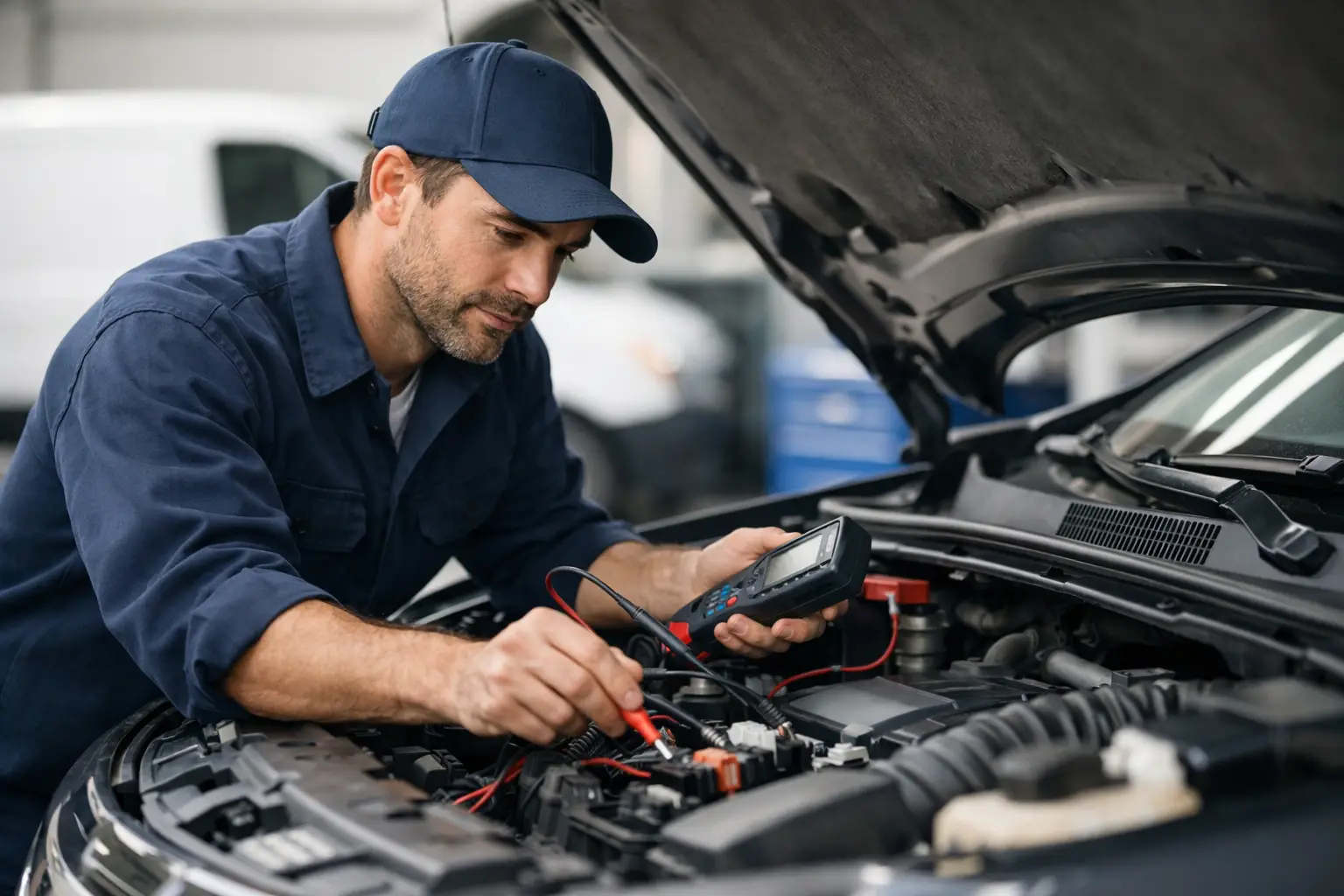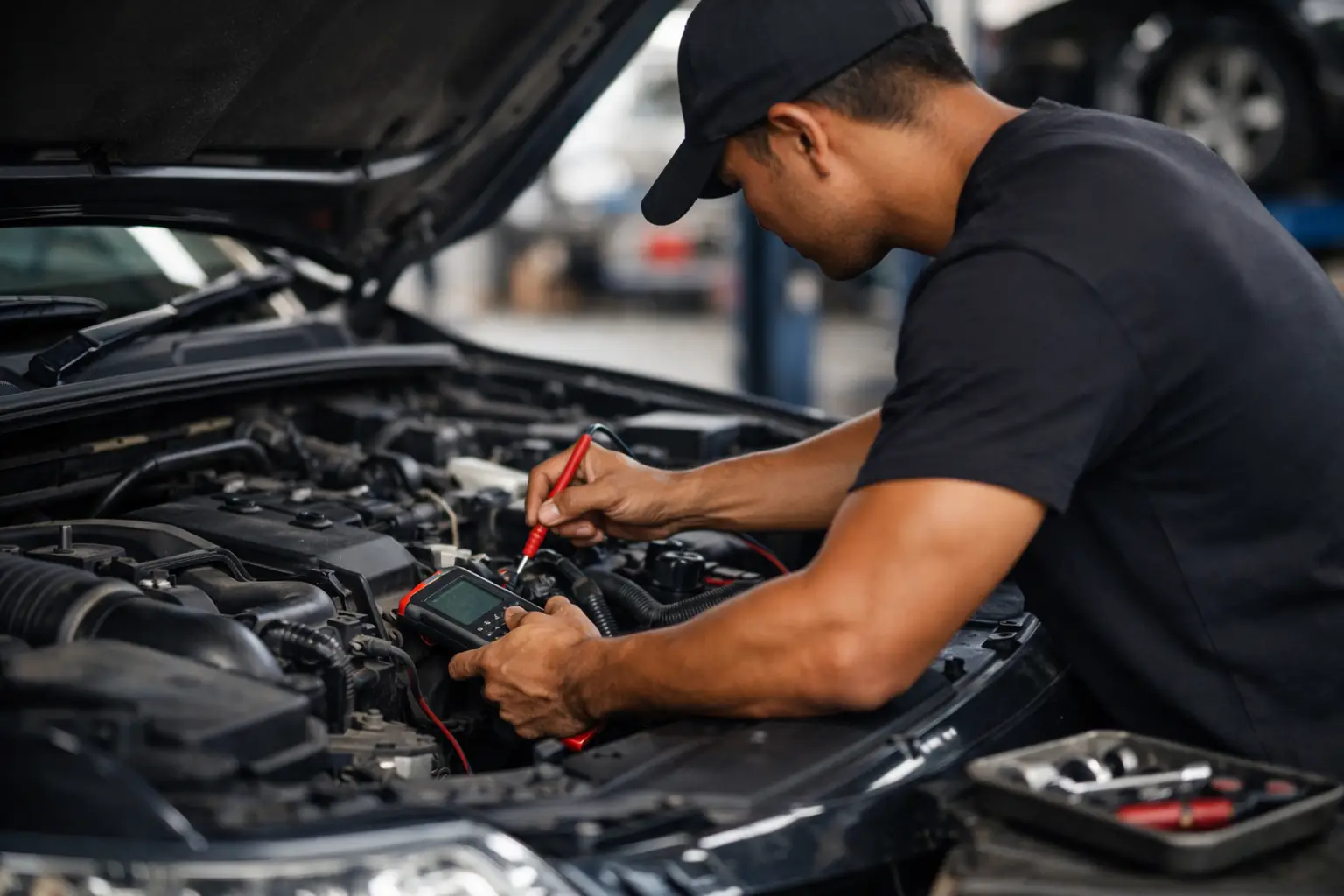

You turn the key or press the start button before work, and instead of the engine firing, there is a click, a slow crank, or nothing at all. A starter motor electrical problem can look like a flat battery, but the cause may be anywhere between the battery terminals, ignition circuit, starter relay and the motor itself.
The good news is that most starting faults can be narrowed down quickly with the right testing. The key is not to guess or replace parts blindly, particularly when the vehicle is needed for school runs, site work or the daily commute.
What the starter system actually does
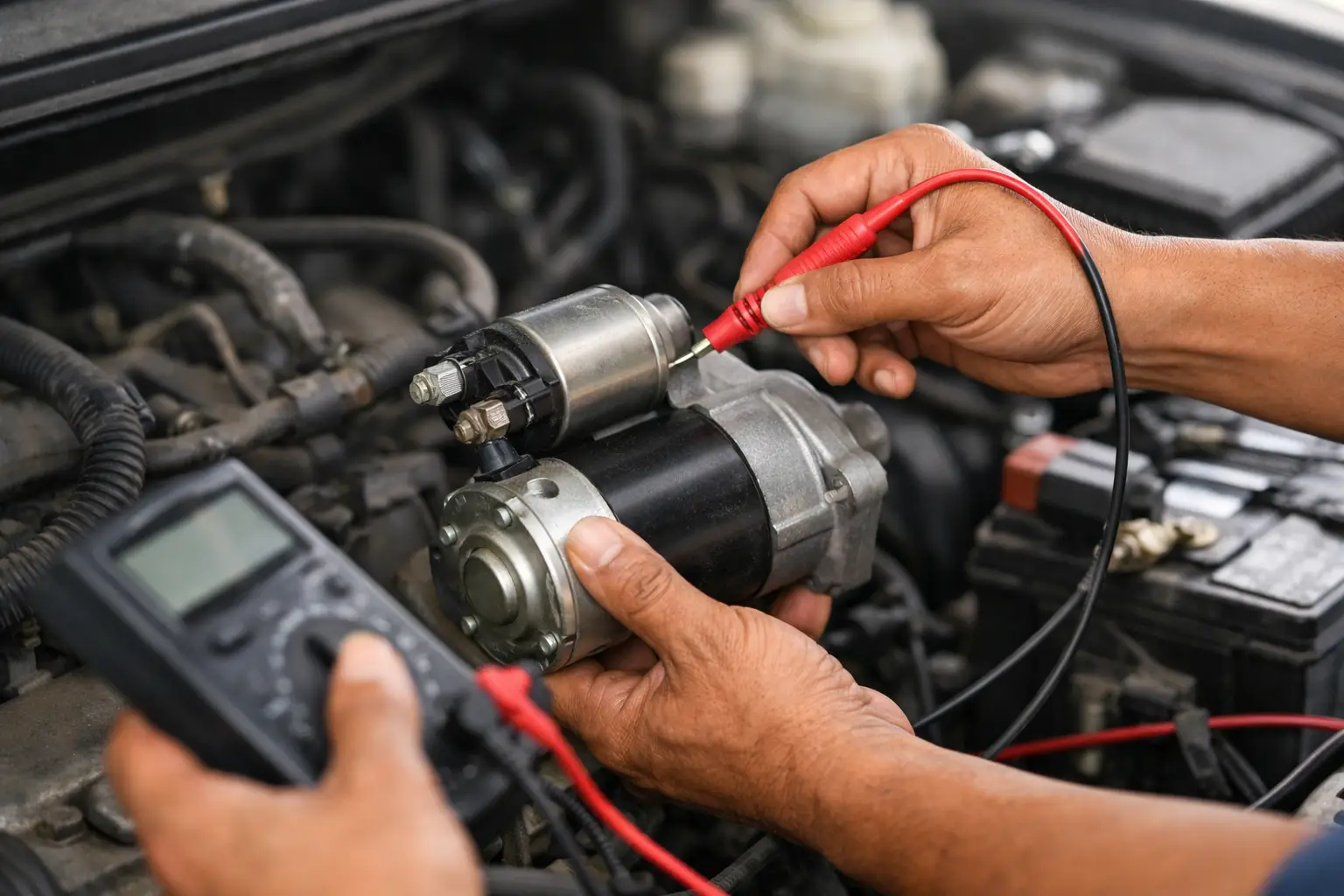
Your starter motor needs a large burst of electrical current to turn the engine over. Power begins at the battery and travels through heavy battery cables to the starter motor. A smaller control circuit, operated by the ignition switch or start button, tells the starter solenoid when to engage.
For the engine to crank properly, the battery must be charged, cable connections must be clean and tight, the earth path must be sound, and the relay, solenoid and starter motor must all work together. A fault in any one of these areas can stop the vehicle from starting.
Modern vehicles can add another layer. An immobiliser, clutch safety switch, park/neutral switch, body control module or smart key system may prevent the start signal reaching the starter. That is why a proper diagnosis matters more than relying on the sound the car makes alone.
Signs of a starter motor electrical problem
The symptom gives an experienced auto electrician a useful starting point, although it does not confirm the failed part by itself.
One click when you try to start
A single solid click often means the starter solenoid is receiving a signal but the starter motor is not turning. This may be caused by a weak battery, a poor battery connection, a bad engine earth, worn starter contacts or an internal starter motor fault.
If the headlights dim heavily at the same time, the battery or main cable connections deserve close attention. If the lights stay bright but there is only a click, the starter motor or its control circuit may be at fault.
Rapid clicking or dashboard lights flashing
Rapid clicks are commonly linked to low battery voltage. The battery may be flat because the lights were left on, but it can also be losing charge due to an alternator issue, a failing battery, corroded terminals or an electrical drain while the vehicle is parked.
A jump-start may get the car moving once, but it does not identify why the battery went flat. If the problem returns, the charging and starting systems should both be tested.
Slow or laboured cranking
A slow crank can feel like the engine is struggling to start, especially on a cold morning. A tired battery is a common cause, but damaged cables, loose connections and a starter motor drawing too much current can create the same symptom.
This is where voltage-drop testing is valuable. It checks whether voltage is being lost through cables or connections under load, rather than simply checking battery voltage when nothing is happening.
No click and no crank
When there is no sound at all, the starter may not be receiving a command to operate. Possible causes include a blown fuse, faulty starter relay, worn ignition switch, immobiliser issue, clutch switch fault in a manual vehicle, or a park/neutral switch issue in an automatic.
Try starting an automatic in Neutral as well as Park, with your foot firmly on the brake. For a manual, make sure the clutch is fully depressed. If it starts only in a different position, do not ignore it – the safety switch may need attention.
It starts sometimes, then fails without warning
An intermittent starting fault is frustrating because it may disappear by the time the vehicle reaches a workshop. Heat-sensitive starter components, loose wiring, worn solenoid contacts and failing relays can all cause a vehicle to start one day and refuse the next.
Take note of what happens when it fails: whether you hear a click, whether warning lights appear, and whether the engine starts after cooling down. Those details can speed up diagnosis.
Safe checks you can make before booking a repair
There are a few sensible checks that do not involve dismantling components or working around high-current wiring. First, look at the battery terminals. They should be secure, free from heavy corrosion and not able to move by hand. White, blue or green buildup can interfere with current flow.
Check whether interior lights, headlights and dash lights are unusually dim. If you have a battery charger, charge the battery fully according to the charger instructions. A battery that has been repeatedly flattened may still need replacement, even if it accepts a charge.
Also consider the recent history of the vehicle. Has it been slow to crank for weeks? Has the battery warning light come on while driving? Was accessory wiring recently installed? Did the fault begin after heavy rain, a battery replacement or work around the engine bay? These clues help separate a battery, charging, wiring or starter issue.
Avoid repeatedly holding the key in the start position. Long cranking attempts can overheat cables and damage the starter motor. Never bridge starter terminals with a screwdriver or bypass safety switches. Modern vehicles have sensitive electronics, and the risk of injury, sparks or vehicle damage is not worth it.
Why battery testing alone is not enough
Many vehicle owners are told they need a battery because the car will not start. Sometimes that is correct. However, a voltage reading by itself is not the full picture.
A battery can show reasonable voltage at rest but collapse under the heavy load of cranking. On the other hand, a healthy battery can appear flat when a poor connection prevents current from reaching the starter. An alternator fault may have left the battery undercharged, while a starter motor with internal wear may draw excessive current and make a good battery look weak.
A complete starting-system diagnosis checks battery condition, charging voltage, cable condition, earth connections, starter current draw and the start signal. This approach helps prevent paying for a battery or starter motor that does not solve the actual fault.
Common repairs after starter circuit testing
The repair depends on the test results. In some cases, cleaning and securing battery terminals or replacing a damaged earth cable restores reliable starting. In others, the vehicle may need a new battery, starter relay, ignition-related switch or starter motor.
Starter motor replacement is usually recommended when the motor has internal electrical or mechanical wear, such as worn brushes, a failed solenoid or a seized drive mechanism. The right choice can depend on the vehicle’s age, parts availability and the condition of the rest of the starting system. Replacing the starter without checking the battery and cables can leave the original problem unresolved.
For late-model vehicles, fault-code scanning may also be needed. A no-crank condition can be caused by an electronic authorisation issue rather than the starter itself, particularly where push-button start and keyless systems are fitted.
When mobile diagnosis makes sense
A no-start vehicle is not always easy or practical to tow. Mobile testing can be especially helpful when the car is stranded at home, at work, in a car park or on a job site. A qualified technician can test the starting and charging system where the fault occurs, rather than relying on the vehicle behaving differently after it has been moved.
For Sydney drivers, Ray’s Auto Electrical provides on-site fault diagnosis and repairs across Sydney, including the Western Suburbs. If you have searched Auto Electrician near me or typed Auto electrician Blacktown while stuck with a vehicle that will not crank, choose a technician who tests the complete circuit before recommending parts.
If the vehicle is stopped in an unsafe location, arrange roadside assistance or emergency support first. Once it is safe, accurate electrical testing is the quickest path to knowing whether the issue is the battery, the wiring, the start control circuit or the starter motor itself.
A starting fault rarely improves with time. Acting when the first slow crank or occasional click appears can save you from the far more inconvenient version: a vehicle that will not start when you need it most.