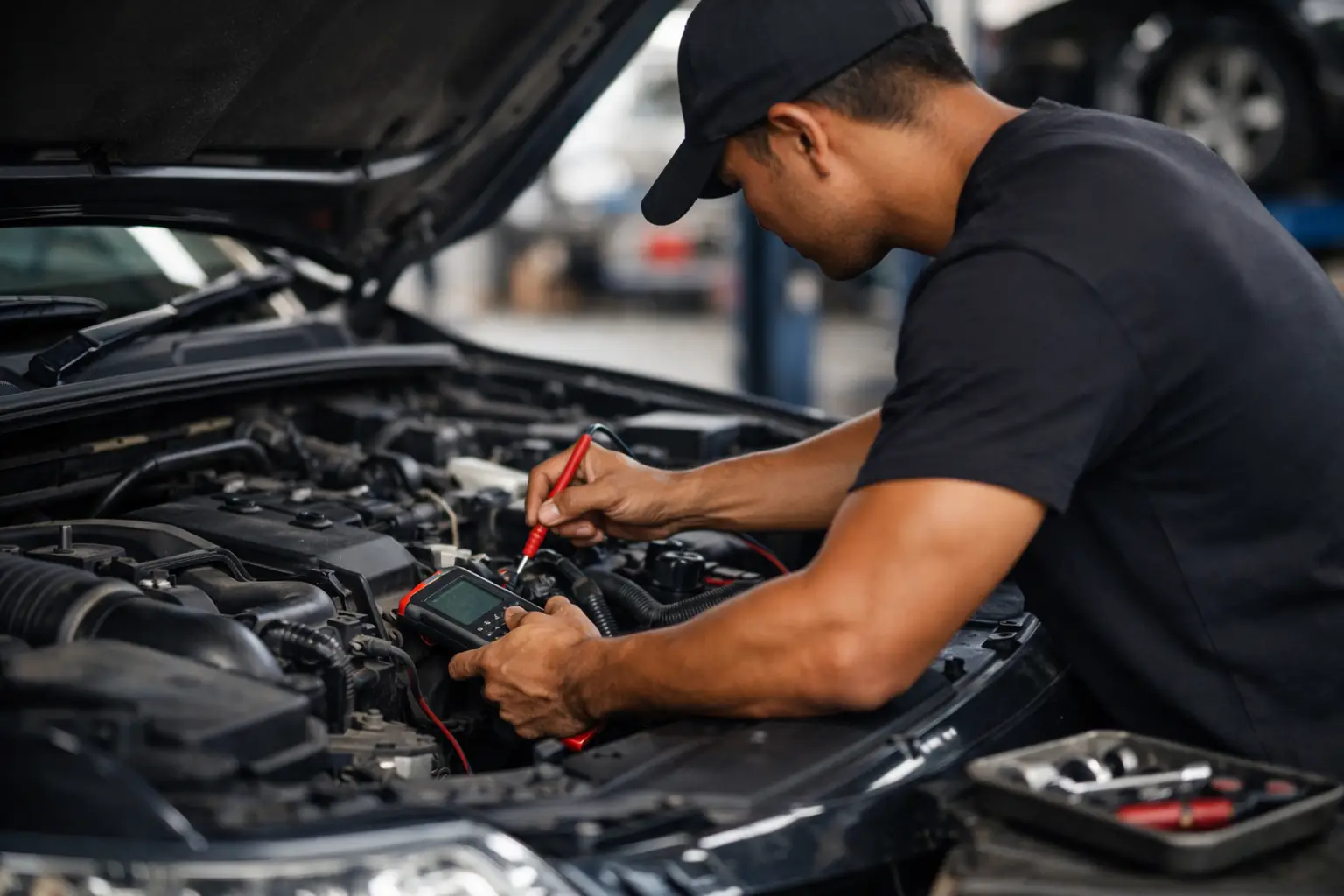

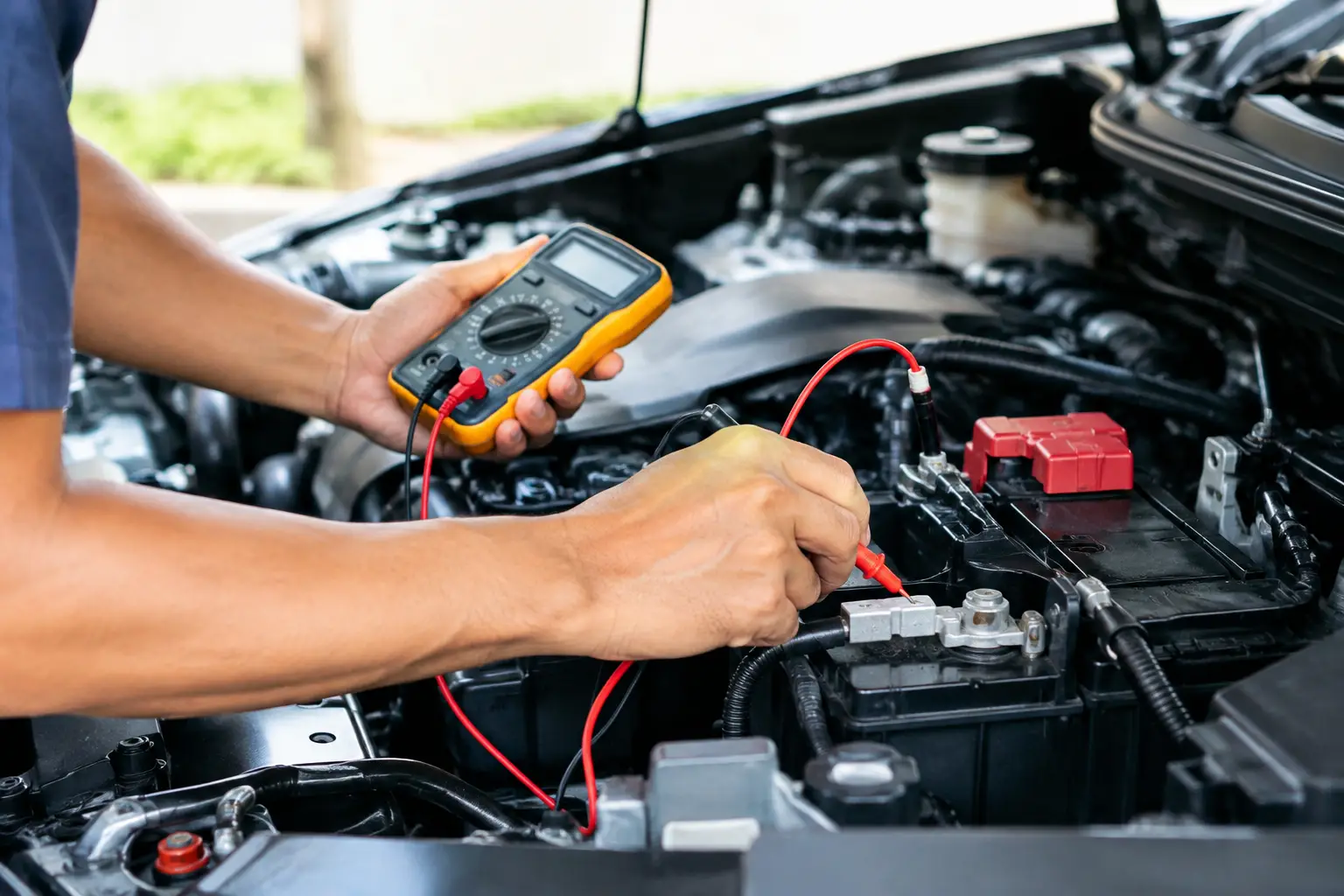
A car that will not start in the driveway, headlights that suddenly dim on the way home, or a battery warning light on the dash can throw your whole day off track. This auto electrical problems checklist helps you recognise the common signs, make a few safe observations and decide when it is time to call a qualified auto electrician.
Most electrical faults do not appear out of nowhere. They often start as small changes: slower cranking, unreliable accessories, flickering lights or warning messages that come and go. Acting early can prevent a roadside breakdown, avoid unnecessary parts replacement and make diagnosis quicker.
Auto electrical problems checklist for everyday drivers
1. Check whether the engine cranks normally
When you turn the key or press the start button, listen carefully. A healthy vehicle should crank firmly and start without hesitation. A slow, laboured crank commonly points to a weak battery, loose battery connection or charging fault.
A single click, repeated clicking or no sound at all can also involve the starter motor, starter relay, ignition switch or wiring. Do not assume it is just the battery because the dash lights come on. Lights use far less power than a starter motor, so a battery can still illuminate the dash while lacking enough charge to start the engine.
2. Look at the battery terminals and battery condition
With the engine off, lift the bonnet and inspect the battery terminals. White, blue or green powder around the terminals is corrosion. It can restrict current flow and cause hard starting, intermittent faults and charging problems.
Also check that the clamps are secure and the battery case is not swollen, cracked or leaking. A swollen battery should not be ignored or handled unnecessarily. Heat, overcharging and internal battery failure can all cause swelling. A proper battery and charging-system test gives a clearer answer than judging a battery by its age alone.
3. Notice the battery warning light while driving
The battery-shaped warning light does not always mean the battery itself has failed. More often, it means the charging system is not working as it should. The alternator, drive belt, wiring, battery terminals and voltage regulator may all be involved.
If this light comes on while driving, turn off non-essential electrical loads where safe to do so, such as aftermarket accessories or the rear demister. Avoid making unnecessary stops because the vehicle may not restart once the battery charge is depleted. Arrange electrical diagnosis as soon as practical.
4. Watch for dimming or flickering lights
Headlights that dim at idle and brighten as revs rise may indicate an alternator or voltage regulation issue. Flickering interior lights, instrument lights or headlights can also be caused by a loose connection, poor earth, deteriorated wiring or a failing alternator.
One faulty globe is usually a local problem. Multiple lights behaving strangely at once is more likely to be a supply or connection issue. This distinction matters because replacing bulbs will not fix an unstable charging voltage or damaged earth point.
5. Test accessories that have become unreliable
Power windows, central locking, the radio, blower fan, reversing camera, dash cam and USB chargers all rely on sound wiring, fuses and voltage supply. If an accessory works only occasionally, cuts out over bumps or resets when starting, note exactly when it happens.
An aftermarket accessory may have its own fuse, wiring connection or voltage protection setting. Poorly installed accessories can create battery drain or interfere with other circuits, but a professionally fitted system can usually be checked and repaired without replacing everything. The goal is to identify the actual fault, not guess at the most visible item.
6. Pay attention to blown fuses, but do not keep replacing them
A fuse protects the wiring by blowing when there is an overload or short circuit. If a replacement fuse blows again, there is a reason. Fitting a higher-rated fuse to stop it blowing can overheat wiring and create a fire risk.
Use only the correct fuse rating specified for the vehicle. If the same circuit keeps failing, leave it switched off where possible and have the wiring inspected. Water entry, damaged insulation, a faulty component or accessory wiring are common causes.
7. Check for signs of a battery drain
A vehicle that starts well after a drive but has a flat battery the next morning may have a parasitic battery drain. Interior lights left on, a boot light that does not switch off, an ageing battery, a faulty alternator diode or an accessory that stays powered can all be responsible.
Think about anything that changed before the issue began. Was a dash cam, stereo, trailer wiring, alarm or UHF system recently installed? Did the fault start after heavy rain or a car wash? These details can save time during diagnosis. Repeated jump-starting is not a solution, as deep discharging can shorten battery life and leave you stranded.
8. Do not overlook air conditioning electrical faults
If the air conditioning blower will not run, only works on certain speeds, or the system cuts in and out, an electrical issue may be part of the problem. The blower motor, resistor, pressure switches, control panel, relays and wiring can all affect operation.
A lack of cold air can also be a refrigerant or mechanical issue, so it depends on the symptoms. An auto electrician can test the electrical side before parts are replaced, which helps avoid paying for work that does not address the cause.
9. Take warning lights and fault messages seriously
Modern vehicles rely on multiple control modules, sensors and communication networks. A warning light may relate to the engine, ABS, airbags, steering, parking sensors or transmission, and some faults can affect starting or charging as well.
Do not clear a warning simply because the car seems to be driving normally. If the message returns, record the wording or take a photo of the dash. That information helps pinpoint intermittent faults, particularly when a technician arrives and the warning has disappeared.
10. Consider recent water, rodent or accident damage
Electrical faults often appear after water enters a connector, wiring is disturbed during repairs, or rodents chew through insulation. Look for damp carpet, water in the spare-wheel well, chewed wiring under the bonnet or damage around lights and bumpers.
Do not pull apart airbag wiring, high-voltage hybrid or EV components, or heavily damaged harnesses yourself. These systems need the right diagnostic equipment and safe procedures. Even on conventional vehicles, a hidden wiring fault can take careful testing to locate.
When a quick check is enough and when to call for help
A loose battery clamp or a clearly flat, ageing battery may be straightforward. However, electrical symptoms can overlap. A bad alternator can flatten a good battery, a poor earth can mimic a failing starter, and an accessory fault can look like a battery problem.
Call for professional help if the vehicle will not start after a safe jump-start, the battery light stays on, fuses keep blowing, you smell burning insulation, see smoke, or lose critical lighting. If there is a burning smell or smoke, stop safely, switch the vehicle off and do not continue driving.
For Sydney drivers who cannot get to a workshop, a mobile diagnosis can be the practical option. Ray’s Auto Electrical can test batteries, alternators, starters, wiring and accessories at your location, helping reduce the disruption of a no-start fault or electrical warning.
People often search “Auto Electrician near me” when the car has already stopped working. A better approach is to book a check when early signs appear, such as slow starting or flickering lights. If you have searched “Auto electrician Blacktown” after a flat battery or charging warning, have your vehicle make, model, symptoms and any recent work ready when you call.
A clear description of what changed, when it happens and which warning lights are showing gives a technician a stronger starting point. It can turn a frustrating electrical fault into a faster, more accurate repair and get you back on the road with confidence.