

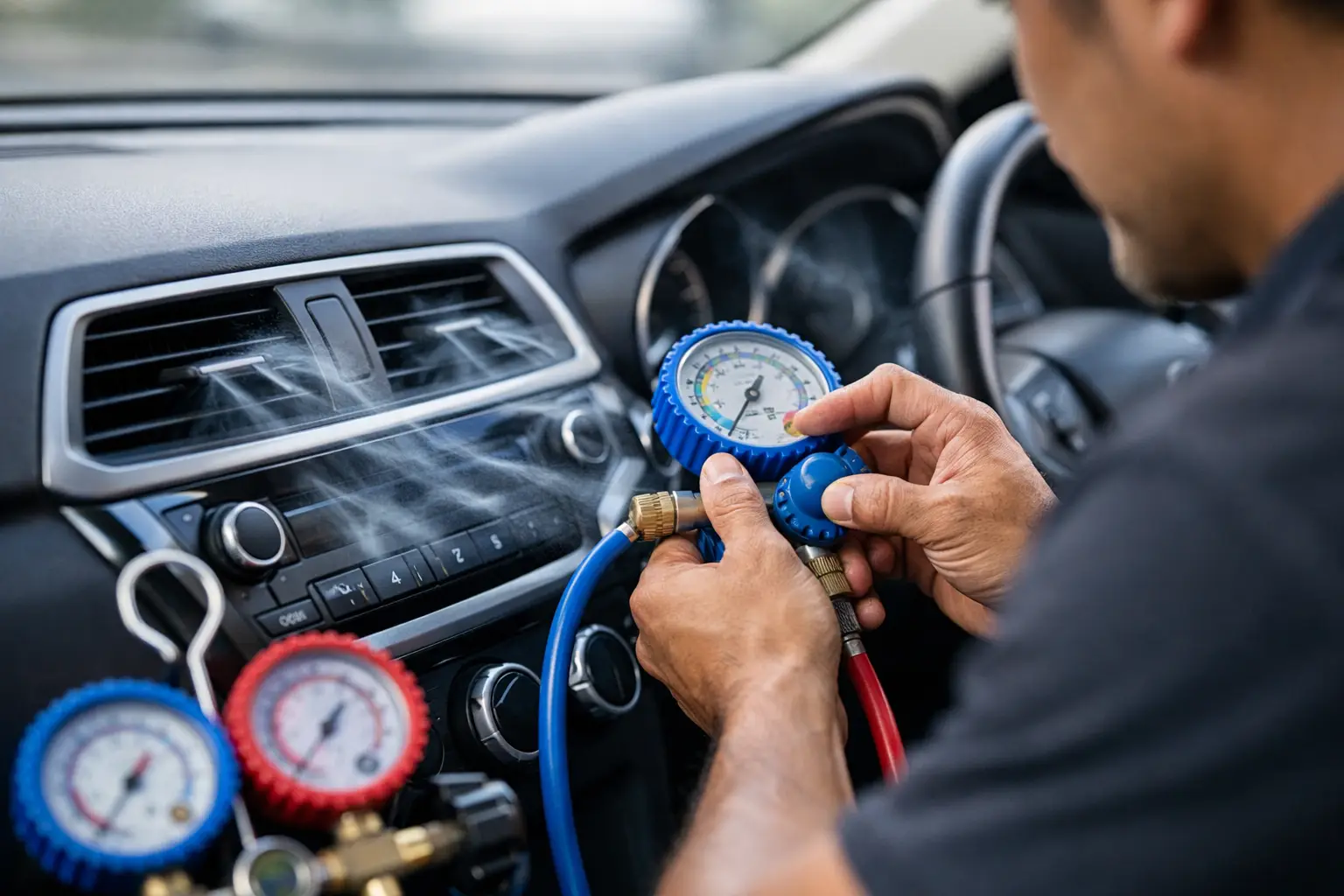
A Sydney summer commute is not the time to find out your air con is only blowing warm air. Regular car air conditioning maintenance helps your system cool properly, clears mist from the windscreen more effectively and can prevent a small issue becoming an expensive repair.
Your vehicle’s air conditioning is more than a comfort feature. It relies on electrical controls, pressure sensors, a compressor, refrigerant, hoses and cabin filters all doing their job. When one part starts to fail, the signs are often easy to miss until the first hot day.
Why car air conditioning maintenance matters
Air conditioning systems naturally lose a small amount of refrigerant over time, even when there is no obvious fault. Refrigerant carries the heat out of the cabin, while the system oil circulates to lubricate key components such as the compressor. If the refrigerant level drops too low, cooling performance suffers and the compressor can be placed under extra strain.
In Western Sydney, long hot days, stop-start traffic and vehicles parked outside can make the system work harder. A weak air con system may still feel acceptable on a mild morning, then struggle badly when the cabin is hot and the car is sitting in traffic.
Maintenance is also useful for catching leaks early. A regas may restore cold air for a while, but it is not a proper fix if refrigerant is escaping through a damaged hose, seal, condenser or component. Finding the cause first can save you from paying to refill a system that will soon lose its charge again.
Signs your air conditioner needs attention
The clearest sign is air that is no longer cold. But there are several other warning signs worth acting on before the system stops working altogether.
If airflow is weak, the cabin filter may be blocked, the blower motor may be struggling or there could be an issue within the vents. A musty smell when the air con starts can point to moisture and bacteria around the evaporator or a dirty cabin filter. This is common, especially if the system has not been used regularly.
Unusual noises also deserve a check. Clicking, squealing, rattling or a grinding sound when you switch on the air con can be caused by a worn compressor, clutch, belt or electrical issue. Do not ignore it simply because the cabin is still cooling. Continued use can turn a repairable fault into a compressor replacement.
Other signs include water pooling inside the cabin, windows that take too long to demist, an air con compressor that cycles on and off frequently, or a burning smell from the vents. Water under the vehicle after running the air con is usually normal condensation. Water on the passenger-side carpet is not.
What a proper air conditioning service checks
A proper service is more than connecting gauges and adding refrigerant. The exact process depends on the vehicle and its symptoms, but a qualified technician should assess the system before deciding what work is needed.
This generally includes checking cooling temperature, refrigerant pressures, compressor operation, electrical connections and visible hoses or fittings. Leak detection may be needed if the system is low on refrigerant. The cabin filter should also be inspected, as a blocked filter reduces airflow and makes the fan work harder.
Modern vehicles often use computer-controlled air conditioning systems. Fault codes, pressure sensors, relays, radiator fans and control modules can all affect cooling. That is why an accurate diagnosis matters. Adding refrigerant will not repair a faulty compressor clutch, a failed fan or an electrical fault.
Refrigerant should only be handled with approved equipment by a suitably qualified technician. It is not a job for improvised top-up kits or guesswork. Using the wrong refrigerant, overfilling the system or mixing oils can cause damage and create a much larger repair bill.
Simple habits that help your air con last
You cannot prevent every fault, but a few regular habits can reduce unnecessary strain and help you notice problems sooner:
- Run the air con for around 10 minutes every week, including during winter, to help circulate oil through the system.
- Replace the cabin filter when it is dirty or at the manufacturer’s recommended interval, particularly if airflow has dropped.
- On very hot days, open the doors or windows briefly before driving to release trapped heat, then use recirculation once the cabin begins cooling.
- Keep leaves and debris clear from the area at the base of the windscreen, as blocked drains can contribute to moisture issues.
- Have changes in cooling, smells or noises checked early rather than waiting for summer.
Using recirculation has a practical trade-off. It cools a hot cabin faster because the system is cooling already-conditioned air. However, for longer drives, switching periodically to fresh air can help reduce stuffiness. If windows are fogging, turn off recirculation and use the demister setting.
Do not skip winter use
Many drivers switch off their air con completely once cooler weather arrives. It is understandable, but occasional use helps keep seals lubricated and allows you to spot a weak system before the heat returns. Air conditioning also dries the air, which is why it is so effective when demisting a windscreen on a wet morning.
When a regas is the right answer
A regas can be worthwhile when testing confirms the system is simply low on refrigerant and no significant leak is found. It can restore cooling and bring pressure levels back within specification.
However, a regas is not automatically the answer to warm air. If the system lost a large amount of refrigerant, has no pressure, or only stayed cold for a short period after its previous service, leak testing should come first. The same applies when there are unusual noises or electrical warning signs.
Some late-model vehicles use different refrigerant types from older cars. The service equipment and procedure must suit the vehicle. A qualified auto electrician or air conditioning technician can identify the correct refrigerant and assess whether the fault is mechanical, electrical or related to a leak.
Mobile help when the air con stops working
An air conditioning fault does not always mean your car is undriveable, but it can make daily travel uncomfortable and, in extreme heat, difficult for young children, older passengers and tradies spending hours on the road. A mobile inspection can be especially useful when getting to a workshop is inconvenient or the vehicle has another electrical issue at the same time.
Ray’s Auto Electrical provides on-site diagnostics and automotive air conditioning support across Sydney, helping drivers get clear answers without rearranging their whole day. A mobile technician can assess the fault at your home, workplace or job site and explain whether you need a service, repair, electrical testing or further parts replacement.
If you are searching online for an Auto Electrician near me or have typed Auto Electrician Blacktown, focus on a provider who can diagnose the cause rather than promise a quick regas before checking the system. Clear advice, suitable equipment and qualified workmanship matter far more than a temporary blast of cold air.
How often should air conditioning be serviced?
There is no single interval that suits every vehicle. As a general guide, have the air conditioning checked every one to two years, or sooner if cooling performance changes. Vehicles that spend most days in heavy traffic, operate as work vehicles, carry passengers regularly or sit in direct sun may benefit from more frequent attention.
Your vehicle handbook may also set out a recommended cabin filter interval. In dusty conditions or after bushfire smoke, roadworks or long periods of poor air quality, the filter may need replacing earlier. A clean filter supports airflow, but it will not fix a refrigerant or compressor problem.
The best time to book a check is before the first stretch of hot weather, not during it. A short inspection now can mean a cooler, safer and far more comfortable drive when the temperature climbs.