
That sinking feeling when you turn the key or press the start button and get nothing is never convenient. Knowing when to replace car starter can save you from being stranded at home, at work or in a car park after a long day. The key is recognising the warning signs early, while also ruling out common faults such as a flat battery or poor battery connection.
What a car starter does
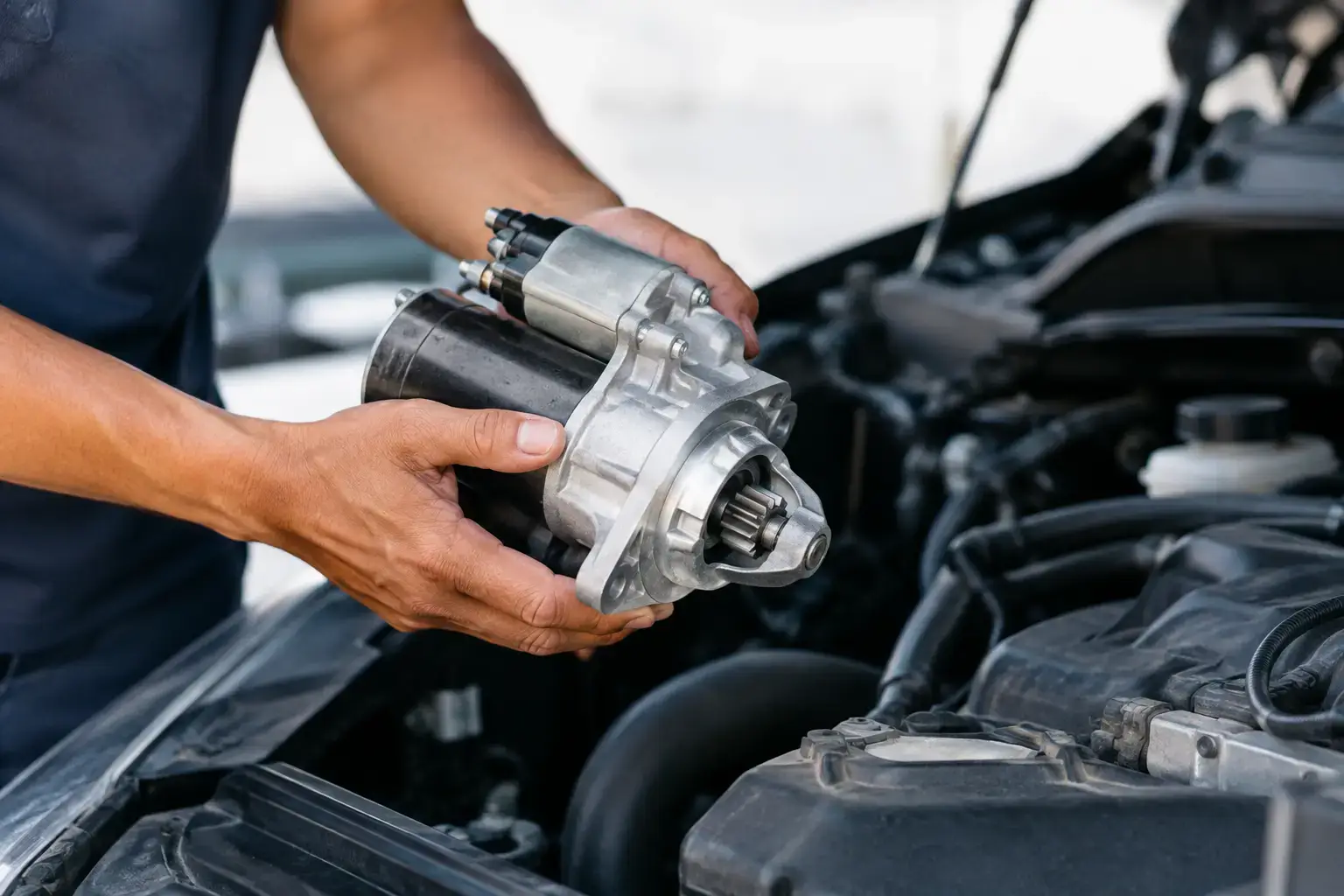
Your starter motor is the electrical component that turns the engine over when you start the vehicle. It draws power from the battery, engages the engine, and gets the combustion process moving. Once the engine is running, the starter’s job is done.
Because it handles a high electrical load every time you start the car, the starter motor and its connected parts gradually wear out. Heat from the engine bay, oil leaks, loose wiring and frequent short trips can all shorten its life.
A starter can fail without much warning, but many vehicles give you clues first. Acting on those clues can mean the difference between a planned repair and needing urgent help when the car will not start.
7 signs it may be time to replace your car starter
1. You hear one click, but the engine will not crank
A single solid click when you try to start is one of the most common starter-related symptoms. It can mean the starter solenoid is receiving power but the motor itself is not turning the engine.
However, a weak battery can make a similar sound. If the dashboard lights are dim, the headlights fade badly, or the vehicle has been sitting for days, the battery should be tested first. A proper electrical diagnosis checks battery condition, cable connections and starter operation before recommending replacement.
2. The engine cranks slowly despite a healthy battery
A sluggish crank can sound like the engine is struggling to turn over. In colder weather it may be more noticeable, but a starter that consistently cranks slowly needs attention.
A battery with low charge is still the first possibility, particularly if you have left lights or accessories on. If testing confirms the battery and charging system are working correctly, excessive resistance or wear inside the starter may be the cause.
3. Starting is intermittent
The car starts normally in the morning, then refuses to start at the shops. Later, it starts as if nothing happened. Intermittent faults are frustrating, but they are often an early warning that the starter solenoid, internal brushes or electrical connections are failing.
Do not assume the problem has gone away just because the vehicle starts on the next attempt. An intermittent starter fault often becomes a no-start fault at the worst possible time.
4. You hear grinding or whirring noises
A grinding sound during starting can indicate worn starter gears or damage to the flywheel teeth the starter engages with. A whirring sound without the engine cranking may mean the starter motor is spinning but not properly engaging.
These noises should be checked promptly. Continuing to try the ignition repeatedly can cause further damage and increase the eventual repair cost. A technician can identify whether the issue is the starter assembly, mounting, engagement mechanism or flywheel.
5. There is a burning smell or smoke near the engine bay
An electrical burning smell after repeated start attempts is not something to ignore. It may be caused by overheating cables, a starter drawing excessive current, or a poor connection creating heat.
Stop trying to start the vehicle if you smell burning, see smoke or notice hot battery leads. Turn the ignition off and arrange an inspection. Electrical faults can worsen quickly when high-current components are involved.
6. The starter stays engaged after the engine starts
If you hear a high-pitched whine or grinding noise for a moment after the engine has started, the starter may not be disengaging correctly. This can damage the starter gear and flywheel if it continues.
This symptom needs prompt attention. It is not a fault to monitor for a few weeks, especially if it happens more than once.
7. Your car needs repeated start attempts
Needing to turn the key several times, press the start button repeatedly, or jiggle the gear selector before the engine starts can point to a starter or starting-circuit issue. It could also relate to a neutral safety switch, ignition switch, key immobiliser or wiring fault.
That is why replacing a starter based on one symptom alone is risky. The correct repair depends on finding where the voltage drop or signal failure is happening.
Before replacing the starter, rule out these common faults
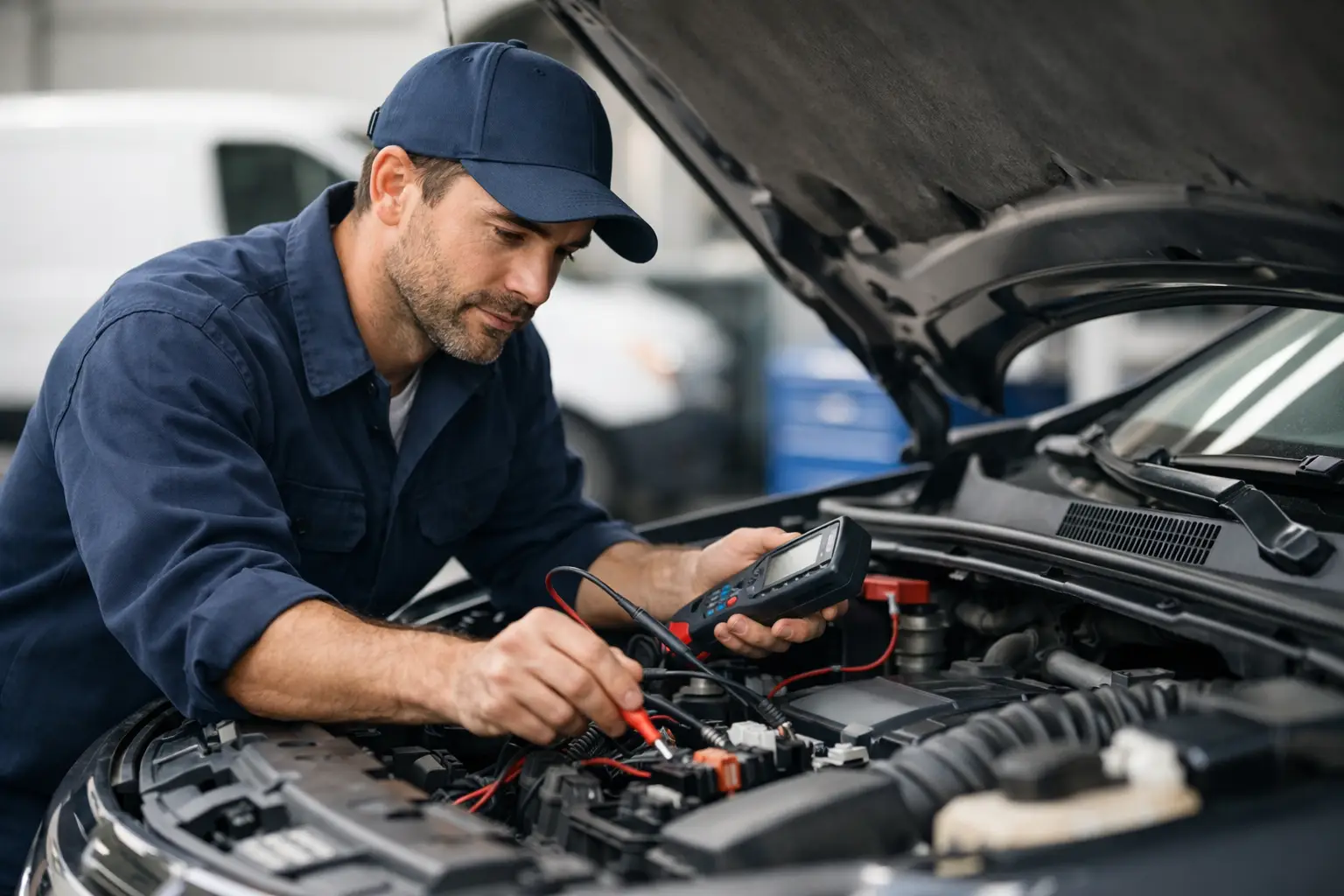
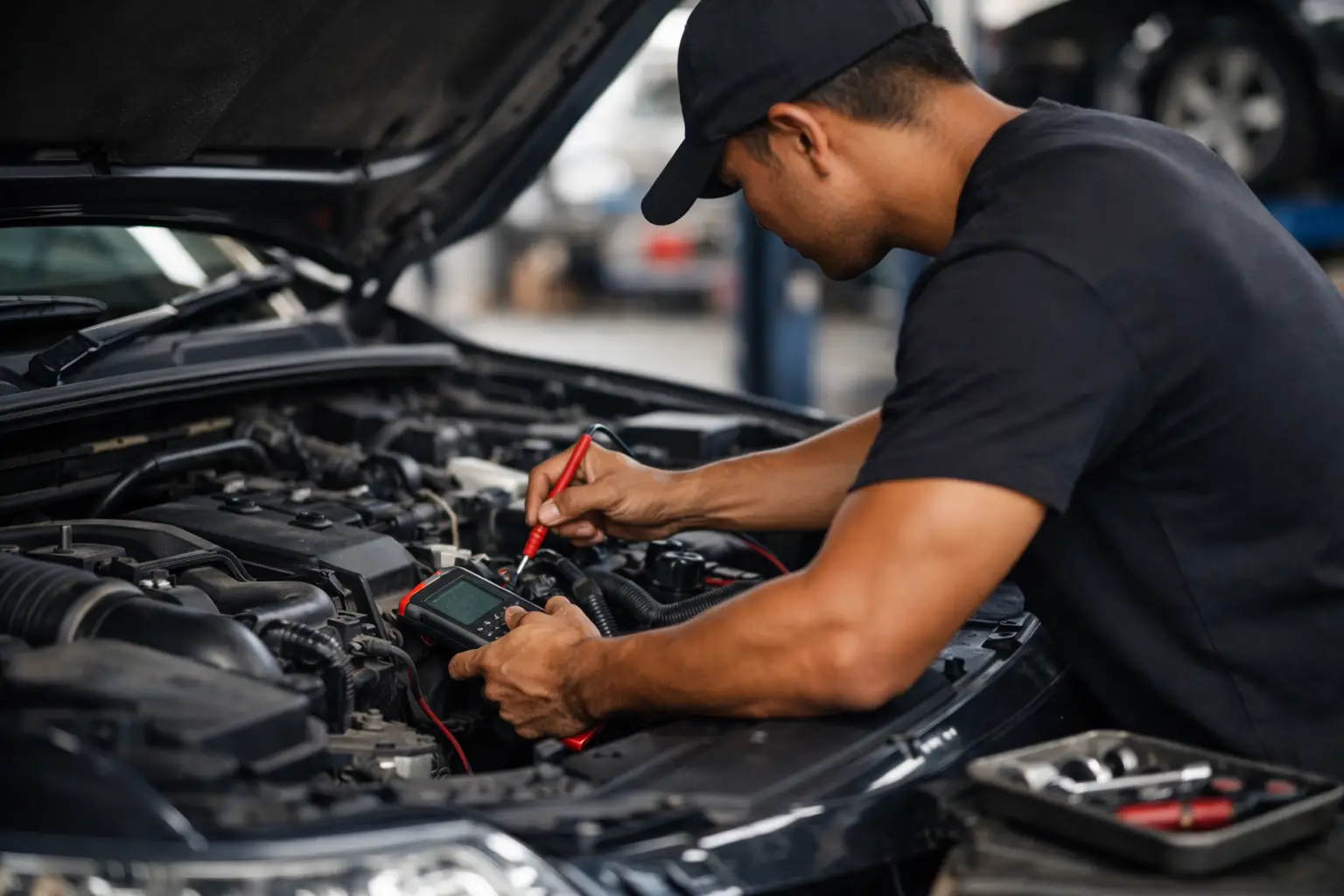
Starter symptoms can overlap with other electrical problems. Replacing a starter unnecessarily costs money and may not fix the vehicle. A qualified auto electrician will normally test the battery, alternator output, terminals, earth connections, starter signal wire and voltage drop through the circuit.
A flat or failing battery is particularly easy to mistake for a starter problem. Even if interior lights and the radio work, the battery may not have enough power to crank the engine. Corroded battery terminals, loose earth straps and damaged cables can cause the same result.
The alternator matters too. If it is not charging the battery correctly while driving, you may face regular starting problems even after fitting a new starter. For this reason, a complete starting and charging test is usually the most cost-effective place to begin.
When replacement is the sensible option
Starter motors are generally replaced when testing confirms an internal fault, such as a failed solenoid, worn brushes, damaged armature or engagement issue. In some cases, a starter can be repaired or rebuilt. Whether that is worthwhile depends on the vehicle, the availability of parts, the condition of the unit and the labour involved.
For many everyday vehicles, fitting a quality replacement starter is the more reliable option. It avoids rebuilding a unit that may have several worn components and gets the vehicle back on the road sooner. For older, classic or specialised vehicles, repairing the original starter may make more sense.
There is no fixed kilometre interval for starter replacement. Some starters last well beyond 200,000 km, while others fail earlier due to city driving, heat, contamination or frequent stop-start use. The condition of the component matters more than the odometer reading.
What to do if your car will not start
First, stay calm and avoid continuously cranking the engine. Repeated attempts can flatten the battery and overheat the starter or cables. Check that the vehicle is in Park or Neutral for an automatic, or that the clutch is fully pressed for a manual. If safe to do so, look for loose or heavily corroded battery terminals.
If you have jumper leads and another vehicle available, a jump-start may help identify a weak battery. But if the car still only clicks, cranks poorly or makes grinding noises, do not force the issue. The vehicle needs proper testing.
For Sydney drivers, mobile diagnosis can be particularly useful when the car is stuck in a driveway, workplace or shopping centre car park. Rather than organising a tow for a fault that may be a battery, cable, alternator or starter issue, an auto electrician can test the system where the vehicle sits.
If you are searching online for an Auto Electrician near me, choose a provider who can explain the test results clearly rather than simply replacing parts. Searches such as Auto Electrician Blacktown are often made when a no-start problem is urgent, but accurate diagnosis remains the fastest path to the right repair.
A small warning sign is worth acting on
A starter rarely fails at a convenient time. If your car has begun clicking, cranking slowly or starting only after several attempts, arrange a check before the next missed appointment or early-morning commute. Ray’s Auto Electrical provides practical mobile testing and repairs across Sydney, helping drivers understand the fault and make a confident decision about the repair.