

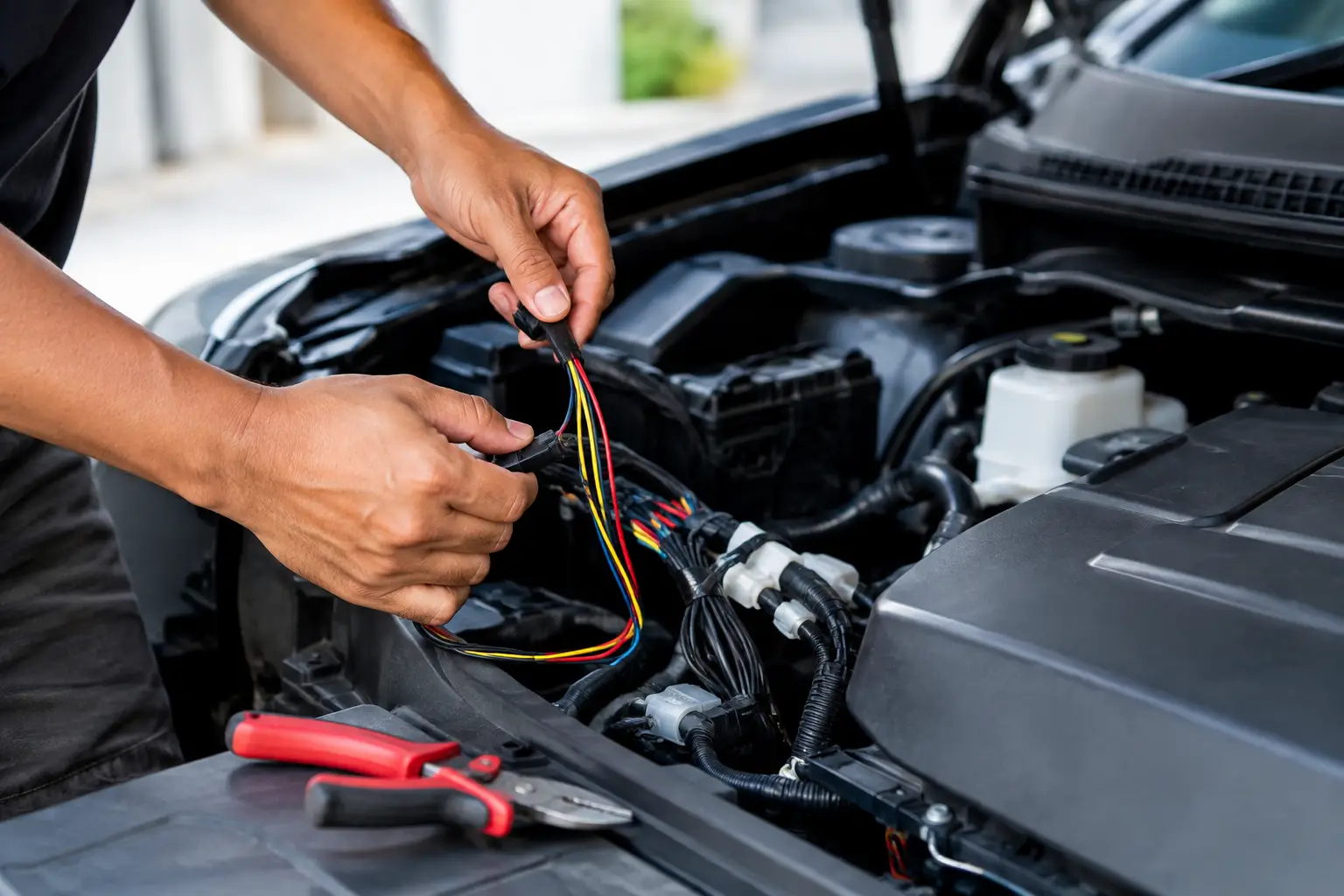
A new dash cam, UHF radio or driving light setup should make your vehicle more useful, not leave you with a flat battery or an electrical fault. This vehicle accessory wiring guide covers the practical decisions that matter before anything is fitted: where power comes from, how wiring is protected, and when a qualified auto electrician is the safer choice.
Accessory wiring is not simply a matter of joining a positive and negative wire. Modern vehicles contain sensitive electronics, safety systems and increasingly complex battery management. A neat-looking installation can still cause problems if the wiring is undersized, the circuit is unfused, or the accessory stays powered when the vehicle is parked.
Start with the accessory and how you use it
The right wiring method depends on the accessory, its power draw and when you need it to operate. A dash cam may need switched power while driving and a separate constant supply for parking mode. A UHF radio needs a stable supply that will not introduce alternator noise. Driving lights need a properly controlled circuit so they operate legally and do not overload an existing lighting wire.
Before fitting anything, check the manufacturer’s power requirements and decide whether the accessory should run all the time, only with the ignition on, or through a separate auxiliary battery. This is especially relevant for tradies, campers and families adding fridge sockets, rear cameras, inverters or USB charging points.
High-draw equipment changes the job. A small mobile charger and a compressor are not comparable, even if both use a 12-volt outlet. The compressor needs heavier cable, suitable circuit protection and secure connections capable of handling the load. If the wiring is selected only by what happens to be on hand, overheating and voltage drop become real risks.
Choose the correct power source
Most accessories are supplied from one of three places: a constant battery feed, an ignition-switched feed, or an auxiliary battery system. Each has a purpose.
A constant battery feed is useful for accessories that require memory retention or parking-mode recording. It must be protected close to the battery, and it may need a low-voltage cut-off to prevent the starter battery from draining. A dash cam that records overnight is useful, but not if it stops the vehicle starting in the morning.
An ignition-switched feed turns the accessory off when the key is removed. This is often suitable for radios, chargers and standard dash cam operation. However, do not assume any nearby wire is safe to tap into. On many newer vehicles, a wire that appears to be ignition-switched may be part of a monitored system. Incorrect connections can trigger warning lights, fault codes or unusual electrical behaviour.
An auxiliary battery is often the better option for sustained accessories, particularly in 4WDs, utes and work vehicles. It separates the starting battery from loads such as camping fridges, work lighting and inverters. The trade-off is greater cost and more installation work, but it provides better protection for vehicles that must start reliably every day.
Avoid overloading factory circuits
Factory wiring is designed for the equipment installed by the manufacturer. Adding extra load to a headlight, tail-light or accessory circuit may affect the circuit’s operation or damage a control module. Modern vehicles frequently use body control modules rather than simple switches and relays, so a traditional shortcut is not always appropriate.
For accessories with a meaningful power demand, a dedicated fused supply and relay-controlled circuit is generally the cleaner, safer approach. It gives the accessory its own protected path without asking an existing circuit to do more than it was designed to handle.
The vehicle accessory wiring guide to cable and fuses
Cable size and fuse protection are two areas where professional workmanship makes a major difference. The cable must be sized for the accessory’s current draw and the distance it travels through the vehicle. Long cable runs create voltage drop. That can make lights perform poorly, cause a radio to cut out, or leave an accessory operating below its intended voltage.
A fuse is there to protect the cable, not just the accessory. It should be installed as close as practical to the power source, particularly when running a new cable from the battery. If a cable is damaged and shorts against the vehicle body, the fuse should disconnect power before the cable overheats.
Do not fit a larger fuse simply because the original one blows. A fuse blowing is a sign that the circuit needs checking. It could point to incorrect cable sizing, a pinched wire, water entering a connection, or an accessory drawing more current than expected.
The wiring route also matters. Cables should be secured away from sharp metal edges, exhaust heat, moving steering components and pedal assemblies. Where a wire passes through metal, it needs suitable protection such as a grommet or conduit. Under the bonnet, heat-resistant cable protection and secure mounting are particularly important.
Keep connections dry, secure and serviceable
Loose joins and poorly insulated connectors are common causes of accessory faults. Vibration, moisture and road grime eventually find their way into weak connections, particularly in engine bays, under trays and around the rear of utes.
Quality terminals, correctly crimped connections and heat-shrink protection provide a more reliable result than twisted wires wrapped in tape. Connections should also remain accessible where possible. If a fuse holder or control module is hidden behind trim with no room for inspection, a simple future repair can become unnecessarily time-consuming.
For external accessories such as reversing cameras, trailer wiring, work lights and roof-mounted equipment, weather sealing is essential. Water ingress does not always cause an immediate fault. It can slowly corrode a terminal until the accessory works intermittently, often at the most inconvenient time.
Be careful around airbags and safety systems
Never route accessory wiring through areas containing airbags, seatbelt pretensioners or steering column components unless you understand the vehicle’s layout. This includes A-pillars, roof linings, front seats and dashboard sections. A dash cam cable placed across an airbag deployment path can create a safety issue in a collision.
Likewise, avoid disturbing yellow airbag connectors or probing unknown wiring with a test light. If trim needs to come off around an airbag or if warning lights appear after an installation, stop and have the vehicle inspected by an auto electrician.
Common accessory jobs and what they need
Dash cams are best hardwired with the correct fuse-tap or purpose-designed wiring kit, depending on the vehicle. A professional installation keeps the cable hidden, avoids airbag zones and sets up parking mode without risking a flat battery.
UHF radios need clean power, proper antenna installation and a microphone location that does not interfere with driving. Routing the antenna cable poorly can affect signal quality, while incorrect power connections can create unwanted noise through the unit.
Driving lights, light bars and work lights need suitable brackets, relay control, correctly rated cable and a tidy switch solution. The wiring should be protected from stone damage and weather, especially on vehicles that regularly travel on unsealed roads.
Sound systems can require more planning than expected. Amplifiers and subwoofers may draw substantial current, so cable size, fusing, grounding and battery condition all need attention. A weak battery or charging fault will not be fixed by fitting bigger speakers.
When to call a mobile auto electrician
DIY can suit a low-power accessory where the instructions are clear and the vehicle is simple. It becomes less suitable when wiring needs to run through the firewall, connect to a modern fuse box, involve an auxiliary battery, or operate near safety systems.
A search for Auto Electrician near me is often the quickest option when an accessory job has become more complicated than expected. If you are searching Auto electrician Blacktown, choose a technician who can test the battery and charging system as well as install the accessory. This helps identify issues that could affect the new equipment, such as poor earth connections, low charging voltage or an ageing battery.
Ray’s Auto Electrical provides mobile accessory installations and electrical diagnostics across Sydney, so the work can be completed at your home or workplace without giving up a day at the workshop. Proper testing after installation matters just as much as the fitting itself. The accessory should work as intended, the vehicle should start reliably, and no warning lights or fault codes should be left behind.
The best accessory installation is one you do not have to think about after it is fitted. It should switch on when it needs to, stay protected from the elements, and leave your vehicle ready to do its job every time you turn the key.