

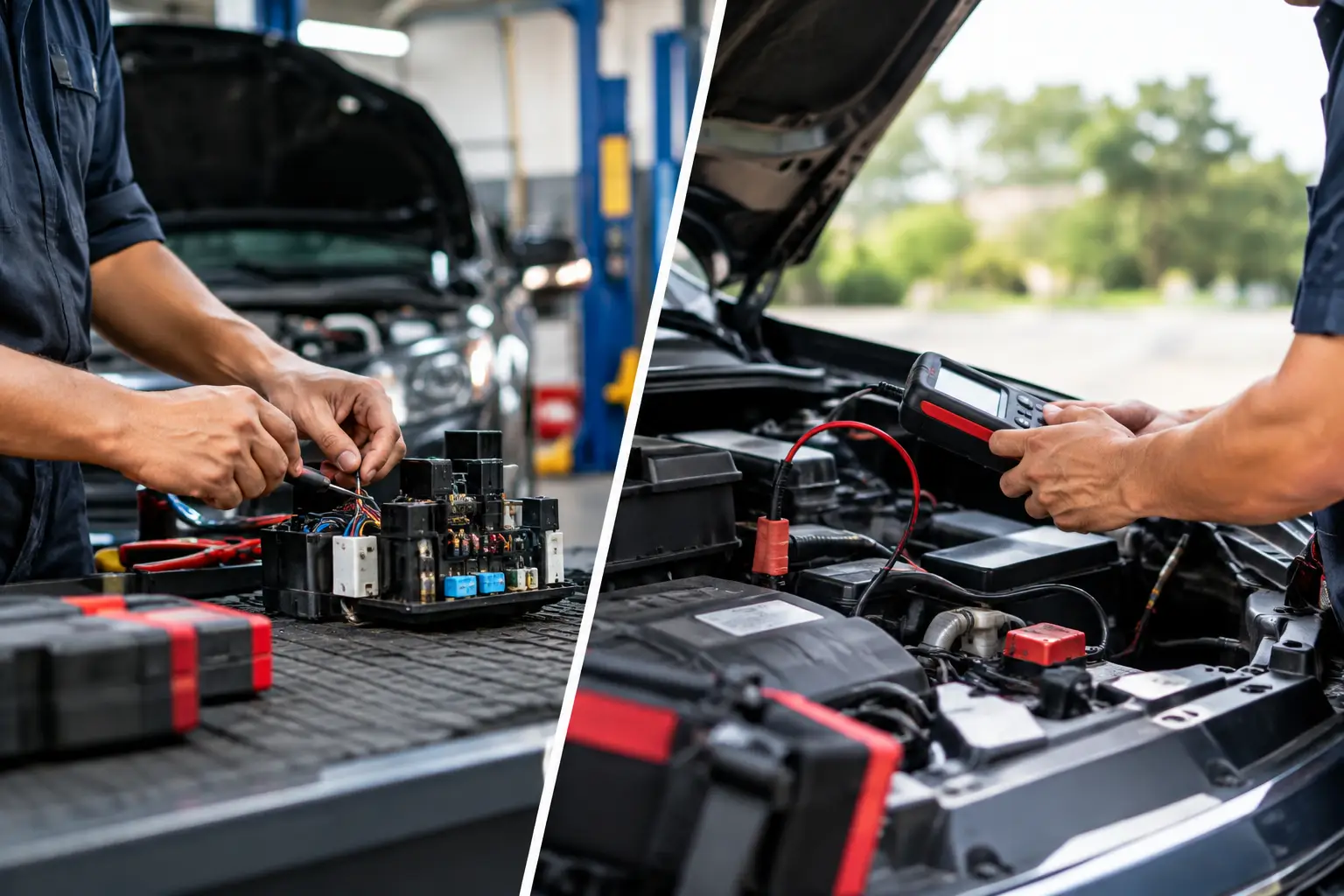
A flat battery before work, a dash warning light that will not clear, or air conditioning that stops cooling on a hot Sydney afternoon can quickly throw out your plans. The workshop repair vs mobile auto electrician decision usually comes down to one practical question: can the problem be safely and properly fixed where the vehicle is sitting, or does it need workshop equipment and more time?
For many electrical faults, you do not need to arrange a lift, wait in a reception area or pay to have a non-starting car towed. A qualified mobile auto electrician can come to your home, workplace or roadside location, test the system and carry out many common repairs on the spot. There are times, however, when a workshop remains the better option. Knowing the difference can save time, stress and unnecessary expense.
Workshop repair vs mobile auto electrician: the real difference
A workshop repair means taking your vehicle to a fixed location where technicians have access to hoists, larger machinery, specialised equipment and a wider range of parts. This can suit jobs that need the vehicle raised, components removed from difficult areas, extensive wiring repairs or work that will take several hours or days.
A mobile auto electrician brings diagnostic tools, testing equipment and commonly needed parts to you. The focus is on accurate fault-finding and efficient repairs that can be completed at your location. For everyday vehicle electrical issues, this often removes the biggest inconvenience: getting the car to a workshop when it may not start or is not safe to drive.
Neither option is automatically better in every situation. The right choice depends on the fault, where the vehicle is located, the available access and whether the repair needs fixed workshop facilities.
When mobile service is the practical choice
Mobile auto electrical work is ideal when the vehicle is stranded, inconvenient to move or needed again quickly. Battery failures are a clear example. A technician can test the battery, alternator and charging system at your driveway or work car park to identify whether the battery is simply flat, at the end of its life or not being charged correctly.
Starting faults, blown fuses, lighting problems, trailer wiring issues and many accessory faults can also be diagnosed on site. The same applies to fitting accessories such as dash cams, UHF systems, radios and sound systems. Having these installed at home or work means less disruption to your day and gives you the chance to discuss exactly where you want equipment positioned.
Mobile air conditioning diagnostics can be useful too, particularly when the issue is electrical, such as a faulty blower motor, relay, pressure switch or control problem. A proper diagnosis matters because replacing parts based on guesswork can become expensive quickly.
For commuters, families and trade customers, the main benefit is straightforward: the repair comes to the vehicle, rather than the vehicle having to come to the repair.
When a workshop is likely to be better
Some jobs are more involved and are best completed in a workshop. If major components need to be removed, the car needs to be lifted, or there is extensive damage behind the dash or through the vehicle wiring loom, a controlled workshop environment can make the work safer and more efficient.
A workshop may also be necessary where a fault requires long-term investigation, specialist manufacturer programming or access to parts that are not available on the day. Severe collision damage, water intrusion affecting multiple systems and major air conditioning repairs can fall into this category.
Good access matters for mobile work. A vehicle parked safely on level ground with room to open doors, the bonnet and the boot is much easier to inspect than one in a tight underground car park or on a busy road. If conditions are unsafe, the right technician will explain why another arrangement is needed rather than rushing a job.
Cost: look beyond the booking price
It is easy to assume a workshop is always cheaper because the technician is already based there. In reality, the total cost can look different once you factor in towing, rideshare trips, time away from work and the inconvenience of leaving the vehicle for a day or more.
A mobile service may involve a call-out charge, but it can also avoid those extra costs. More importantly, it can prevent unnecessary repairs through on-site testing. For example, a car that will not start may appear to need a new battery, but the actual issue could be a loose terminal, a failed alternator, a parasitic drain or a starter circuit fault. Testing before replacing parts is the sensible way to protect your budget.
Workshop repairs can offer better value when the work is extensive. If a technician needs repeated access to the vehicle over several hours, requires a hoist or needs to strip down multiple components, the workshop setup may reduce labour time. The best approach is to ask what the diagnosis includes, what parts may be required and whether the repair can realistically be completed on site.
Convenience matters, but so does diagnosis
Convenience is a major reason people choose a mobile auto electrician, but it should not replace quality workmanship. Electrical faults can be intermittent. A warning light may come and go, the battery may only drain overnight, or a radio may cut out when driving over bumps. These problems need methodical testing, not quick assumptions.
A professional technician will check the likely causes, explain the findings in plain English and give you a clear recommendation. Sometimes that recommendation is a same-day repair. Sometimes it is booking the vehicle into a workshop because the job needs more access or equipment. Honest advice is more valuable than being promised an on-site fix that is not suitable.
Ray’s Auto Electrical provides mobile diagnostics and repairs across Sydney, helping drivers deal with common electrical issues without automatically losing a day to a workshop visit.
Choosing the right option for your vehicle
Start with the vehicle’s condition. If it will not start, has a charging problem, faulty lights, an accessory issue or an electrical fault that can be checked safely where it sits, mobile service is often the quickest path forward. It is especially useful when the car is at home, at work or unable to be driven.
If the vehicle needs major dismantling, prolonged repairs or specialised workshop equipment, booking it into a workshop may be the more practical choice. A reliable auto electrician should be able to tell you this after asking a few questions about the symptoms, make and model, and location.
When searching online, terms such as “Auto Electrician near me” can help you find nearby support when time matters. If you are in the Western Suburbs, people also search “Auto electrician Blacktown” when they need a local technician for a battery, alternator, air conditioning or accessory problem. The spelling matters less than choosing someone qualified, responsive and prepared to diagnose the fault properly.
A few signs you should not delay
Electrical problems are often easier to repair before they leave you stranded. Slow cranking, dim lights, repeated flat batteries, burning smells, flickering dashboard displays and warning lights that keep returning all deserve attention. If the car loses power while driving, you smell hot wiring or see smoke, pull over safely, switch the vehicle off if safe to do so and arrange professional assistance.
Do not keep jump-starting a vehicle without finding out why the battery is flat. A jump-start may get you moving once, but it will not repair a failing battery, alternator or electrical drain. The same applies to repeatedly replacing fuses. Fuses blow to protect the circuit, so fitting a larger fuse or ignoring the cause can create a more serious problem.
The best repair option is the one that gets the correct diagnosis, keeps you safe and causes the least disruption to your day. If the job can be completed at your location, mobile auto electrical service is often the easier choice. If it needs a workshop, getting clear advice early helps you make the right arrangement before a small fault becomes a bigger headache.