
Your car has gone quiet at the worst possible time. You turn the key or press the start button and get a click, a slow crank, or nothing at all. The starter vs alternator question comes up often because both faults can leave you stranded, but they do very different jobs. Knowing the likely signs can help you explain the issue clearly and avoid replacing the wrong part.
For Sydney drivers who rely on their vehicle for work, school runs or daily commuting, a proper diagnosis matters more than a guess. A flat battery may be the symptom, but the cause could be the battery itself, the alternator, the starter motor, wiring, or a drain in the electrical system.
Starter vs alternator: what each part does
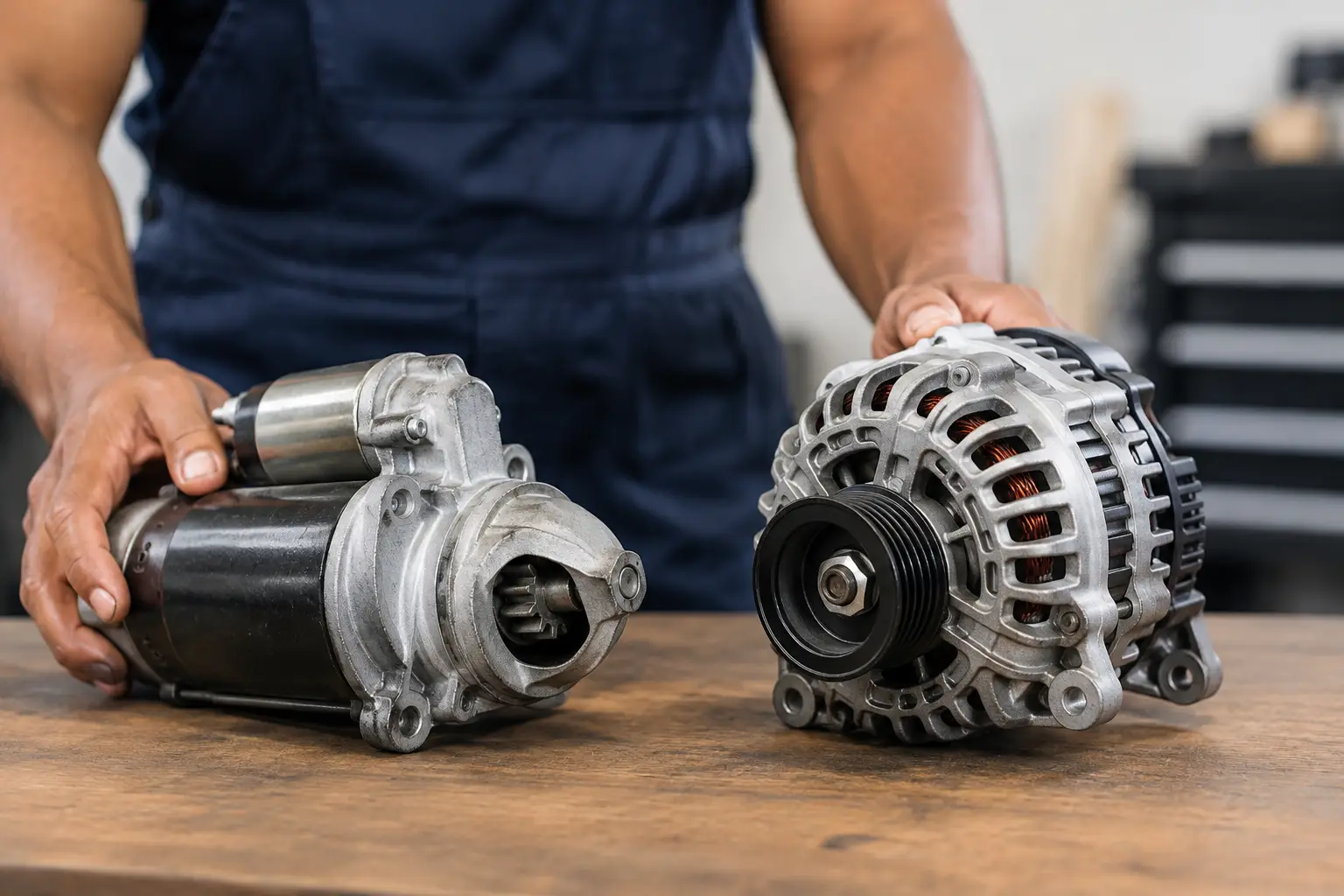
The starter motor gets the engine turning when you first start the vehicle. It uses power stored in the battery to crank the engine. Once the engine fires and runs on its own, the starter’s job is done.
The alternator takes over after the engine starts. Driven by the engine belt, it produces electricity to run the vehicle’s electrical systems and recharge the battery while you drive. Headlights, air conditioning blower, radio, engine management and accessories all rely on a charging system that is working properly.
Put simply, the starter helps start the car. The alternator keeps the battery charged after it has started. Both depend on a healthy battery and sound cables, which is why the symptoms can overlap.
Signs the starter motor may be the problem
A starter fault usually shows itself when you are trying to start the engine. You may turn the key and hear a single solid click, repeated clicking, or no response at all. In some cases, the dash lights come on normally but the engine does not crank.
A slow or intermittent start can also point to a starter issue, particularly if the battery tests well. You might find the car starts after several attempts, then fails again the next day. Heat can make an ageing starter motor more troublesome too, so a vehicle may start fine in the morning but refuse to start after a stop at the shops or a work site.
That said, clicking does not automatically mean the starter needs replacing. A weak battery, corroded terminals, poor earth connection or damaged cable can prevent enough current from reaching the starter. This is why testing before fitting parts is the sensible approach.
Common starter-related warning signs
A starter fault is more likely when the engine will not crank but the battery has sufficient charge, the charging system is operating correctly, and the electrical connections are secure. A grinding noise during starting, a starter that stays engaged briefly, or smoke from the starter area need prompt attention. Do not keep attempting to start the vehicle if you notice these signs, as further attempts can damage wiring or the starter ring gear.
Signs the alternator may be the problem
Alternator trouble often becomes noticeable while you are driving, not just when you start the car. The battery warning light on the dashboard is one of the clearest signs. It does not always mean the battery is faulty – it commonly means the charging system is not supplying the right voltage.
You may also notice headlights that dim or fluctuate, an air conditioning fan that slows down, flickering interior lights, or electrical accessories behaving oddly. If the alternator is not charging the battery, the vehicle will run on stored battery power until that power is depleted. Eventually, the engine may stall and refuse to restart.
A whining noise from the engine bay can sometimes be linked to alternator bearings or belt issues. A loose, worn or slipping drive belt can stop an otherwise healthy alternator from charging correctly. Modern vehicles can also have computer-controlled charging systems, so voltage readings need to be interpreted in the context of the vehicle, not treated as a one-size-fits-all answer.
A flat battery is not always an alternator fault
A battery can go flat because it is old, has an internal fault, or has been drained while the car is parked. A glovebox light, dash cam, aftermarket accessory, faulty relay or wiring issue can create a parasitic drain. Short trips can also leave a battery undercharged, especially when the vehicle regularly runs air conditioning, lights and other accessories.
If a jump-start gets the vehicle moving, that does not prove the alternator is fine. It only proves there was enough power to start the engine at that moment. A charging-system test is needed to check whether the alternator is restoring the battery as it should.
Why accurate testing saves money
The starter vs alternator decision should not be based on symptoms alone. Both components work alongside the battery, terminals, earth points, cables, fuses and vehicle electronics. Replacing an alternator because the battery went flat, only to find a loose terminal was the real issue, is an expensive and frustrating outcome.
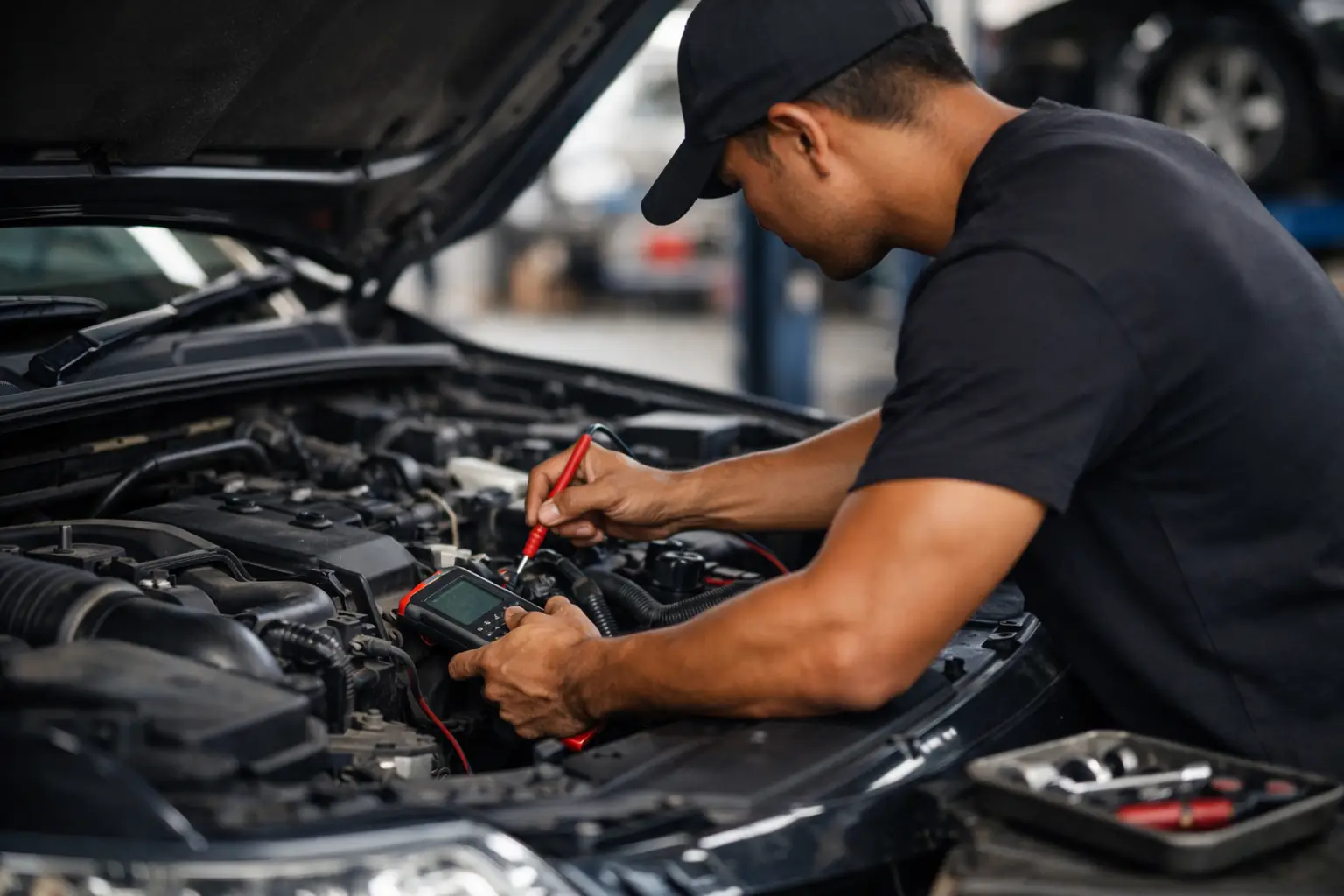
A qualified auto electrician can test battery condition and starting performance, measure charging output, inspect belt condition, check voltage drop in cables, and scan for relevant fault codes where required. These checks identify whether the issue is a failed component, poor connection, wiring fault or battery drain.
This is particularly useful with late-model vehicles. Many have stop-start systems, smart charging, multiple battery types and sensitive electronics. Fitting the wrong battery or overlooking a coding or registration requirement can cause further issues.
What to do when your car will not start
First, look for the simple clues. Are the dashboard lights weak or completely off? Are the battery terminals loose or covered in corrosion? Does the engine crank slowly, click once, or crank normally without firing? These details help narrow down the fault.
Avoid repeatedly jump-starting a vehicle with an unknown electrical problem. It may get you going temporarily, but it will not fix a failing alternator, starter, battery or cable. Never disconnect the battery while the engine is running to test the alternator. That old method can damage sensitive vehicle electronics.
If the battery warning light is on while driving, reduce unnecessary electrical load where safe to do so and arrange assistance as soon as practical. If lights are fading, warning lights are appearing, or the vehicle begins to lose power, pull over in a safe location before it stops completely.
Mobile help where the car is parked
A no-start fault is inconvenient because getting a car to a workshop can be the hardest part. Mobile testing and repair can make sense when the vehicle is at home, at work or stranded in a car park. An on-site inspection can establish whether you need a battery, alternator, starter repair, cable repair or further electrical diagnosis.
Ray’s Auto Electrical provides practical mobile auto electrical support across Sydney, including the Western Suburbs, so drivers can get the fault assessed at their location. For people searching “Auto Electrician near me” after a no-start, the priority should be a technician who tests the whole starting and charging system rather than simply fitting the most obvious part.
If you are in the local area, you may also see searches such as “Auto electrican Blacktown”. Whether the issue is a sudden no-start, recurring flat battery or a battery light that has appeared on the dash, give clear details about the symptoms, vehicle make and model, and when the problem first occurred.
A starter and alternator do different jobs, but the best next step is the same: have the starting and charging system checked properly before a small electrical fault becomes a day without your car.