

A brief flicker when you start the car can be easy to dismiss. But if your headlights keep flickering while driving, idling at lights or using accessories, your vehicle may have an electrical fault that needs attention. It can affect how far you can see at night, make other drivers less able to judge your position, and leave you with a flat battery or no-start problem if the underlying issue worsens.
The cause is not always a blown globe. Headlights rely on a stable supply of power from the battery, alternator, wiring, connections and switches. A qualified auto electrician can test the system properly and identify the fault without replacing parts based on guesswork.
Why headlights keep flickering
Flickering happens when the power reaching the headlights is interrupted or unstable. The pattern often gives a useful clue. Lights that flicker only at idle may point to charging-system performance, while lights that react when you hit a bump can suggest a loose connection or worn wiring.
A weak battery or poor battery connection
Your battery helps stabilise voltage throughout the electrical system. When it is weak, ageing or has a damaged internal cell, the headlights may dim or flutter, particularly when you use the air conditioner, wipers, rear demister or stereo.
Loose or corroded battery terminals can cause the same symptoms. Even if the car starts, a poor connection can restrict current flow and create intermittent faults. White, blue or green build-up around the terminals is a common sign that they need inspection and cleaning.
An alternator that is not charging consistently
The alternator recharges the battery and supplies electrical power once the engine is running. If its regulator, internal components or drive belt are failing, voltage can rise and fall rather than remain steady. Headlights may brighten when you accelerate, dim at idle, or pulse in time with engine speed.
An alternator issue is worth addressing quickly. Continuing to drive can eventually drain the battery, trigger warning lights, affect power steering on some vehicles, or cause the engine to stop once battery power is exhausted.
Loose earth points, wiring or connectors
Every electrical circuit needs a reliable earth. A loose, corroded or damaged earth strap between the battery, body and engine can create flickering headlights and a range of other strange electrical behaviour. You might also notice a radio cutting out, dashboard lights changing brightness, or slow cranking when starting.
Headlight plugs and wiring can also become brittle from heat, moisture and age. On older cars, utes and vehicles used on rough roads, vibration can loosen a connector behind the headlight or damage wiring inside the loom. The fault may only appear over bumps or when the vehicle turns.
Failing bulbs or headlight assemblies
Halogen globes can flicker near the end of their life, particularly if the filament has weakened. Moisture inside a headlight housing can also corrode terminals and affect the globe connection.
LED and HID headlight systems add other possible causes, including a failing driver, ballast or incompatible replacement globe. This is why fitting the cheapest aftermarket LED kit is not always a simple upgrade. Some kits draw power differently, generate heat in the housing or interfere with the vehicle’s electronics if they are not matched and installed correctly.
A faulty switch, relay or control module
Some vehicles use relays to switch headlight power, while newer models may have body control modules that manage lighting automatically. A worn headlight switch, sticking relay or module fault can cause lights to cut in and out.
These faults are less obvious than a loose terminal. Testing voltage at different points in the circuit is the sensible way to confirm the cause before any parts are replaced.
Is it safe to drive with flickering headlights?
It depends on how severe the issue is, but flickering headlights should not be treated as normal. If the lights are only slightly fluctuating and you can drive safely in daylight, arrange an inspection as soon as practical. Avoid unnecessary night driving until the charging and lighting systems have been checked.
Pull over safely and seek help sooner if the headlights become very dim, cut out completely, the battery warning light comes on, you smell burning plastic, see smoke, or the vehicle begins losing other electrical functions. Do not keep driving simply because the lights come back on. Intermittent electrical faults often return at the worst possible time.
Simple checks you can make safely
Before booking a diagnosis, there are a few observations that can help explain the problem. Check whether the flicker occurs only when the engine is idling, only over bumps, or when a high-draw accessory is switched on. Note whether the dashboard lights, interior lights or radio are affected as well.
With the engine switched off, you can visually inspect the battery terminals for looseness, corrosion or obvious damage. Do not touch exposed wiring, disconnect battery cables unless you understand the correct procedure, or attempt repairs around high-voltage hybrid and electric vehicle systems.
Also check for condensation inside either headlight assembly and look at the globe operation. If one headlight flickers and the other remains stable, the issue may be local to that globe, connector or housing. If both lights flicker together, battery, alternator, earth or main wiring faults become more likely.
A visual check is useful, but it cannot confirm charging voltage, voltage drop under load or an intermittent wiring problem. Those checks require appropriate test equipment and experience.
How an auto electrician finds the real fault
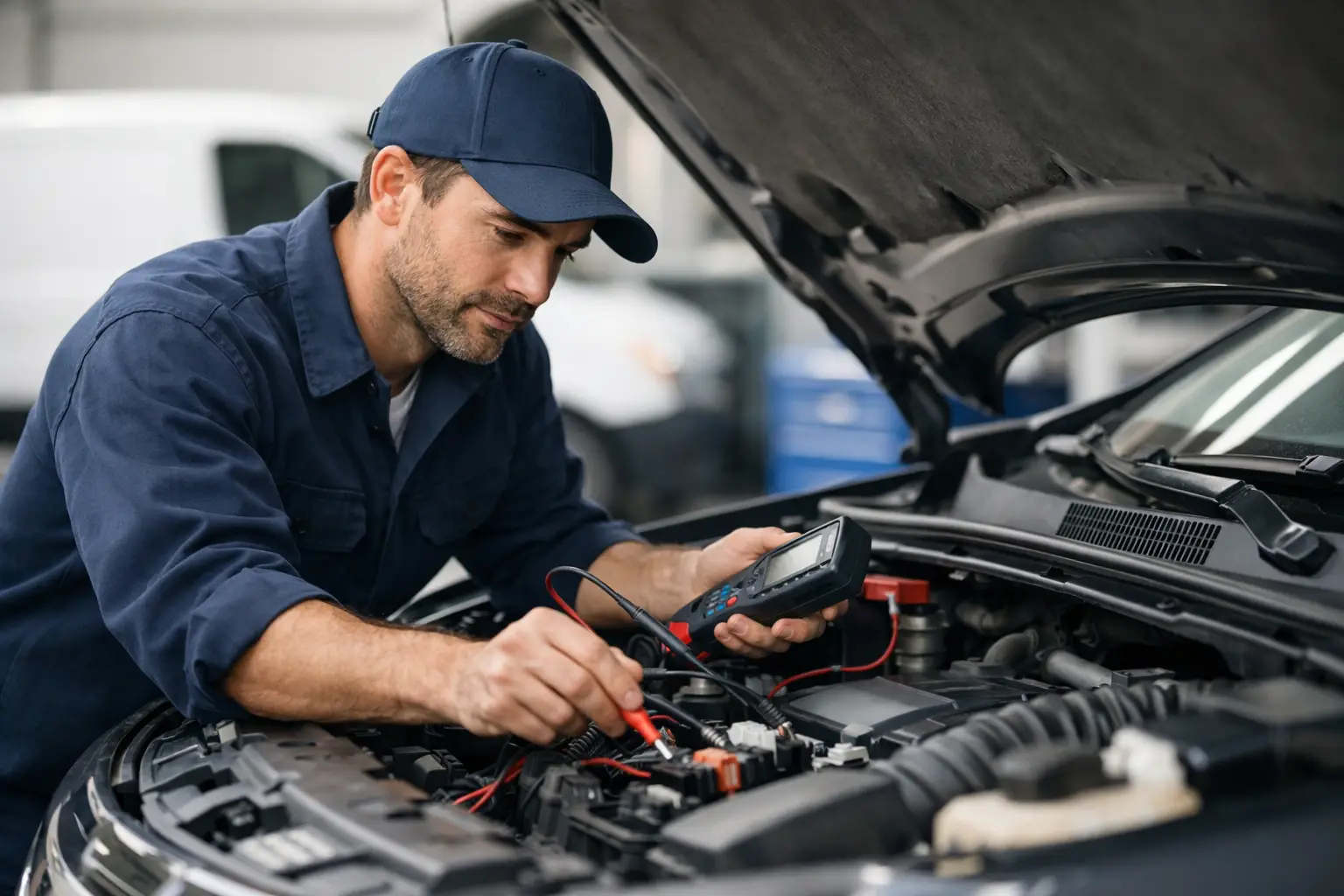
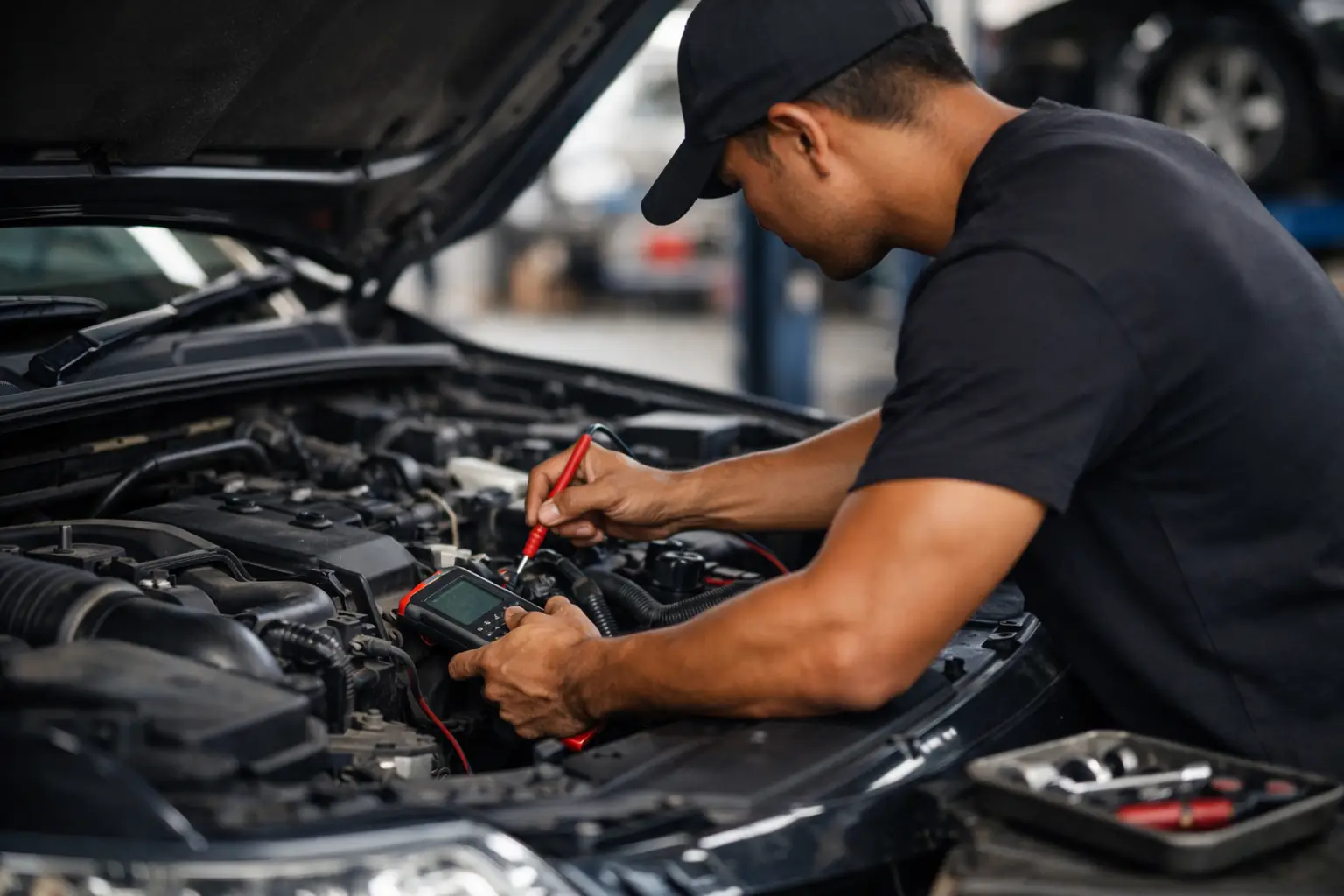
A proper diagnosis starts with battery condition and charging-system testing. The technician checks battery voltage with the vehicle off, then measures alternator output with the engine running and electrical loads switched on. The result helps show whether the system is undercharging, overcharging or fluctuating.
Next comes an inspection of battery terminals, earth straps, fuses, relays, headlight plugs and wiring. Voltage-drop testing is particularly useful because a cable can look fine from the outside yet have corrosion or resistance inside it. Where required, the technician can test the headlight switch, relay control and vehicle modules to isolate the faulty component.
This approach matters because a new battery will not fix an alternator regulator fault, and new globes will not solve a poor earth connection. Accurate testing protects you from paying for parts that were never needed.
Common repairs for flickering headlights
The repair depends entirely on what testing finds. It may be as straightforward as securing and cleaning a battery terminal, replacing a worn globe or repairing a loose plug. In other cases, the job may involve renewing an earth strap, repairing damaged wiring, replacing an alternator or fitting a correct-quality LED driver or ballast.
There is a trade-off with older vehicles. Repairing a small section of wiring is usually cost-effective when the rest of the loom is in good condition. If insulation is brittle in several places or connectors are heavily corroded, a more thorough repair may be the better long-term option. A good technician should explain the condition of the system and the repair choices before proceeding.
Get help without the workshop run-around
A flickering headlight fault can be frustrating because it may disappear temporarily before you reach a workshop. Mobile testing at your home, workplace or roadside location can make diagnosis easier, especially when the fault occurs during normal vehicle use.
If you have searched for an Auto Electrician near me or typed Auto electrician Blacktown while trying to find a fast answer, look for a technician who can test the battery, alternator and lighting circuit rather than simply swap parts. Ray’s Auto Electrical provides mobile auto electrical diagnostics across Sydney, including the Western Suburbs, with practical advice on the repair needed.
Your headlights are one of the clearest signs of your vehicle’s electrical health. Arrange a check while the flicker is still occasional, and you are far more likely to avoid a darker, more expensive breakdown later.